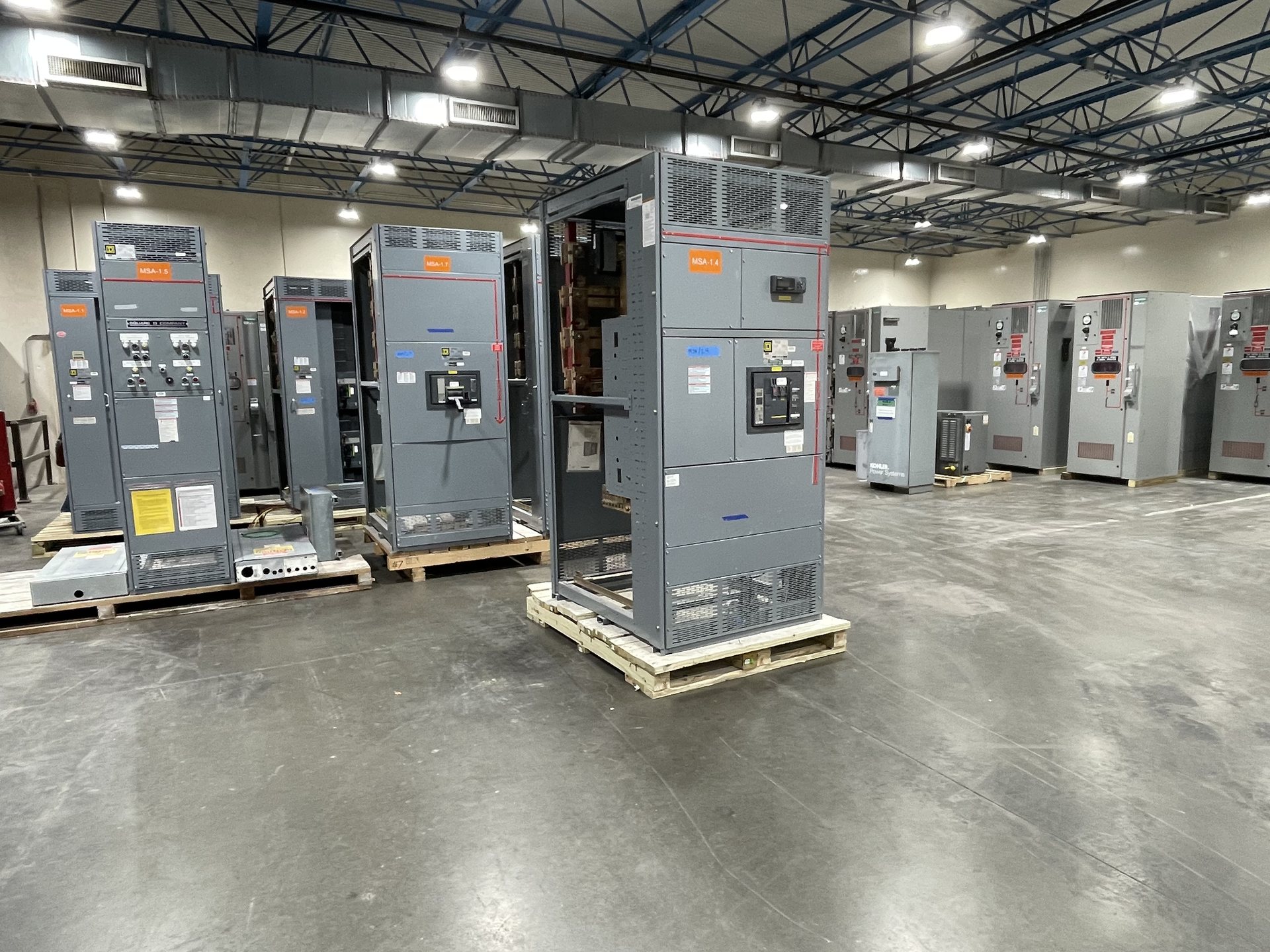
Scope the expansion around new feeders
Start by identifying what the expansion adds and where each new circuit must connect. The scope may include feeders for inverters, battery systems, auxiliary loads, transformers, or new collection sections. Confirm the number of circuits, their destinations, expected operating conditions, and whether the work adds a lineup, replaces a section, or uses new retrofit components in existing equipment. These distinctions affect enclosure layout, bus connections, protection provisions, and outage planning.
Provide a current one-line diagram alongside a proposed expansion one-line, clearly marking existing and new circuits. Include equipment tags, feeder functions, connection points, and any planned changes to the normal operating arrangement. If drawings are preliminary, identify assumptions and open decisions rather than treating them as final. That gives engineering and purchasing teams a common basis for reviewing fit, identifying missing inputs, and requesting pricing for new equipment.
Check existing equipment ratings and condition
An added feeder must fit within the electrical and physical limits of the equipment it connects to. Document the existing switchboard or switchgear manufacturer and catalog information if available, bus and protective-device ratings, interrupting ratings, enclosure details, and available spaces. Record system voltage, frequency, grounding method, and the relevant normal and emergency operating configurations. Do not assume spare space means a section has adequate electrical capacity or that a component can be replaced without affecting the assembly.
The project team should also establish whether existing nameplates, drawings, and field conditions agree. Note prior modifications, obsolete or unidentified components, damaged parts, and discrepancies for review by qualified personnel. Share photographs and dimensional information where useful, but do not use them as substitutes for drawings or verified ratings. We can review the stated requirements for new equipment or new retrofit components; compatibility and applicable standards must be confirmed for the specific configuration.
Gather inputs from the interconnection study
Interconnection documents help define the electrical conditions that the expanded distribution system must accommodate. Provide the applicable study requirements and available results, including utility or system-operator criteria, the point of interconnection, fault-current information, protection coordination requirements, and any operating scenarios that affect the facility. Identify which values are confirmed and which remain subject to study updates. Changes in generation, storage dispatch, or network configuration may alter design assumptions, so the equipment scope should reflect the current project basis.
Clarify the required functions of feeder protection, metering, controls, and communications without assuming that a particular device or setting is already established. Include responsibility boundaries between the facility, interconnection equipment, and utility scope, along with required interface points. The manufacturer can assess the equipment specification against the information supplied, but cannot substitute product selection for the project’s interconnection engineering. Confirm study inputs, protection responsibilities, and approvals with the responsible engineer and interconnecting parties.
Choose distribution equipment to match the application
A useful equipment specification connects each feeder’s electrical duty to the physical arrangement and intended operating mode. Describe the required bus configuration, incoming and outgoing connections, protective-device functions, metering, control interfaces, cable entry, and environmental conditions. State whether the expansion must accommodate future circuits and how those provisions should be arranged. For retrofit components, identify the exact existing assembly and component being replaced; a similar appearance or nominal rating alone does not establish interchangeability.
For switchboard applications, specify the intended assembly and ask which standards and listing requirements apply to the proposed configuration. UL 891 applies to switchboards, not universally to every type of switchgear or every system voltage. Listing status and applicable standards should be verified for the particular assembly. Provide any required drawings, component schedules, and acceptance-document needs for quotation review. Component origin, engineering, availability, lead time, and documentation are confirmed for each project rather than assumed.
Sequence procurement with construction and outages
Expansion work often has to fit around civil construction, equipment foundations, cable installation, control-system work, and operating constraints at an existing facility. Map the planned sequence from design release through delivery, setting, connection, inspection, and energization. Identify the dates when approved drawings are needed, when connection dimensions must be frozen, and when access or an outage is expected. This helps expose dependencies that can affect the equipment configuration before procurement commitments are made.
For a phased project, show which circuits and sections must be available at each stage and whether temporary operating arrangements are part of the approved plan. Clarify who coordinates field verification, interfaces with other contractors, and resolves conflicts between new and existing equipment. Do not base the schedule on an assumed delivery date: lead time is subject to project review and confirmation at quotation. Installation, servicing, testing, and energization require qualified personnel working under approved procedures.
Prepare a complete package for pricing and review
A clear request for pricing should include the project location in Texas or elsewhere, requested equipment type, system parameters, scope boundaries, and the target schedule. Attach the existing and proposed one-line diagrams, available equipment data, interconnection requirements, and preliminary or final specifications. List open decisions, requested options, and any project-specific document or drawing requirements. If the request concerns retrofit components, include assembly identification and the purpose of each replacement so the review can distinguish a fit question from a new-equipment design.
Before release, coordinate the equipment specification with the electrical engineer, contractor, owner, and purchasing team. Confirm who approves drawings, supplies field dimensions, determines protection settings, and accepts deviations. Ask that the quotation identify the proposed scope, exclusions, assumptions, and documents available for review. We manufacture and supply new equipment and new retrofit components to specification, serve Texas from the United States, and ship nationwide. Availability, engineering, component origin, lead time, and test documentation require project-specific confirmation.