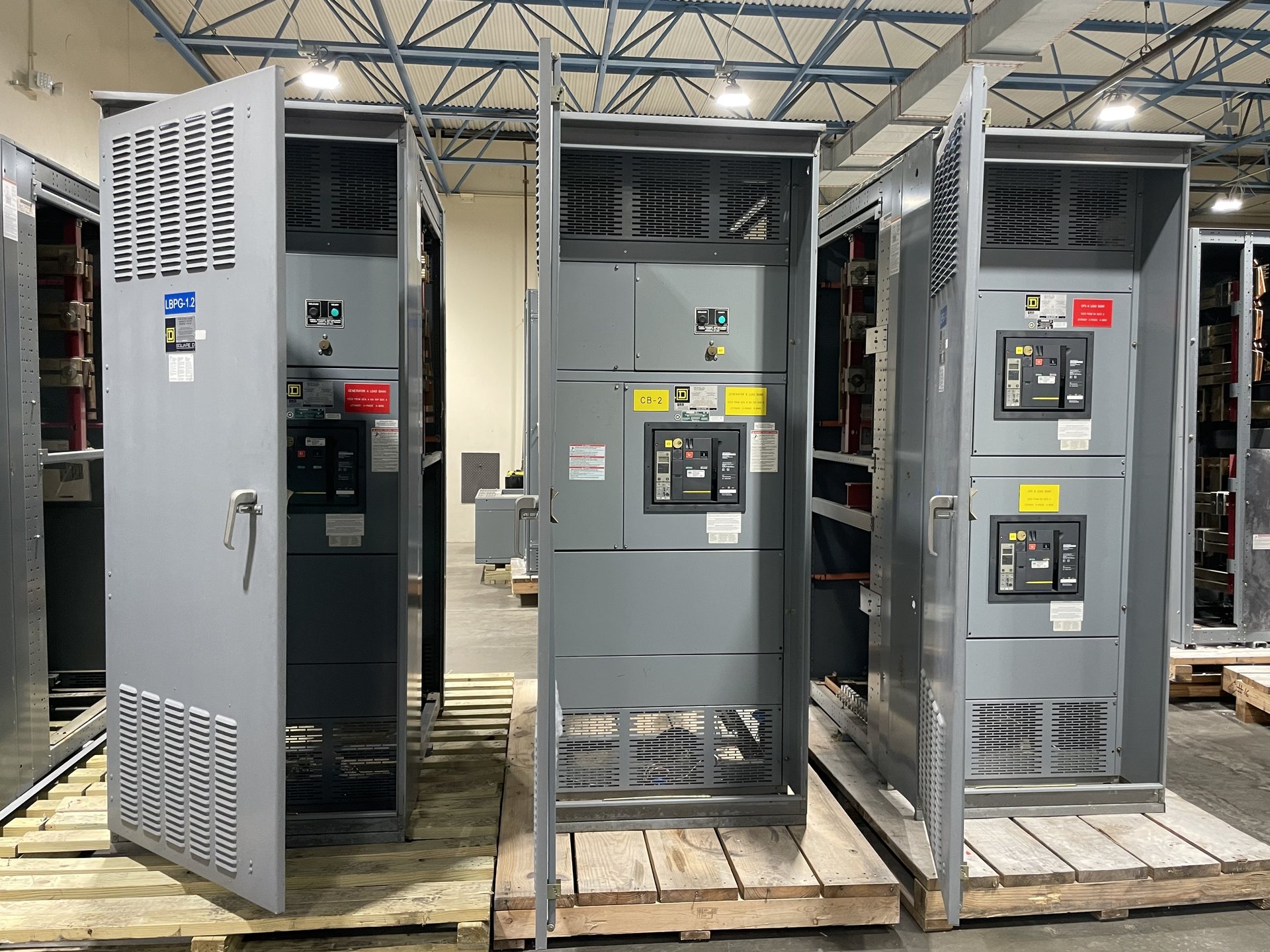
Connect procurement decisions to the incident-energy study
Begin by establishing which electrical system information and study results will guide the equipment design. Ask whether the project has current short-circuit and coordination studies, which operating scenarios were evaluated, and whether the study identifies the specific switchgear lineup and protective devices being procured. An incident-energy value reflects stated assumptions; it is not a permanent property of the equipment independent of the system and its settings.
If studies are incomplete or based on earlier equipment, identify who will provide revised engineering and what information that party needs. Useful inputs include one-line diagrams, transformer data, utility fault-current information, conductor details, grounding arrangement, and protection-device models. Resolve study responsibilities and required submittals before purchase so equipment details can be checked against the assumptions used in the analysis.
Confirm available fault current and equipment ratings
Available fault current influences protective-device selection, coordination, and the interrupting and withstand capabilities required of the assembly. Ask for the source and date of the fault-current data, the expected range of utility contribution, and any generator or parallel-source operating conditions. Where future system changes are possible, have the responsible engineer identify which scenarios must be considered rather than relying on a single present-day value.
Compare the project’s calculated conditions with the ratings and configuration offered for the switchgear. Confirm that the quoted assembly and specified devices address the applicable voltage, fault duty, and system arrangement, including any relevant upstream or downstream equipment. Ratings and compatibility depend on the design; they should be reviewed in the quotation and final submittals, not inferred from a product category or a general description.
Treat protective settings as engineered project data
Protective settings affect both coordination and the time equipment remains exposed to an arcing fault. Procurement documents should identify the required trip-unit or relay functions, adjustment ranges, sensor or rating-plug details where applicable, and the party responsible for selecting and verifying final settings. Ask how settings will be documented and whether the delivered configuration must match study assumptions or be adjusted during commissioning.
A setting that reduces clearing time in one operating case may affect selectivity or continuity in another. Do not specify a setting solely to obtain a lower incident-energy result without qualified review of the full protection scheme. Request coordination between the equipment design, study inputs, and approved setting schedule, and confirm how any selectable modes, interlocks, or remote operating provisions are represented in the project documentation.
Evaluate arc-resistant design against the application
Arc-resistant construction is a design option to evaluate, not a substitute for fault studies, correct protection, or safe work practices. Determine whether the project specification requires a particular construction, accessibility arrangement, or evidence of evaluation for the proposed configuration. Review the intended lineup arrangement, compartments, doors, barriers, and installation conditions with the responsible engineer because design features and performance depend on the specific assembly and its application.
Ask what operating positions and access conditions the design addresses, and whether the project’s room layout, cable entry, ventilation, adjacent equipment, and installation clearances match the manufacturer’s documented configuration. Verify applicable standards, listings, and documentation for the quoted assembly rather than assuming a general claim applies to every lineup. No design feature guarantees a particular incident-energy level or eliminates the need for risk assessment and procedures.
Specify maintenance and operating features deliberately
Maintenance access and operating choices can affect exposure during inspection and switching, so identify these needs while defining the equipment. Discuss compartment access, provisions for isolation, control and indication requirements, and whether remote operation or other project-specific features are being considered. Ask what maintenance documentation and device information will be supplied, and make sure the requested features are compatible with the protection scheme and intended operating modes.
Procurement should also clarify who will establish inspection intervals, verify protective-device condition, and manage changes to settings or system topology. These responsibilities are not replaced by equipment features. Installation, inspection, testing, servicing, and energization require qualified personnel following approved procedures. A maintainable design supports planned work, but the project’s procedures, training, and controls remain essential to managing electrical hazards.
Align submittals, retrofit scope, and quotation requirements
For a new lineup, define the required one-line, elevations, device schedules, ratings, control interfaces, and study assumptions that must be reviewed during submittals. For an existing installation, provide accurate nameplate data, drawings, dimensions, photographs where appropriate, and details of the installed devices before requesting new retrofit components. Compatibility cannot be established from a broad equipment description alone; configuration and application require review.
We quote new equipment and new retrofit components only, built or supplied to the project specification. Include the required standards, listing expectations, component-origin requirements, documentation, and delivery destination in the request for pricing. American components can be specified, but component origin, availability, engineering, lead time, and test documentation must be confirmed for each quotation; domestic-content compliance is not assumed. Texas projects are served from the United States, with shipping nationwide.