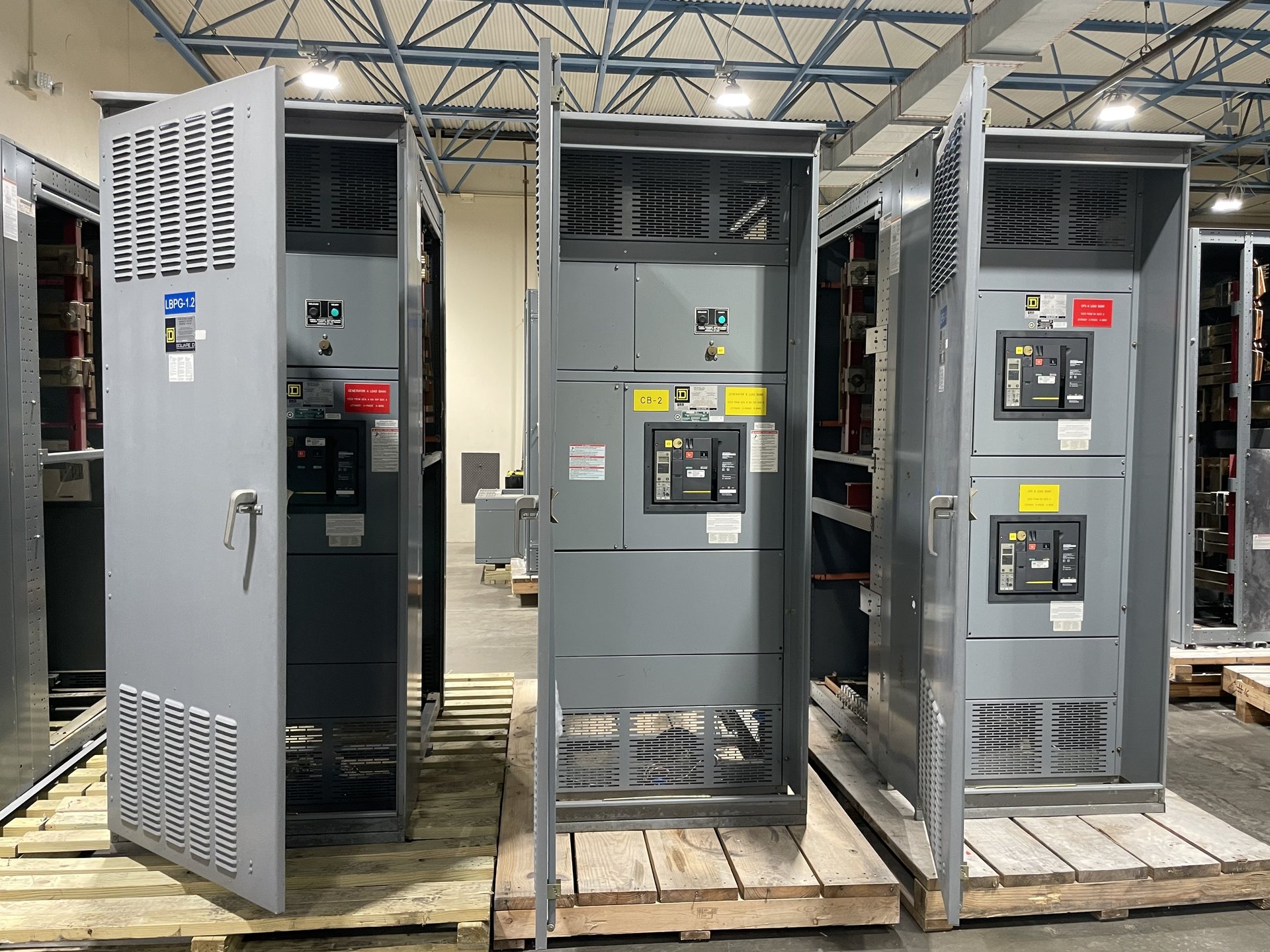
Mounting the Device and Operating Mechanism
The first integration question is how the switching device is supported and aligned within the assembly. A fixed-mounted device, a door-mounted operator, and a mechanism linked through the enclosure impose different space, support, and access requirements. For a new build or a new retrofit component, provide the intended device, enclosure layout, mounting orientation, available depth, and any existing cutouts or structural constraints that must be retained.
The operating linkage must transfer motion consistently without binding or unintended movement. Relevant details include the handle or operator location, shaft or linkage path, required travel, clearances around adjacent equipment, and the relationship between the mechanism and the device's operating positions. Share manufacturer documentation and assembly drawings where available. We review these inputs during quotation; feasibility, component selection, and final arrangement depend on the specific configuration.
Door Operation and Mechanical Interlocks
When an operator is mounted on a door, the door, operating shaft, and switching device must function as a coordinated system. Define whether the device is intended to operate with the door closed, whether the door must be prevented from opening in a specified state, and whether an authorized override is part of the design. These requirements should be explicit rather than inferred from a handle location or a general reference to an interlocked door.
Mechanical interlocks can restrict an action based on the physical position of a handle, door, or related mechanism. Their intended sequence, permitted states, and exception provisions should be documented for the particular assembly. We need to understand normal operation as well as maintenance access requirements, including which doors are opened and under what approved conditions. Final interlock behavior and applicable standards must be verified for the quoted configuration.
Electrical Interlocks and Control Interfaces
Electrical interlocks use control circuits, auxiliary contacts, or other specified interfaces to prevent or permit an operation under defined conditions. To scope them accurately, identify the devices involved, the desired operating sequence, the control-power source and relevant control drawings. Clarify whether the function is intended to block a switching command, provide status, or coordinate with another part of the system; those are distinct requirements and should not be treated as interchangeable.
Provide available contact diagrams, control schematics, device data, and project descriptions of permissive and prohibited states. If existing controls are involved in a retrofit, identify the equipment they connect to and the boundaries of the work. We can assess new components against the information supplied, but compatibility and interface details require project review. Electrical interlocks do not replace operating procedures, protective measures, or qualified personnel following approved procedures.
Access, Clearances, and Serviceability
A device can be mechanically operable yet difficult to inspect or service if adjacent components, wiring routes, barriers, or door hardware restrict access. Provide enclosure elevations and internal layouts showing the operator, device terminals, nearby equipment, wireways, and the intended service approach. Note any required access direction, removable panels, door swing limits, or obstacles that could affect normal operation or planned maintenance.
For retrofit work, document the existing enclosure dimensions, device position, mounting pattern, door cutout, and nearby obstructions rather than relying on a general equipment description. Photographs can supplement drawings, but they do not replace dimensional information needed for review. Describe which existing features must remain and which can change. The proposed arrangement must be evaluated for the actual assembly; installation and service work require qualified personnel using approved procedures.
New Builds and New Retrofit Components
For a new assembly, submit the one-line diagram, equipment schedule, required device functions, enclosure arrangement, and operating sequence. Identify any project-specific preferences for handle position, door operation, mechanical or electrical interlocking, and component origin. Customers may specify American components; component origin, availability, and applicability must be confirmed for each quotation. A request for pricing is most useful when the scope distinguishes required functions from preferences and identifies unresolved design decisions.
For an existing assembly, Switchgear Builders Texas supplies new retrofit components only. Include the original equipment information, device nameplate data where available, clear dimensional records, existing linkage details, and drawings that show relevant control interfaces. State whether the objective is replacement, a changed operating arrangement, or a new interlock function. We are the manufacturer and supplier of new equipment and components.
Quotation Review, Documentation, and Safety
A complete quotation review should settle what device and operating mechanism are in scope, what interfaces are required, which interlock states must be achieved, and what existing conditions affect mounting or access. Provide applicable specifications, drawings, control documents, and requested submittal information. Engineering feasibility, availability, component origin, lead time, and test documentation are confirmed for each project; no particular rating, schedule, or test record should be assumed before review.
Ask which standards and listing requirements apply to the complete configuration, and verify them against the project specification. UL 891 applies to switchboards, not universally to every type of switchgear or every switching-device arrangement; listing and applicable standards must be checked for the assembly being quoted. We serve Texas from the United States and ship nationwide. Installation, servicing, testing, and energization must be performed by qualified personnel under approved procedures.