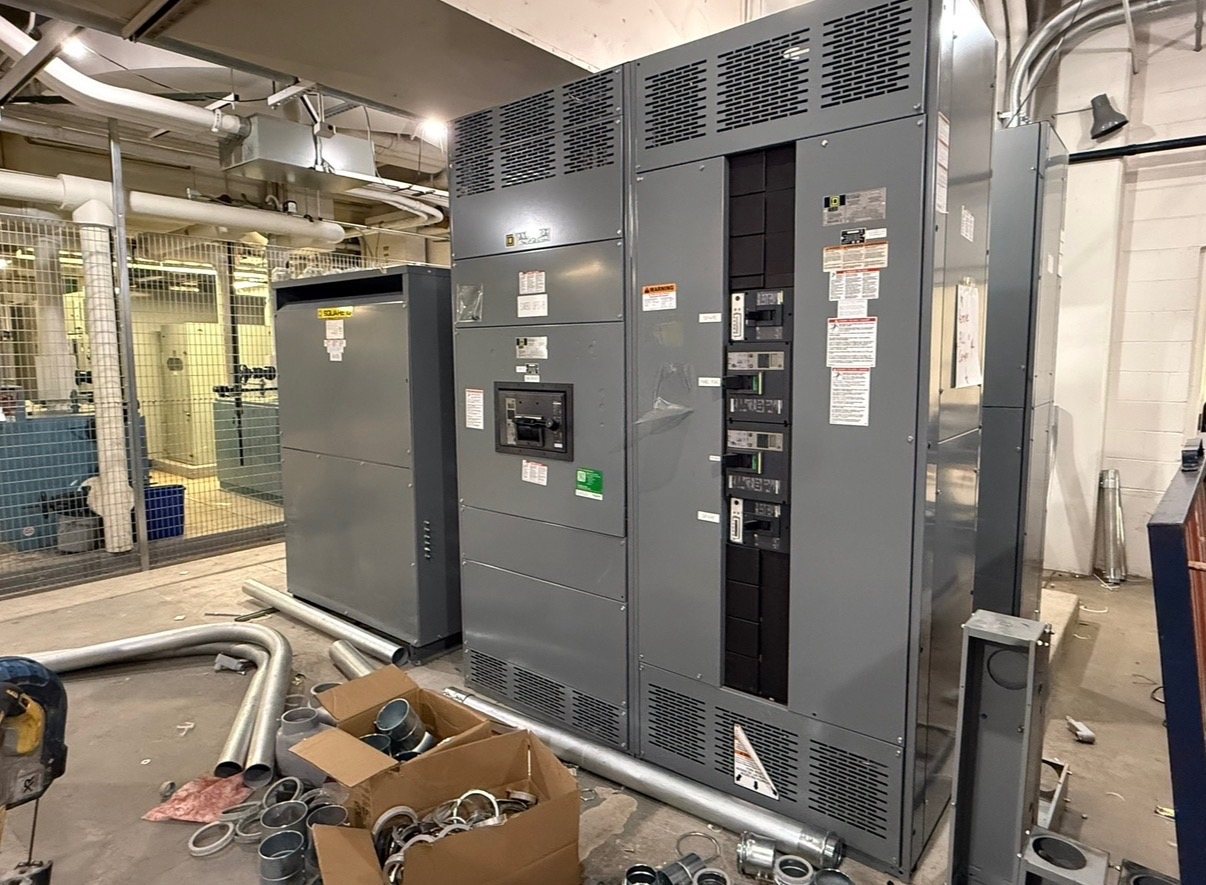
Ask Separately About Assembly and Component Origin
Start by asking where the proposed equipment will be assembled, then ask which components are imported and which are sourced in the United States. Assembly location does not establish the origin of every breaker, control, meter, enclosure part, or other component. Request answers by equipment scope rather than relying on a broad description such as “U.S.-made,” which may not resolve the distinctions your contract requires.
For a useful review, identify the equipment type, project application, requested configuration, and any specified components. Ask whether the response covers the complete assembly, individual major components, or only selected parts. We build new equipment and supply new retrofit components to specification; availability, engineering, component origin, and supporting records must be confirmed for the quoted scope. Texas is a market we serve, not a statement of where a particular assembly is manufactured.
Identify the Contract Rule Before Requesting a Claim
Domestic-content obligations depend on the contract, funding source, project documents, and applicable rules. Ask the owner, engineer, contractor, or contracting authority to identify the precise clause, program, or procurement requirement that applies. A project may require origin disclosure without requiring a particular domestic-content percentage, while another may define eligible costs, component categories, or documentation differently.
Do not assume that a general request for American components establishes compliance with Buy American, BAA, or another domestic-content rule. Those requirements can define how origin is determined and what evidence is acceptable. Send the relevant contract language with your request for pricing so the proposed scope can be reviewed against the stated requirement. Any compliance determination should be made by the responsible project or procurement authority using the applicable rules.
Request Documentation That Matches the Equipment Scope
Ask what origin information can be provided for the quoted assembly and its identified components, in what format, and at what point in procurement. Useful project records may include a component schedule, manufacturer or country-of-origin information where available, and documents tied to the equipment description or quotation. The specific records available depend on the configuration and sourcing at the time it is quoted; do not assume a standard certificate or a single document answers every contract question.
Before placing an order, compare proposed records with the contract’s required fields, signatures, dates, and submission deadlines. Clarify whether the requirement applies to the switchboard or switchgear assembly, replacement components, or both. If a form asks for an unqualified certification, route it to the responsible contracting or compliance representative for review. We can discuss documentation for the proposed scope, but should not be treated as independently certifying every part’s domestic-content status.
Define New Equipment and Retrofit Scope Clearly
State explicitly whether the request is for a complete new assembly, a new replacement section, or new retrofit components for existing equipment. Include the existing equipment’s manufacturer and model when known, relevant nameplate details, compartment or breaker information, and available drawings. These details help distinguish the requested new scope from items that may not fit the project’s new-equipment requirement.
For retrofit work, ask which specific new components are proposed and what existing equipment they are intended to interface with. Compatibility, dimensions, ratings, controls, and documentation require project review; a component’s origin statement alone does not establish that it is suitable for the application. Our supply is limited to new equipment and new retrofit components. Describe the existing installation for engineering context and identify the new equipment or retrofit components requested.
Resolve Technical and Compliance Requirements Together
Origin questions should be reviewed alongside electrical and physical requirements. Provide the one-line diagram, equipment schedule, available fault-current information, system voltage, current requirements, enclosure or environmental conditions, and applicable drawings or specifications when available. Identify required protective devices, metering, communications, bus arrangements, and interfaces. These inputs help define what is being quoted and which component-origin questions apply to that exact configuration.
For switchboard assemblies, identify any required UL 891 or other applicable standards in the project documents. UL 891 is a switchboard standard, not a blanket listing for every type of switchgear. Listing status and applicable standards must be verified for the proposed configuration; do not infer them from an origin statement or from a different assembly. Installation, service, testing, and energization must be handled by qualified personnel under approved procedures.
Put Sourcing Questions in the Quotation Record
Send one coordinated request for pricing that includes the equipment scope, contract clauses, required origin disclosures, requested records, and submission deadlines. Ask the manufacturer to identify assumptions, exclusions, and open questions in its response. If a requirement applies only to certain components or funded portions of a project, identify those boundaries so the quotation can address them without implying a broader certification.
Before award, compare the final quotation and supporting information with the approved specification and contract. Confirm the equipment description, new-product scope, configuration, component-origin statements, and any documentation that will be supplied. Lead time and availability are subject to project review, and delivery timing should be confirmed for the quoted scope. Resolve discrepancies in writing with the responsible project authority before purchase, especially where a procurement decision depends on a specific origin rule or record.