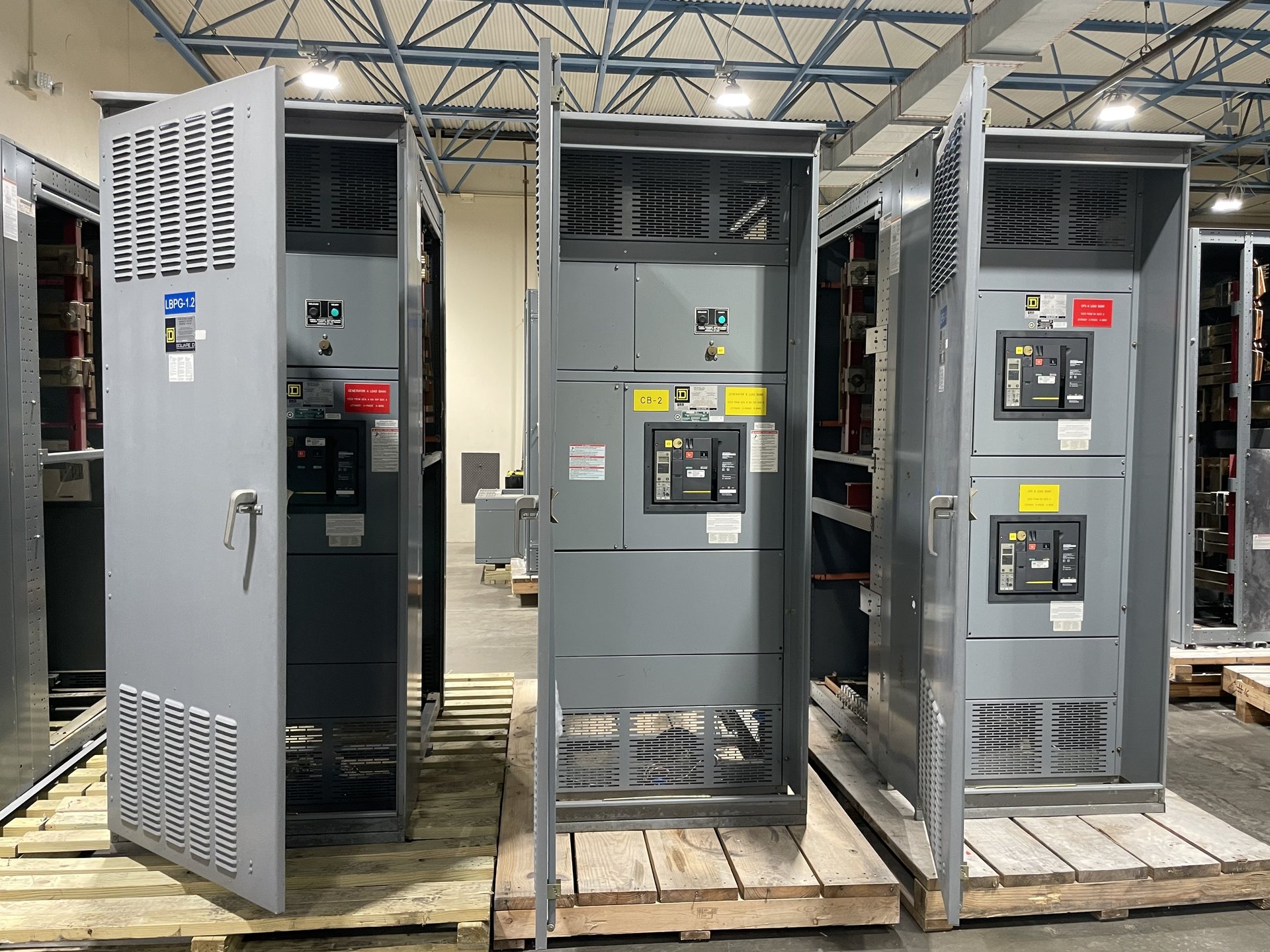
Define What “Future Capacity” Must Mean
Start with a written description of the expected expansion, not a general request to leave room for growth. Identify anticipated loads, likely connection points, operating schedules, and whether additions may occur in stages. Ask the engineer to distinguish forecast demand from connected load and to state which assumptions govern the initial design. That information helps us evaluate equipment requirements without treating an unspecified reserve as usable capacity.
For a Texas project, share the current one-line diagram, load information, site conditions, and the planned development phases with the quotation request. If the future load, source, or installation layout is uncertain, identify that uncertainty explicitly. A project review can clarify which design choices can be established now and which require later confirmation. Equipment availability, engineering, lead time, component origin, and test documentation must be confirmed for each quotation.
Separate Reserved Ways From Usable Electrical Capacity
A reserved way or breaker space addresses a possible connection point; it does not by itself prove that the bus, upstream protective device, transformer, or source can carry another load. Specify whether each future way must be fully equipped, provisioned for a defined breaker, or simply accommodated physically. Include the intended device type and rating as design inputs for review, rather than assuming that a blank space can accept any later component.
Ask the design team to show reserved positions and future connections on the one-line and equipment layout, with clear identification of what is included at initial delivery. Confirm whether the proposed arrangement allows the anticipated device to be installed without changing adjacent sections or interrupting existing operations. We supply new equipment and new retrofit components only; compatibility and suitability of a later addition require review against the actual assembly and current project documentation.
Check Bus Capacity Against the Expansion Plan
Bus capacity must be evaluated for the intended operating conditions, not inferred from the number of empty positions. Provide present and projected load data, relevant demand assumptions, source configuration, and any expected operating modes. The engineer should determine whether the bus and associated connections are suitable for the planned load under the applicable design conditions. A nominal equipment size or a physical opening is not a substitute for that assessment.
For staged expansion, ask how the design treats loads that may operate simultaneously and whether future additions change the loading of shared sections or feeders. Document the basis for any planned reserve and identify who will reassess it when actual load information becomes available. We can build to the specified design, subject to project review; the quotation should make the proposed configuration clear rather than imply that future bus loading is automatically approved.
Verify Source Capacity and Fault Ratings
Future load depends on the source as well as the switchgear. Have the responsible engineer evaluate the upstream supply, transformer or generator capability, protective devices, and any planned source changes. A switchgear assembly with unused ways cannot compensate for a source that lacks capacity. Changes in source configuration can also affect available fault current, so the expansion plan should identify possible changes and require renewed engineering review before new equipment is connected.
Confirm that the specified short-circuit or withstand ratings are appropriate to the calculated available fault current and the protective-device arrangement. Do not assume a rating from a prior installation, another lineup, or a product family applies to the proposed configuration. Provide available fault-current information and protection details with the project documents. Applicable ratings, standards, listing status, and supporting documentation must be verified for the specific assembly and quotation.
Reserve Enclosure Space and Plan Physical Extensions
Physical room is useful only if a future section can be installed in the actual electrical room and connected as intended. Provide overall room dimensions, access routes, working-space constraints, cable entry requirements, and known obstructions. Ask whether the expansion concept depends on an adjacent section, a future lineup extension, or a separate enclosure. Those choices affect arrangement and should be considered before the initial equipment layout is finalized.
If an extension is contemplated, document the intended lineup direction, connection interfaces, future section functions, and any limits on installation access. Confirm how the initial assembly will be arranged to support that concept and what changes would require a new design review. A physical extension is not automatically compatible merely because space appears available. Any later work must use new, suitable components and be reviewed for mechanical and electrical compatibility; installation requires qualified personnel under approved procedures.
Make the Purchase Scope and Records Explicit
For comparable proposals, state which future provisions are included in the purchase: reserved spaces, installed devices, bus provisions, enclosure features, and identified extension interfaces. Request drawings and schedules that distinguish installed equipment from items shown for future planning. Confirm the specified component origin and any documentation requirements in writing. Customer requirements for American components should be stated directly; origin and documentation are subject to confirmation, and no independent verification or domestic-content certification is implied.
Before release, reconcile the quotation with the approved one-line, equipment schedule, layout, and design assumptions for future loads. Identify the responsible party for confirming source capacity, load calculations, fault duty, and site fit, and define what information must be resubmitted if the plan changes. We manufacture new equipment to specification and can quote new retrofit components following review. Lead time, engineering scope, ratings, standards, listing, and test documentation are confirmed for the quoted configuration.