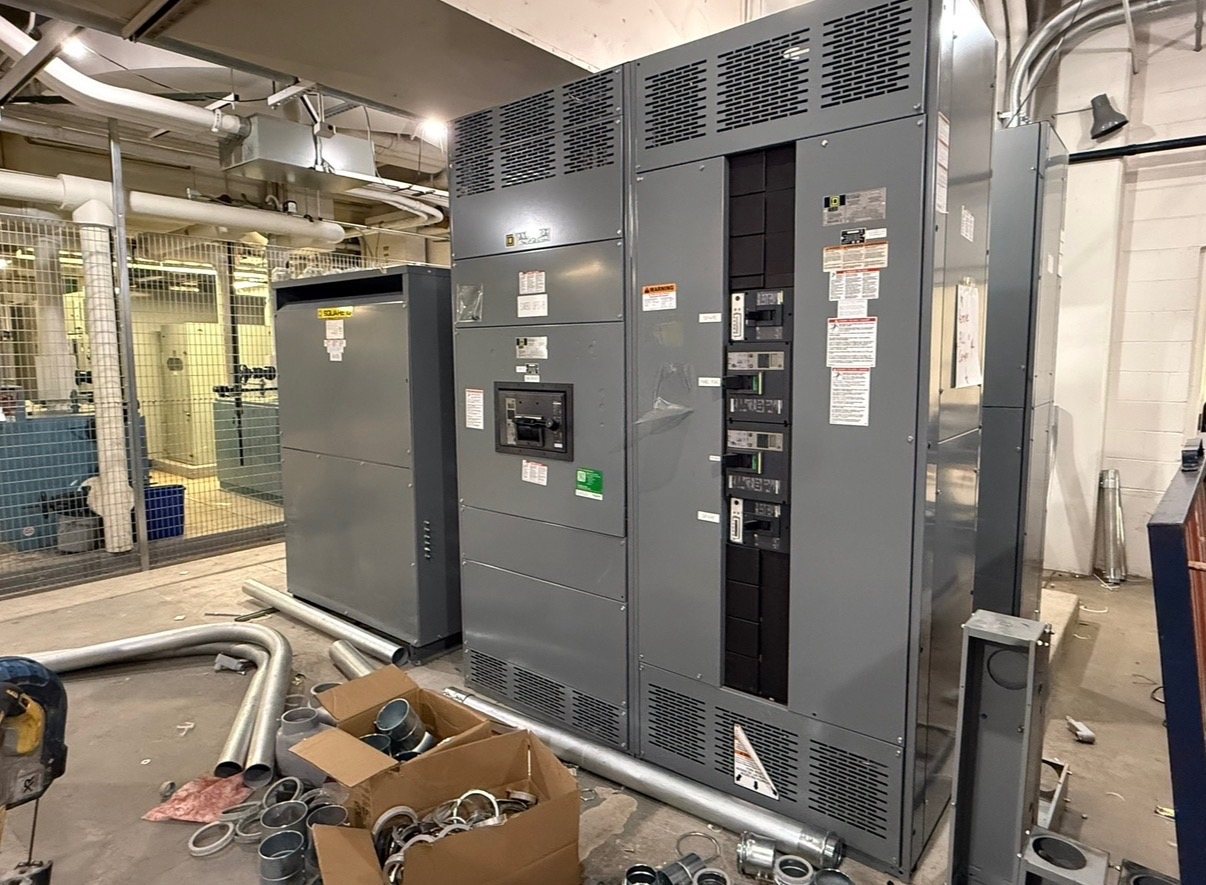
Plan New Switchgear Around a Credible Expansion Scenario
Start with what the facility may add, not simply with a request for “room to grow.” Identify likely future loads, their expected operating schedules, and whether they will be continuous, intermittent, or served by separate distribution equipment. A planned production line, tenant area, or building addition can inform the lineup arrangement, whereas an undefined future demand cannot establish a reliable ampacity, feeder count, or protection scheme.
For a new equipment quotation, provide the current one-line diagram, load schedule, system voltage, available fault-current information, and a description of the anticipated expansion. Note which future loads are committed and which are possibilities. We serve Texas from the United States and build to specification; engineering scope, component origin, documentation, and lead time are confirmed during project review.
Choose Spare Ways and Sections for the Likely Circuit Mix
A spare way is useful only if its intended function can be accommodated by the selected section and configuration. Consider whether future circuits are likely to require breakers, fusible switches, or other specified devices, and record expected feeder sizes and protective-device requirements when known. A lineup with open positions is not automatically suitable for every future circuit or compatible with every later equipment choice.
Decide whether expansion should occur within the original lineup or through a future adjacent section. An initially supplied spare section may provide a clearer physical and electrical path, but it adds present equipment scope and must be coordinated with the room layout and bus design. Ask the design team to identify reserved positions, intended uses, and any boundaries on later additions in the equipment documents.
Coordinate Bus Capacity and Fault-Rating Requirements
Future feeders affect more than the number of available ways. The anticipated demand and operating arrangement may influence the required bus rating, while the prospective fault current and upstream protection inform the short-circuit rating and equipment coordination. Share the source configuration, transformer or utility data when available, and planned sources such as generators or other distributed generation. Changes in sources can alter the fault-current basis used for design.
Do not treat an unused breaker position as evidence that the bus or assembly can serve an added load. Ask the engineer of record to define the present design basis and the assumptions used for foreseeable growth. Any later addition must be checked against the actual system conditions and the equipment’s documented ratings. Ratings, configuration, applicable standards, and listing status must be reviewed for the specific assembly.
Reserve Physical Space and Installation Clearances
A future section needs a feasible place to go. Provide room dimensions, access routes, door and column locations, floor conditions, and any relevant constraints around the lineup. Confirm whether the planned arrangement leaves the clearances and working space required by the project design and applicable codes. Also account for cable entry, conduit paths, pull space, and the location of adjacent equipment rather than reserving only a nominal footprint.
If a later addition is expected, document the intended direction of lineup growth and the site conditions that must remain available. Confirm how access and interconnection would be addressed under an approved future design; do not assume an adjacent section can be added without disruption or engineering review. Installation, modification, and energization require qualified personnel using approved procedures. Physical allowances in the initial design are not a substitute for that review.
Provide Metering That Can Support Future Decisions
Metering provisions can help a facility understand how existing capacity is being used before committing to expansion. Consider which sources, main buses, or significant feeders need measurement, what values the owner needs to monitor, and whether the project calls for local indication, communications, or both. Identify required metering functions and interfaces early so the specified equipment and project documentation can address them.
Where future monitoring needs are uncertain, distinguish between metering included in the initial scope and space, wiring provisions, or interfaces that may be considered for a later design. Do not assume a reserved meter position alone provides a complete measurement solution. Specify the information needed by operators and controls designers, and confirm instrument, communications, and integration requirements during quotation review.
Set Clear Limits When Future Load Is Undefined
No manufacturer can size a system responsibly for an unspecified future load without assumptions. A percentage allowance may be useful only when the engineer establishes its basis and checks it against demand, diversity, protection, and operating conditions. Record the assumptions, the loads excluded from the estimate, and the conditions that would trigger a new engineering review. This makes the intended flexibility clearer to owners, designers, and future contractors.
When the expansion plan is still uncertain, prioritize documented provisions over an unsupported promise of spare capacity. For pricing, identify the present equipment scope separately from optional sections, ways, metering, and other defined allowances. We supply new equipment and new retrofit components only. Retrofit components require a defined application and compatibility review; they do not establish that an existing assembly can accept an addition without further evaluation.