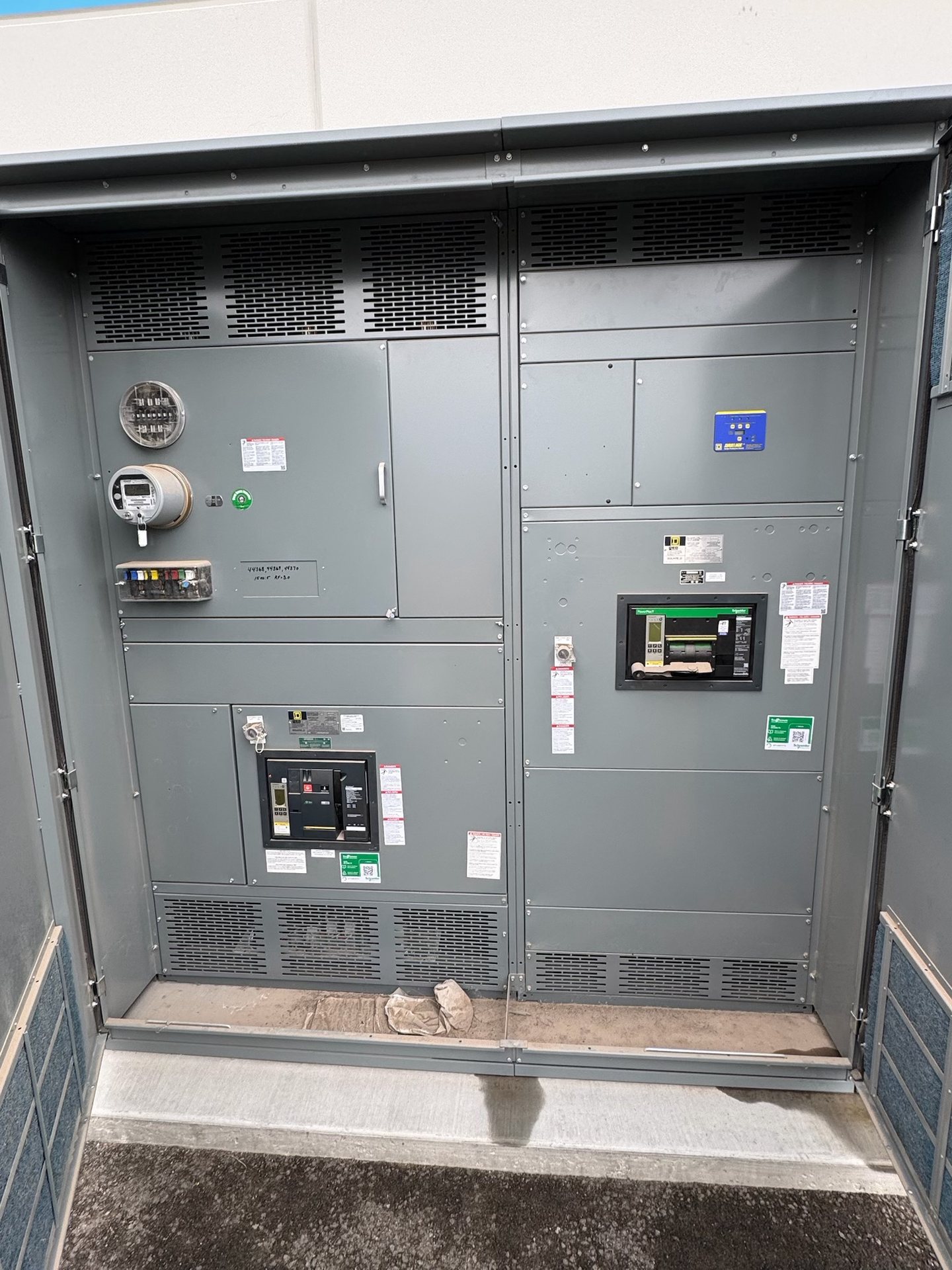
Define the temperature-rise basis before selecting equipment
A temperature-rise value is meaningful only alongside its reference conditions and measurement points. Establish where the switchgear will operate, whether it is indoors or outdoors, and how ambient air around the enclosure may differ from general room or outdoor conditions. Identify the expected loading pattern, including continuous loading, demand variation, and any periods when several sources or sections may carry load together.
The specification should state the applicable standards, the intended operating environment, and the temperature limits that govern the equipment and connected devices. Ask whether the stated ambient assumption applies to the equipment interior, its surroundings, or a defined test condition, and which components are covered. We review these details during project scoping rather than treating a generic rise value as a universal operating allowance.
Evaluate the real ambient around the enclosure
Room temperature alone may not describe the air entering a switchgear enclosure. Nearby transformers, drives, process equipment, sun-exposed walls, roof spaces, or exhaust outlets can create local hot spots. For an outdoor installation, enclosure exposure, solar gain, shading, and the air path around the equipment may affect the thermal environment. Document these influences and expected seasonal conditions for the actual installation site.
For a Texas project, consider the site’s operating conditions and the building or enclosure design rather than assuming one statewide ambient. Ask the facility team for available environmental data, ventilation plans, and information about future equipment additions that could increase room heat. If conditions are uncertain, flag the uncertainty in the inquiry so the design and quotation can identify assumptions requiring confirmation.
Trace heat through the complete assembly
Heat is generated by current-carrying paths and electrical devices, then moves through conductors, joints, bus structures, insulating supports, enclosure surfaces, and the surrounding air. Connection resistance, conductor arrangement, device selection, and the physical layout can influence where heat accumulates. A thermal review should therefore consider the assembled configuration and its intended loading, not just the nominal current of an individual component.
Ask which parts of the assembly are expected to be thermally significant and whether adjacent sections, cable compartments, or closely grouped devices affect heat transfer. Specify relevant conductor and device arrangements, section interfaces, and planned field connections as accurately as possible. Changes made after design review can alter the heat path; substitutions or layout changes should be reviewed by the manufacturer before acceptance.
Treat ventilation as part of the equipment design
Ventilation depends on both the enclosure and the space around it. Intake and exhaust openings, filter condition, fan operation where applicable, clearances, and obstructions all affect air movement. An enclosure installed against a wall or inside a tight room may not receive the airflow assumed during design. Conversely, opening or modifying an enclosure to increase airflow can affect protection, safety, and the evaluated configuration.
Provide drawings or site details showing enclosure placement, nearby barriers, room ventilation, and any planned cooling or filtration. Confirm who is responsible for maintaining fans, filters, and environmental controls, and how access for that maintenance will be preserved. Do not treat field-cut openings, added fans, or altered louvers as an approved thermal remedy unless the manufacturer has reviewed the proposed change and its effect on the specified assembly.
Use only manufacturer-approved derating
Derating is not a universal percentage to apply whenever conditions seem warm. Its basis can depend on the specific equipment, component, ambient conditions, enclosure, loading, and applicable evaluation requirements. A lower operating limit should be documented for the exact configuration and operating assumptions. If the project requires a particular load at elevated ambient, state that requirement at inquiry so it can be reviewed before equipment selection is finalized.
Request written confirmation of the assumptions and any manufacturer-approved operating limitations included with the quoted configuration. Do not infer an allowable load from a nameplate value, a separate component document, or a rule of thumb without confirming its applicability to the complete assembly. Availability, engineering, lead time, component origin, and supporting test documentation are confirmed for each quotation; applicable standards and listing should also be verified for the configuration.
Specify thermal requirements for new equipment and retrofits
For new switchgear, include the one-line diagram, load schedule, expected loading profile, site ambient information, enclosure location, ventilation details, and applicable standards in the request for pricing. Identify required documentation and any project-specific temperature-rise or operating-temperature criteria. These inputs help us assess whether the proposed arrangement matches the intended service and identify unanswered design assumptions before procurement decisions are made.
For retrofit work, we supply new retrofit components only. Provide the existing equipment identification, compartment and connection details, drawings, and the proposed replacement scope so compatibility and thermal implications can be reviewed. Do not assume a new component retains the original assembly’s evaluated characteristics when installed in a different configuration. Installation, inspection, testing, and energization require qualified personnel following approved procedures.