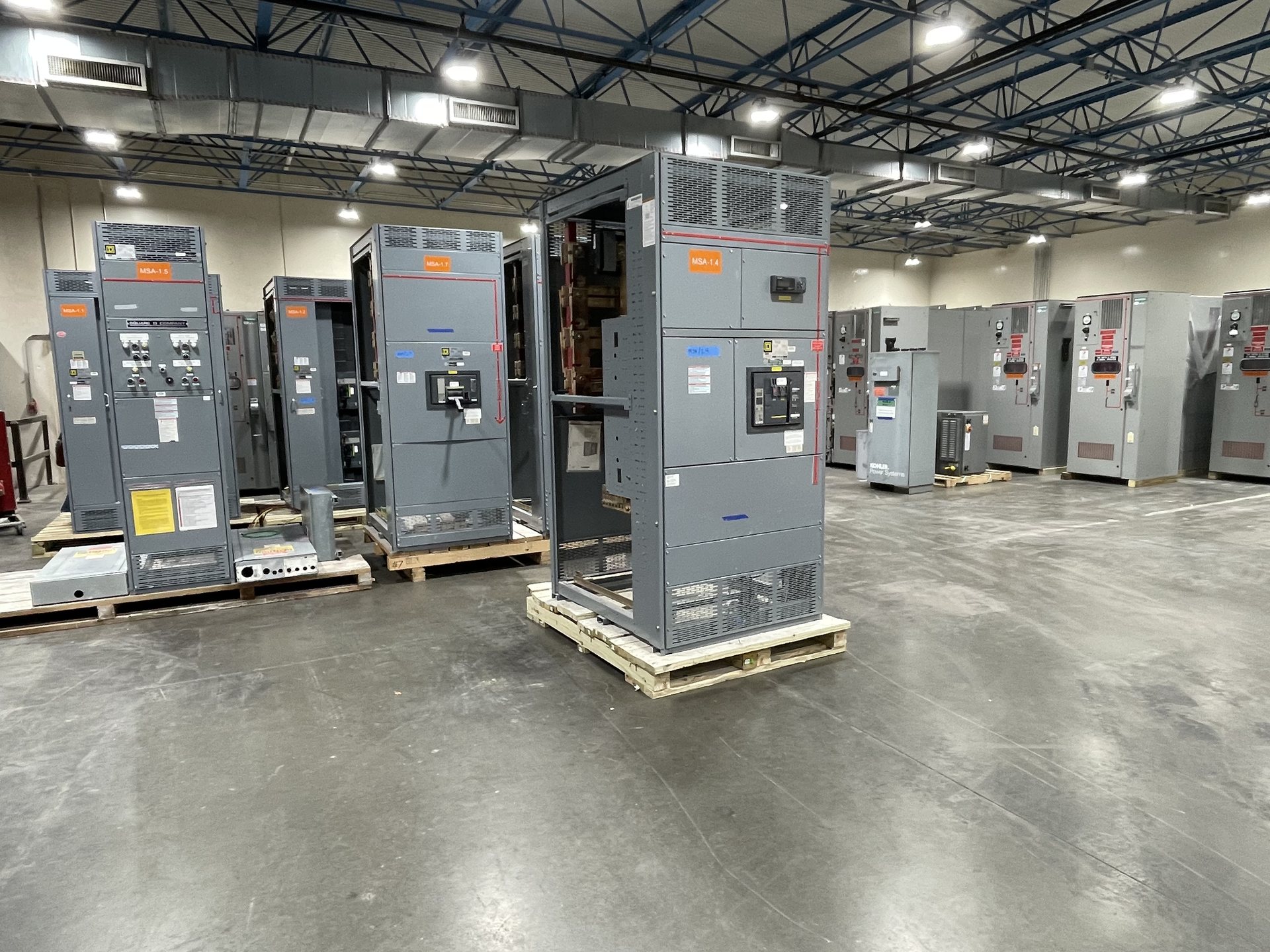
Define the Airport Transfer Arrangement
Start by documenting the normal source and every alternate source under consideration, such as an emergency generator or another project-defined supply. Identify source voltage, phase, frequency, grounding arrangement, available fault-current information, and connection points. Clarify whether the transfer equipment serves one distribution section or coordinates with upstream and downstream assemblies. These details determine which equipment arrangement can be evaluated; a source label alone is not enough to establish compatibility.
Describe the intended operating modes before selecting a transfer arrangement. Explain whether transfer is automatic, supervised, or initiated by an operator, and whether the design permits open-transition operation or requires another engineered sequence. State how the system should behave when the alternate source is unavailable, when normal power returns, and during maintenance. Final switching and interlocking provisions must follow the approved one-line diagram, control narrative, and project requirements.
Identify Essential Loads by Function
An airport project should distinguish loads by operational function rather than treating the entire facility as one backup-power group. Provide a load schedule identifying the equipment intended to remain supplied, its connected and demand loads, starting characteristics, duty cycle, and any permissible interruption. Include the distribution panel or downstream equipment served by each branch, and note loads that must not transfer automatically. This information supports evaluation of feeder capacity, source loading, and the intended division of essential circuits.
Ask the facilities engineer and electrical designer to identify priority tiers and any load-shedding rules in the sequence documentation. Confirm whether loads start together or in a defined order, whether motor acceleration or other transient demand affects source selection, and how future expansion is represented. Airport operations and safety requirements belong in the project’s own design criteria; equipment selection should not substitute for the authority having jurisdiction’s review or create an assumed sector-specific certification.
Specify Transfer Timing and Restoration
A useful transfer narrative describes each condition that initiates action and the response expected from the equipment. Define how normal-source failure is detected, what permissives or time delays apply, how alternate-source readiness is established, and when essential loads are connected. Address failed-start or unavailable-source conditions, alarms and status indications, and any required operator decision. The engineer should make these choices based on the system design rather than relying on an assumed standard sequence.
Restoration deserves the same attention as transfer. State whether loads return to normal power together or in stages, how retransfer is authorized, and what happens if normal power becomes unstable during restoration. Identify any required cooldown or load-disconnection behavior for the alternate source and the control interfaces that communicate these states. A written sequence lets the project team evaluate control compatibility and helps prevent conflicting assumptions among the switchgear, generator, building controls, and commissioning documents.
Resolve Distribution and Protection Compatibility
To assess a compatible assembly, provide the latest one-line diagram, source and feeder ratings, system voltage and frequency, phase and wire configuration, grounding method, and available fault-current data at the connection point. Include protective-device types and settings where established, coordination requirements, enclosure and environmental conditions, and space or cable-entry constraints. Identify the existing equipment manufacturer and catalog or nameplate information when the work interfaces with an installed lineup. Engineering review is needed before confirming a configuration.
For a retrofit, clarify whether the project calls for replacement distribution equipment, new retrofit components, or a combination, and identify exactly what remains in service. Provide photographs and dimensional records only as supporting references; they do not replace drawings and verified interface information. We supply new equipment and new retrofit components. Any requested UL 891 switchboard assembly must be evaluated as a switchboard configuration, with listing and applicable standards verified for that specific design.
Plan Testing and Acceptance Evidence
Define acceptance needs early, including the documents required for review, inspection, and commissioning. Depending on the approved project scope, useful records may include equipment drawings, wiring diagrams, component schedules, operating descriptions, and applicable test documentation. State who reviews each submittal and what acceptance criteria govern the transfer sequence. Availability of particular documentation or testing is confirmed for the quoted configuration; do not assume that a general product description establishes a project-specific test result or listing.
Testing plans should cover source-failure response, alternate-source availability, transfer and retransfer behavior, interlocks, indications, and the documented response to abnormal conditions, as applicable to the approved design. Coordinate the plan with the generator and control-system teams so test conditions reflect the actual interfaces and load priorities. Installation, servicing, testing, and energization must be performed by qualified personnel under approved procedures. The manufacturer’s equipment scope should align with, but does not replace, the project commissioning plan.
Prepare a Complete Equipment Request
A clear request for pricing should include the project location, required delivery destination, procurement schedule, one-line diagram, load schedule, transfer narrative, and equipment scope. Attach applicable specifications and identify requested submittals, control interfaces, enclosure requirements, and any new retrofit components. List open design decisions rather than silently assuming them. This gives the manufacturer a basis to identify missing information, review feasible arrangements, and distinguish confirmed requirements from items that still need engineering coordination.
Specify any American-component requirement directly and identify the components or documentation relevant to the project. Component origin and availability must be confirmed for each quotation; requesting American components does not itself establish independent verification or Buy American Act compliance. Lead time and delivery are likewise subject to project review and confirmation. Switchgear Builders Texas manufactures to specification, serves Texas from the United States, and can quote new airport backup-power transfer equipment for projects across the country.