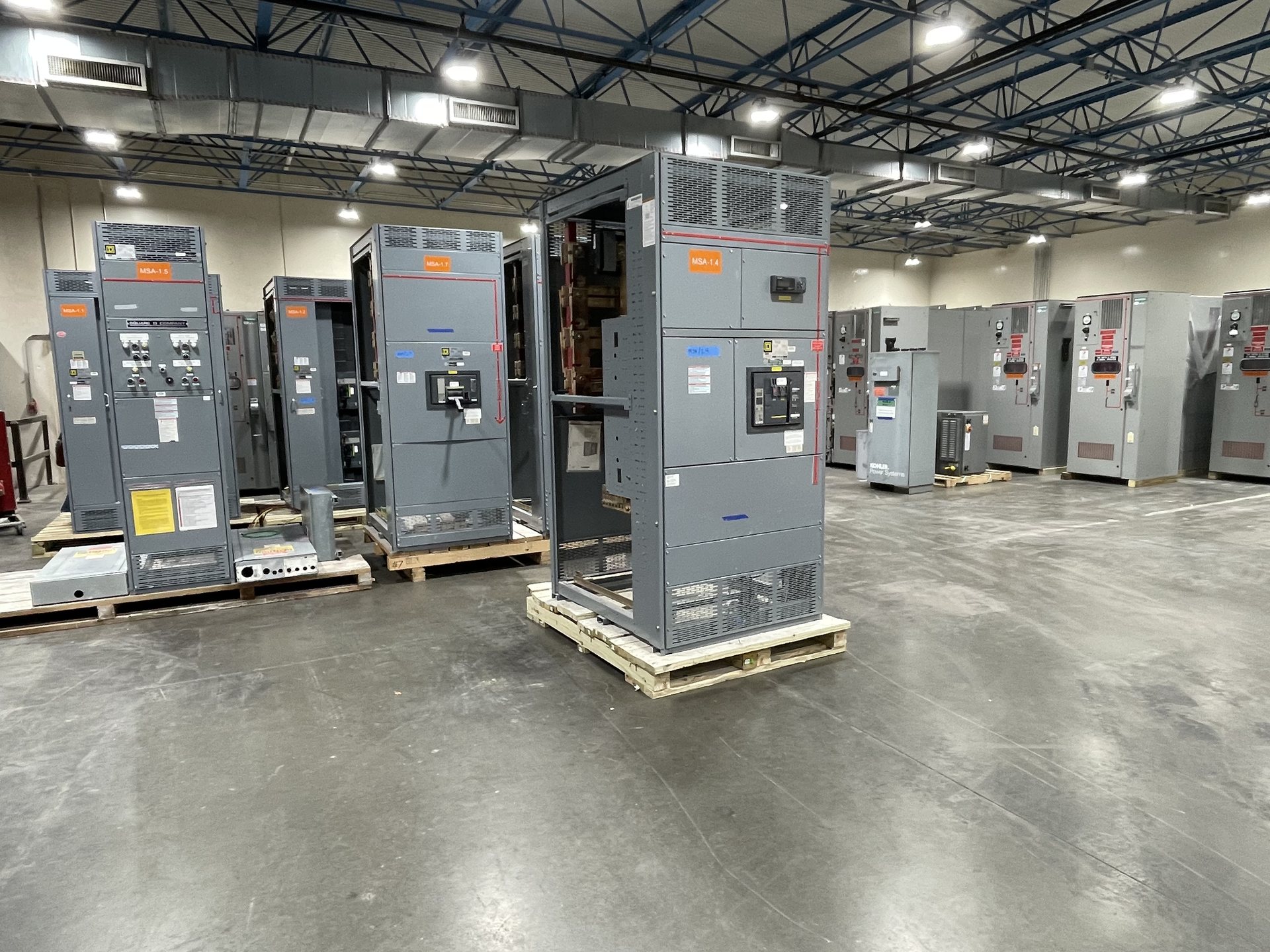
Plan Terminal Distribution Around Feeder Requirements
Terminal distribution begins with the relationship between the incoming service and the downstream systems it must supply. Identify the utility service arrangement, transformer or other source interfaces, distribution voltage, available fault-current information, and the destination and design load of each feeder. The one-line diagram should show how terminal sections, feeder breakers, tie points, and downstream distribution fit together; a project-specific review can then address compatible equipment construction and ratings.
Airport terminals often combine passenger-facing areas with mechanical, baggage, lighting, security, concessions, and tenant loads. Provide a feeder schedule that distinguishes existing circuits from new work, notes expected load and conductor information where available, and identifies any spare or future feeder provisions. Also clarify whether the equipment is intended for a new distribution lineup or a defined replacement scope. These details help avoid selecting an arrangement that cannot accommodate the actual cable routes or connections.
Coordinate Utility Interfaces and Service Changes
Utility coordination affects equipment selection before a purchase order is placed. Confirm the service source, ownership boundary, metering arrangement, required isolation or switching interfaces, and any utility-issued electrical criteria that apply to the project. Share available source data, including fault-current values and protective-device information, and identify whether the utility expects a particular termination space or access arrangement. These are project inputs for engineering review, not assumptions that can be safely inferred from an airport’s location.
Document how the proposed distribution equipment relates to existing service gear, transformers, generators, and other sources. Where service modifications are planned, clarify what remains in place, what is being replaced, and which interfaces are in the contractor’s scope. Utility requirements and approved drawings may change during design, so identify the document revision used for pricing and the process for communicating updates. Final compatibility and applicable standards must be verified for the quoted configuration.
Separate Essential Loads and Source Arrangements
Terminal projects should identify essential loads by function and operating priority rather than grouping every critical-sounding circuit together. Specify which loads are expected to remain available during a utility interruption, which are supplied by standby sources, and whether the project documents call for transfer equipment or other source-selection provisions. Clarify the intended connection points and the coordination responsibilities for equipment outside the switchboard scope. The manufacturer can review the requested arrangement against the drawings and stated electrical requirements.
Provide the project’s source and operating diagrams, including any generator, alternate utility, or other supply interfaces shown in the design. Explain whether ties are normally open or normally closed where that is established by the design, and identify any operating restrictions or interlocking requirements. Do not rely on a general label such as “emergency” to define the equipment. The design team must establish the required sequence and protection; qualified personnel handle installation, testing, and energization under approved procedures.
Make Room for Terminal Growth and Phased Work
Passenger terminals change as gates, tenant spaces, baggage systems, and building services are modified. For a new lineup, provide the current one-line diagram and identify anticipated future feeders, reserved spaces, growth assumptions, and any physical limits on the equipment footprint. Distinguish between a provision that is required at initial delivery and a future option that is only being evaluated. This helps the project team consider present needs without treating unconfirmed future capacity as part of the equipment rating.
Phased construction can also constrain access and sequence. Share the available room dimensions, equipment location, cable entry direction, wall or overhead obstructions, and any limitations affecting delivery or placement. Identify whether the distribution gear must connect to existing equipment and supply drawings, photographs, or field-verified dimensions for that interface. For planned expansion, confirm how future work will be documented and engineered; do not assume a lineup can be extended without reviewing its original design and the proposed changes.
Define New Equipment and Retrofit Boundaries
For airport-terminal projects, Switchgear Builders Texas supplies new equipment and new retrofit components only. For a retrofit scope, identify the equipment manufacturer and model if known, enclosure and section details, bus and connection information, protective-device requirements, and the specific component being replaced. Include clear nameplate and interior photographs where available, along with existing drawings and dimensions. A compatibility review depends on these project records; visual similarity alone does not establish that a new component will fit or operate correctly.
Explain whether the work affects one section, a feeder position, an incoming service, or a larger distribution assembly. Include the existing equipment’s condition and any known modifications, but have qualified personnel gather information using approved safety procedures. Replacement boundaries matter for drawings, connections, protective coordination, and construction planning. No retrofit component should be treated as compatible until the configuration and relevant interfaces have been reviewed for the quotation.
Assemble a Complete Package for Quotation
A useful quotation package includes the current one-line diagram, feeder schedule, equipment schedule, applicable specifications, available fault-current and protection data, utility criteria, and the required delivery location. Add section elevations or room layouts, cable entry and termination requirements, and a list of interfaces with transformers, generators, or existing gear. State which documents govern if drawings and specifications differ. Clear revisions and scope boundaries allow the manufacturer to identify open engineering questions before pricing is finalized.
Also specify requested component origin and the documentation expected with the equipment. American components can be specified for review, but component origin and any required supporting documents must be confirmed for each quotation; no independent verification or Buy American or BAA compliance is implied. UL 891 applies to switchboards, not every form of switchgear, so verify applicable standards and listing requirements for the actual configuration. Engineering, availability, lead time, and test documentation are project-specific and must be confirmed.