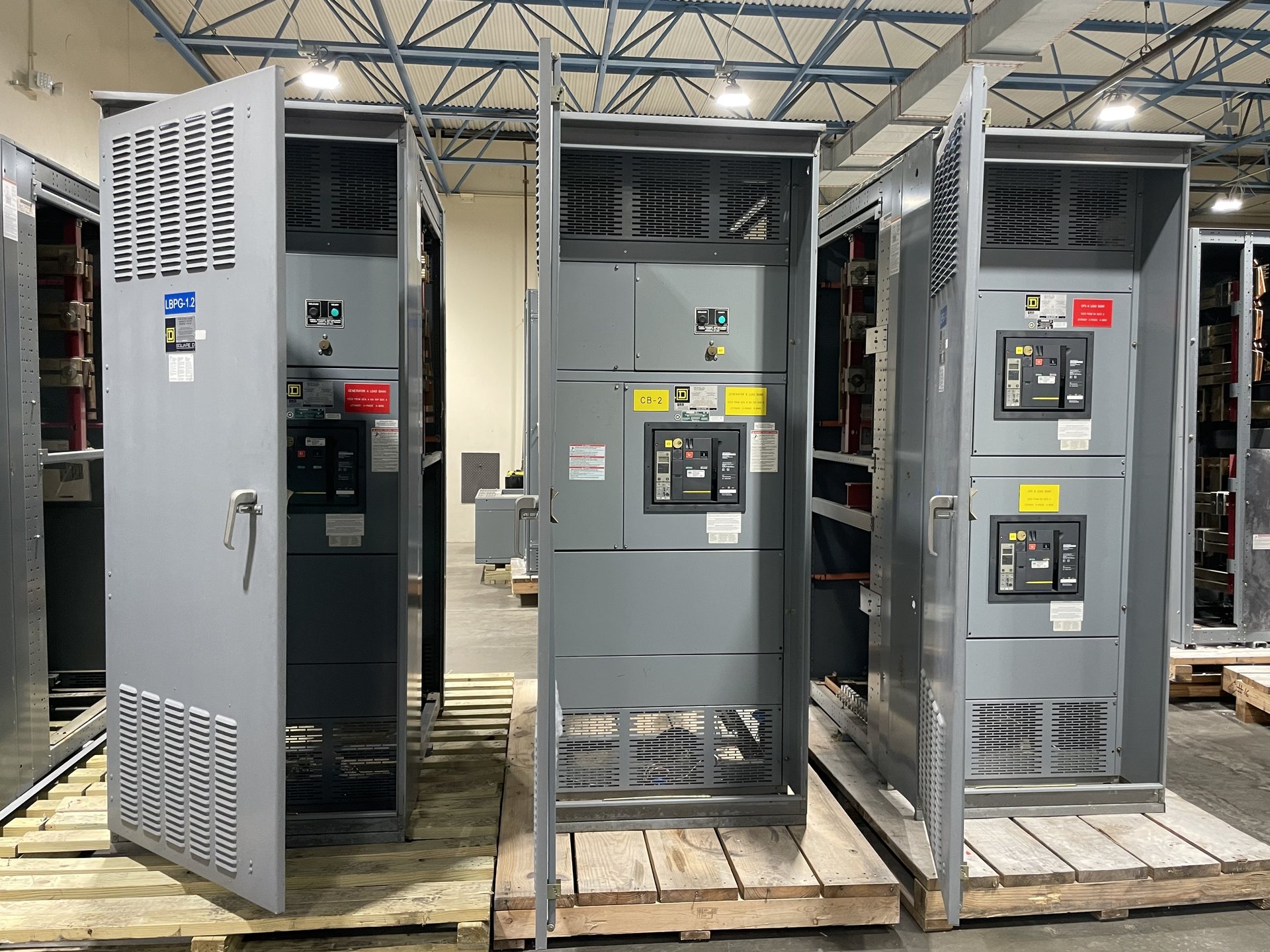
Define what the 1600-amp rating covers
Start by identifying whether 1600 amps is the required continuous rating of the main bus, the main protective device, a feeder, or another part of the assembly. These ratings describe different equipment functions and must be coordinated rather than treated as interchangeable. A 1600-amp main bus does not, on its own, establish that the main breaker or every connected feeder is rated for 1600 amps.
For a new assembly, provide the one-line diagram and state the intended rating at each relevant point. For a retrofit component, identify the existing device, its role, and the equipment it must connect to. Confirm whether the requested value is a design requirement or an existing nameplate value. This distinction helps prevent a quote based on the wrong component or an incomplete interpretation of the system.
Match voltage and phase to the system
Voltage and phase are essential selection inputs alongside current. Specify the system voltage, number of phases, frequency where relevant, and any neutral requirement. Describe the incoming source and the loads served so the proposed configuration can be reviewed against the actual distribution arrangement. A 1600-amp designation alone does not identify voltage, phase, or conductor configuration.
Share the project one-line diagram and any available existing-equipment information, including nameplate details for a replacement or retrofit application. Identify whether the project changes the service arrangement, adds a source, or alters the distribution scheme. These details help determine the required equipment interfaces and clarify which design questions must be resolved before pricing and engineering can be confirmed.
Describe the load profile and growth needs
Explain what the 1600-amp equipment will serve, including the types of loads, expected operating patterns, and any known periods of high demand. Continuous-current selection should reflect the project’s operating requirements, not simply the sum of breaker handle ratings or an assumed future capacity. Provide load schedules and demand information when available, and flag loads with unusual starting, cycling, or operating characteristics for engineering review.
Discuss planned additions and the intended role of spare or future feeder provisions. A design with room for a future device still requires the bus, protective-device arrangement, physical layout, and fault-duty basis to be considered together. If the equipment replaces an existing assembly, indicate whether loads and feeder assignments will remain unchanged. Clear load information supports a more useful scope and helps identify missing project inputs early.
Choose the enclosure for the installation
State where the equipment will be installed and describe the surrounding conditions. Provide the available electrical-room dimensions, access path, mounting arrangement, and any relevant environmental exposure. Enclosure selection affects the physical configuration and should account for the installation environment and project requirements. Do not assume a particular enclosure type, construction, or footprint from the 1600-amp rating alone.
For retrofit work, document the existing lineup’s dimensions, access clearances, bus arrangement, connection details, and equipment identification as completely as possible. Photographs and drawings can support review but do not replace confirmation of critical measurements and interfaces. Identify required cable entry and termination directions, conduit constraints, and any building-access limitations. The enclosure and layout must be reviewed against both the replacement scope and the actual installation conditions.
Establish fault duty and protection requirements
Provide the available fault-current information or the project basis used to determine required withstand and interrupting capabilities. The 1600-amp continuous-current designation does not state the assembly’s fault-duty capability. Source characteristics, protective-device selection, and the system arrangement affect the coordination review, so the fault-current basis must be supplied and verified for the specific configuration.
Include the protective-device requirements, coordination information, and any applicable study documents available for the project. For a replacement, do not infer fault duty from the existing equipment’s current rating; provide its markings and the system information needed to evaluate the proposed scope. Applicable standards and any requested listing must be verified for the configuration. UL 891 applies to switchboards, not as a blanket listing for every form of switchgear.
Scope new equipment, retrofit components, and records
We manufacture and supply new equipment and new retrofit components to specification. For a new 1600-amp assembly, define the requested lineup, main and feeder functions, metering or control provisions, connection points, and project-specific options. For retrofit components, identify the original equipment and component part information where available, then provide interface drawings and dimensional details for review.
Request pricing with the project location, schedule requirements, drawings, rating basis, and requested documentation. Lead time, engineering scope, component origin, and test documentation must be confirmed for each quotation. Customers may specify American components, but component origin and any domestic-content requirements require project-specific confirmation; no independent verification or Buy American/BAA compliance is implied. Installation, servicing, testing, and energization require qualified personnel working under approved procedures.