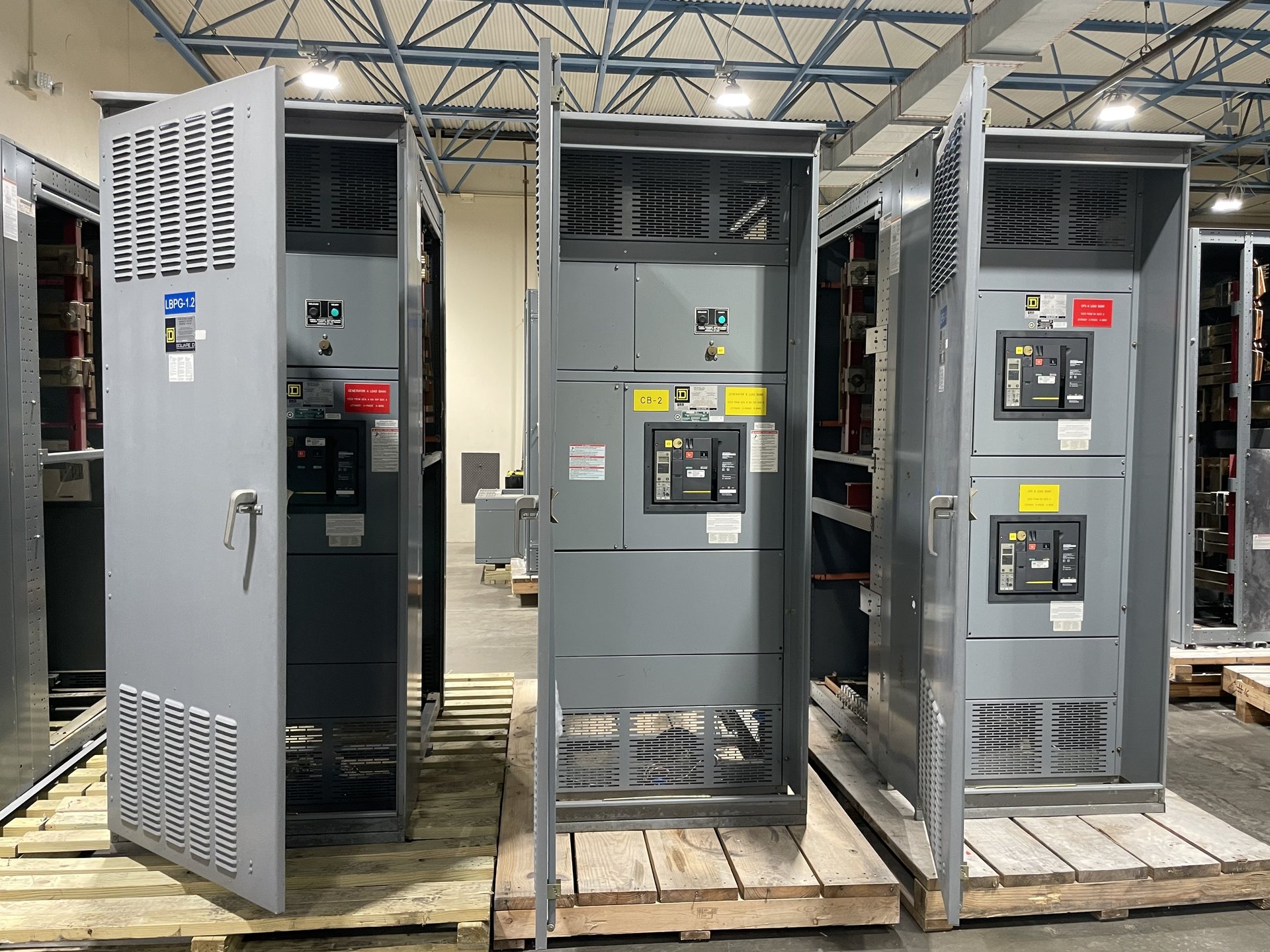
Confirm what 347/600 V means at the service
In the common 347/600 V arrangement, three phase conductors and a neutral form a four-wire wye system. Loads connected phase-to-neutral may use 347 V, while loads connected phase-to-phase use 600 V. Before selecting a switchboard or related distribution equipment, establish which loads are actually present, how they are connected, and whether the project uses the neutral for lighting, controls, or other line-to-neutral circuits.
Do not assume a 347/600 V utility service is available because the project is in Texas or because the drawings use that designation. Ask the serving utility or electrical engineer to confirm the service voltage, phase and wire arrangement, point of connection, and any project-specific supply constraints. Include that confirmation in the equipment inquiry so the proposed configuration can be reviewed against the real source.
Resolve grounding and neutral requirements
The grounding method affects equipment configuration, protective-device selection, neutral treatment, and the way the installation is documented. Confirm the system grounding arrangement with the project engineer, including whether the source is solidly grounded or uses another specified method. Identify the intended neutral and equipment-grounding conductor paths, and clarify where the system bonding connection is made under the project design.
Provide the one-line diagram and grounding notes with the request for pricing. They help distinguish a four-wire wye service from a different system that may be described imprecisely in early project documents. If the service or grounding design is still being coordinated, identify open decisions explicitly; equipment selection should not rely on an assumed neutral, bonding point, or ground-fault protection scheme.
Establish available fault current before specifying equipment
Available fault current at the equipment location is essential to evaluating the required interrupting and withstand capabilities of the selected configuration. Obtain the utility’s or engineer’s calculated value and the assumptions behind it, including the source and relevant transformer information where available. A voltage designation by itself does not establish the fault duty, and the value can differ between service equipment and downstream distribution points.
For a useful engineering review, provide the one-line diagram, equipment location, upstream protective-device information, and the available fault-current documentation. Ask the project engineer to identify the required short-circuit ratings and coordination objectives. We review the specified values as part of the quotation and equipment configuration; the final suitability of the system must be established for the complete installation and its approved design.
Match ratings to every circuit and connected load
Confirm that the equipment voltage ratings match the supply and the intended connections of each load. A 347/600 V designation does not mean every outgoing circuit is 347 V or 600 V, nor does it establish that a particular device is suitable for both. Document phase-to-neutral and phase-to-phase loads, continuous-load considerations, conductor and termination requirements, and the protective functions called for by the design.
The specification should state the required bus arrangement, number and type of outgoing circuits, neutral provisions, protective-device characteristics, enclosure conditions, and any metering or control needs. Identify future capacity as a defined design requirement rather than an informal expectation. We use these project details to develop the proposed new equipment configuration and flag information that needs engineering confirmation before an order is finalized.
Plan new equipment or a new-component retrofit
For replacement work, distinguish a complete new assembly from a retrofit that uses new components in an existing installation. Record the existing equipment manufacturer and identification, dimensions, bus and connection details, available drawings, and the purpose of the modification. Photographs and field measurements can help clarify the scope, but they do not replace approved drawings or verification by qualified personnel.
We supply new equipment and new retrofit components only. Existing gear, the condition of its insulation and connections, and the compatibility of a proposed replacement must be evaluated for the specific project. Provide the existing one-line diagram and equipment documentation, and identify which parts of the installation will remain. Any work involving installation, servicing, testing, or energization must be performed by qualified personnel under approved procedures.
Coordinate submittals, standards, and purchasing details
A complete inquiry should include the service confirmation, one-line diagram, grounding requirements, fault-current data, load and circuit schedule, enclosure conditions, and any retrofit drawings. State the required submittal documents and test records, the project schedule, delivery destination, and any approval milestones. These details allow the quotation to address the actual scope and make lead time subject to project review rather than assumption.
Specify American components when that is a project requirement, and identify any documentation the purchasing team needs for its own review. Component origin and supporting records must be confirmed for the quoted configuration; a component preference alone does not establish compliance with a domestic-content rule. If the assembly is a switchboard, identify the applicable standards and required listing, then verify that the listing and standards apply to the exact configuration.