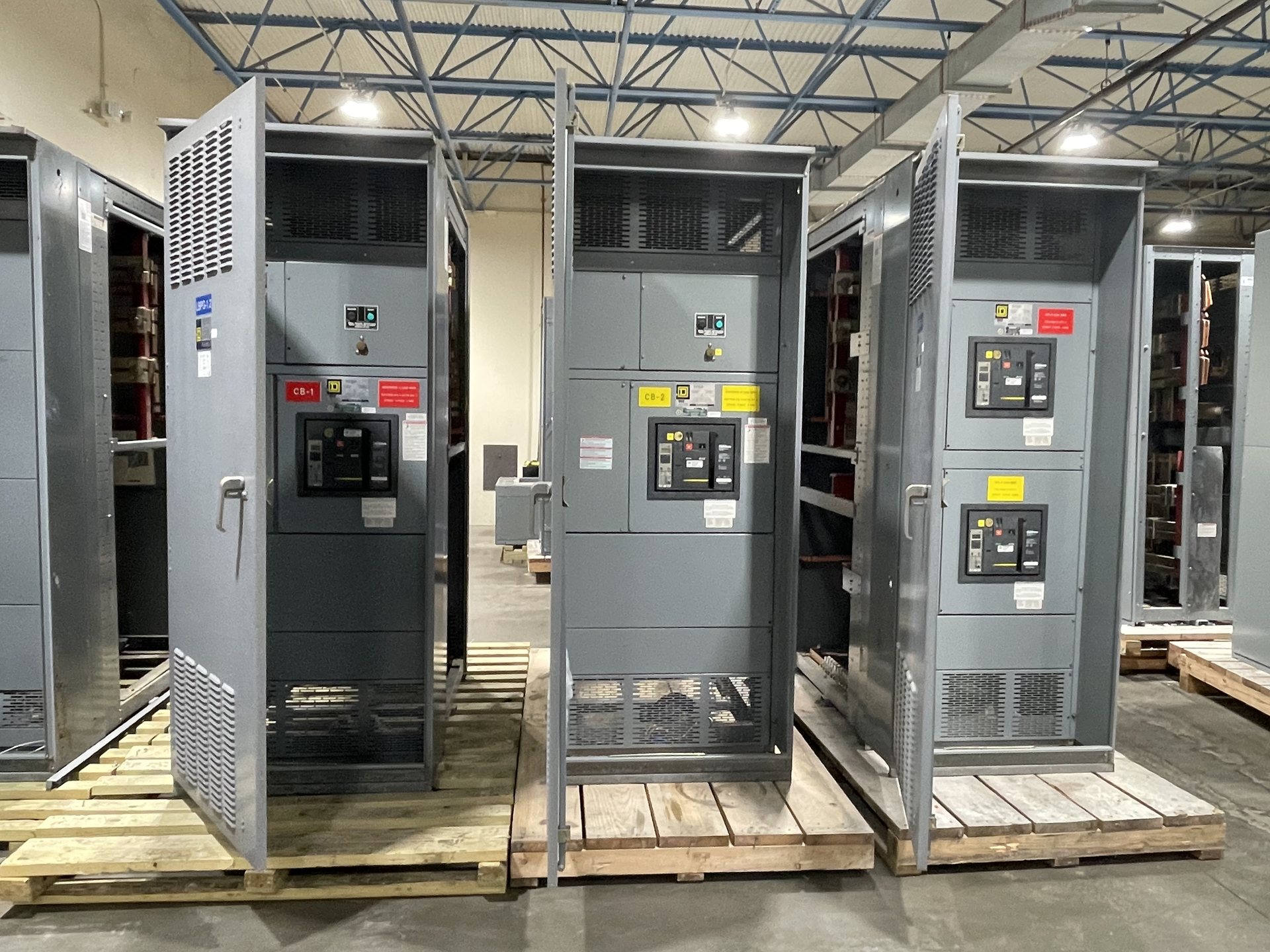
Start with Relevant Assembly Experience
Ask the manufacturer to describe experience with the assembly type and application in your scope. A supplier of a UL 891 switchboard assembly, for example, should be able to discuss the configuration being considered, its intended use, and the design information required to develop it. Experience should relate to the actual equipment—not just broad claims about serving industrial, commercial, or utility customers.
Provide the one-line diagram, project voltage, current requirements, available fault information, service conditions, and interface constraints when requesting a quote. Ask what comparable assembly experience can be shared and what details remain subject to engineering review. References may be available, but customer confidentiality can limit disclosure; treat references as one evidence source, not a substitute for reviewing your own submittal.
Review Ratings and Their Documentation
Request a clear schedule of proposed ratings and identify the document that will substantiate each one. Depending on the design, this may include voltage, continuous current, short-circuit or withstand rating, enclosure details, bus configuration, and protective-device information. Check that ratings apply to the proposed assembly and operating conditions, rather than relying on a general catalog statement or a rating copied from a different configuration.
Confirm which drawings, product data, and other records will be supplied for review and at what project stage. UL 891 applies to switchboards; it is not a blanket listing for every kind of switchgear. Ask the manufacturer to identify the standards and listing status applicable to the quoted configuration, and verify them against project requirements. Do not assume a specific assembly carries a particular listing or label without configuration-specific confirmation.
Test Design Capacity Before Ordering
A manufacturer needs enough design capacity to translate project requirements into a coordinated build. Ask who reviews the one-line, how deviations are identified, and how the team resolves items such as incoming and outgoing arrangements, bus requirements, metering, protective devices, and physical interfaces. Establish how many review cycles are included and how design changes after approval are assessed for cost and schedule impact.
Send the manufacturer a realistic document package and request an initial list of missing or conflicting information. This can reveal whether the supplier asks useful questions about site conditions, cable entry, clearances, control power, and connection points before the design is released. Confirm that engineering, component selection, and lead time are reviewed for your specific scope; availability and schedule must be established in the project quotation.
Examine Quality Records and Component Scope
Ask what quality records are maintained for the manufacturing process and which records can be provided for your order. Useful evidence may include drawing revision control, inspection checkpoints, material or component identification, nonconformance handling, and final documentation requirements. Clarify whether inspection records are included in the delivered package, available on request, or outside the quoted scope, and agree on acceptance criteria before production begins.
If your specification calls for American components, identify the components and documentation expectations in writing. Confirm the proposed component scope and origin for the quotation rather than treating a general statement as proof that every part meets domestic-content rules. We manufacture and supply new equipment and new retrofit components only. Any applicable listing, standards, component availability, and origin details require confirmation for the specific configuration.
Use References and Commercial Review Carefully
When references are available, ask for examples that align with the assembly type, application, or coordination demands in your project. Useful questions concern the accuracy of submittals, handling of technical questions, change communication, and completeness of closeout documents. Do not request confidential customer material, and do not treat a reference from a different equipment category as proof of performance for the design you are buying.
Compare quotations line by line. Check whether the price covers engineering, drawings, specified protective devices and accessories, documentation, packaging, and any requested inspection or testing records. Identify exclusions, assumptions, and customer-furnished items. Ask how revisions, substitutions, and schedule changes are handled, and whether the quoted scope is new equipment or new retrofit components. A low initial price is difficult to evaluate if the technical basis and exclusions are unclear.
Define Support Through Delivery and Installation
Before placing an order, write down what support the manufacturer provides and when it ends. Confirm the process for answering submittal comments, reporting a shipping issue, resolving a documentation discrepancy, and requesting technical assistance. Ask whether field services, startup support, or training are included, optional, or unavailable. Do not assume that delivery, installation, commissioning, or ongoing service is part of an equipment quotation unless it is expressly stated.
For Texas projects, confirm the shipping destination, delivery coordination responsibilities, and required arrival documents. Establish who unloads and stores the equipment, who checks it on receipt, and who is responsible for installation and energization. Installation, servicing, testing, and energization require qualified personnel following approved procedures. As the manufacturer, we serve Texas from the United States and ship nationwide.