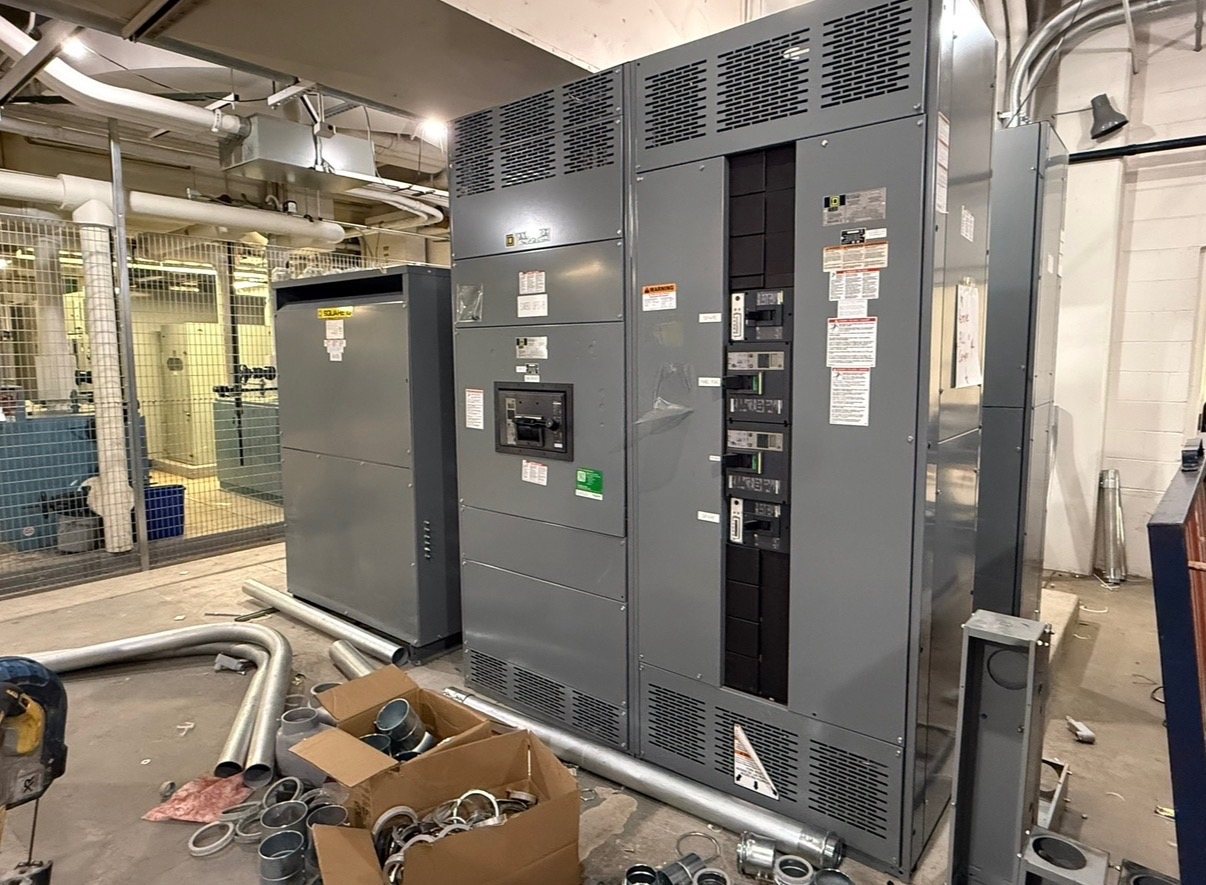
Coordinate the Generator Source Interface
Start by documenting how the generator will connect to the building distribution system. Useful inputs include generator output characteristics, available fault-current information, grounding arrangement, connection location, and the intended transfer-device configuration. Identify whether the design uses one generator or multiple sources and how those sources relate to the normal utility supply. These details help determine compatible distribution equipment and expose interface questions before a quotation is prepared.
Also clarify who is supplying the generator, transfer equipment, protective devices, and interconnection conductors. Provide equipment schedules, one-line diagrams, available fault-current data, and generator documentation when available. Confirm the project’s governing design criteria and applicable standards with the responsible engineer. We review the stated configuration for the proposed equipment; generator compatibility, protective-device coordination, and listing applicability must be confirmed for the specific design.
Define Transfer Sequencing Before Selecting Equipment
Transfer sequencing describes what happens when normal power is lost, when generator power becomes available, and when utility service returns. The project team should specify the intended source-transfer logic, any required time delays, and whether loads return together or in stages. Clarify what conditions permit transfer and retransfer, what happens if the generator does not become available, and how the system responds if a source becomes unacceptable.
These decisions affect the arrangement and control interfaces of the distribution equipment. Provide control schematics or a written sequence of operation, including interfaces with generator controls and any building automation system. Identify who is responsible for programming, interconnection, and final sequence validation. Do not assume a particular delay, transition method, or control feature is standard; the design team must define requirements and confirm them for the quoted configuration.
Select and Prioritize Standby Loads
A backup-power plan should identify which circuits or distribution sections are intended to receive generator power. Building-wide connected load is not a substitute for a selected standby-load schedule. List the equipment that must operate, its electrical characteristics, starting or inrush behavior where relevant, and any loads that may be shed or restored in stages. Include essential life-safety or other regulated loads as defined by the project’s qualified design professionals.
The generator’s usable capacity and the operating plan must be evaluated together. Ask whether loads run simultaneously, which have priority, and how the system should respond if demand exceeds the intended standby capacity. Provide panel schedules, load calculations, and motor or equipment data where available. We use the project requirements to scope new distribution equipment; final load selection, code obligations, and system adequacy remain subject to project engineering and review.
Match Distribution Equipment to the Building
Equipment selection depends on the existing and proposed electrical architecture. Share the service and distribution one-line, system voltage and phase, bus and feeder requirements, enclosure and installation constraints, and any specified interrupting or withstand ratings. For retrofit work, document the existing gear manufacturer and configuration, available space, connection details, and the equipment being retained. Do not assume new components will fit or coordinate with existing assemblies without design review.
For new construction, provide the electrical schedules, drawings, site conditions, and scope boundaries among the switchboard manufacturer, generator supplier, transfer-equipment provider, and installing contractor. For retrofit projects, distinguish clearly between new equipment and new retrofit components to be furnished, and identify existing equipment that is outside the scope. Switchgear Builders Texas supplies new equipment only. UL 891 applies to switchboards; applicable standards and any required listing must be verified for the particular assembly and configuration.
Prepare a Complete Quotation Package
A useful request for pricing includes the project location, project phase, required quantity, equipment schedules, one-line diagrams, sequence of operation, and requested delivery timing. Add the generator submittal, load schedule, protective-device requirements, control interface details, and project specifications when available. State whether the request covers a new switchboard assembly, new retrofit components, or both, and identify equipment or services furnished by others.
Call out documentation expectations rather than assuming they are included in a standard scope. These may include drawings, component information, coordination data, or project-specific test documentation. If American components are required, state that requirement in the inquiry so availability and origin can be reviewed for the proposed configuration. Component origin, engineering scope, applicable documentation, availability, and lead time are confirmed during quotation review; no domestic-content certification is implied.
Plan Operational Testing and Handover
The project should define how the completed system will demonstrate the intended transfer sequence and standby-load operation. Coordinate the test scope with the engineer, generator provider, transfer-equipment provider, contractor, and building operator. Identify the test conditions, expected source indications, load staging, transfer and retransfer behavior, and records required for handover. Whether testing is factory-level, field-level, or both depends on the specified equipment and project responsibilities.
Before testing or energization, qualified personnel must follow approved procedures and applicable site safety requirements. Confirm who will arrange the generator, building loads, test equipment, and any required witness or documentation. For turnover, provide operators with the approved sequence, equipment documents, and defined responsibilities for routine operation. We can review specified documentation needs with the equipment scope, but testing methods and acceptance criteria must be established for the project.