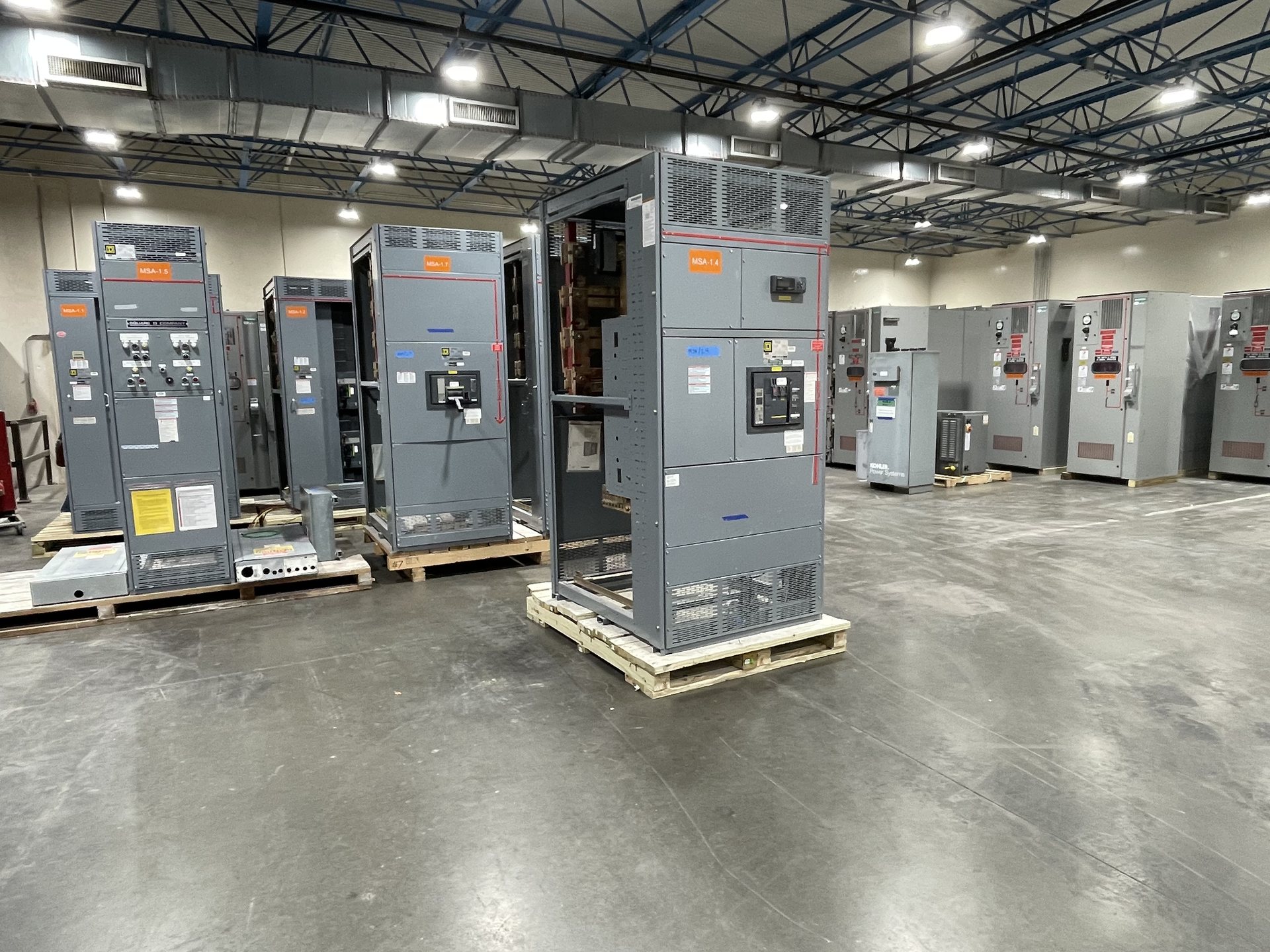
Plan Corpus Christi Distribution Around the Actual Project
A Corpus Christi project may involve a new facility, a building expansion, or replacement of existing distribution equipment. The right arrangement depends on the utility service, connected loads, operating priorities, available electrical room space, and the interfaces with downstream panels and equipment. Begin with the intended scope: identify what the new assembly must feed, which existing systems it must connect to, and whether the work is a complete distribution package or a defined equipment portion.
For an initial review, provide the latest one-line diagram, service and load information, preliminary equipment layout, and project milestone dates. Note whether the design is fixed or still under engineering review, and identify known site constraints such as access, indoor or outdoor placement, environmental exposure, and conduit entry direction. These details help distinguish firm requirements from open design questions before equipment configuration and pricing are developed.
Choose the Product Category That Fits the Distribution Point
Product scope can include low-voltage switchboards, switchgear assemblies, panelboards, and new retrofit components intended for a defined existing-equipment application. UL 891 applies to switchboards, not universally to every type of switchgear. For a switchboard request, identify the required arrangement and applicable standards; for other equipment, state the intended function and governing project requirements. Listing and applicable standards must be checked against the proposed configuration rather than assumed from a product name.
Clarify whether the package needs a main service section, distribution sections, feeder provisions, metering space, or coordination with separately furnished equipment. If the request concerns retrofit components, send the existing manufacturer and model information, nameplate details, dimensions, photographs, and the specific replacement function. We supply new equipment and new retrofit components. Compatibility and fit must be reviewed against the information available for the existing installation.
Turn Drawings and Load Data Into a Reviewable Scope
A useful quote package connects electrical requirements to physical arrangement. Include the one-line diagram and, when available, load schedules, equipment elevations, room plans, and relevant specifications. Identify system voltage, phase and wire arrangement, service or feeder duties, required interrupting or withstand criteria, and any protection, metering, or control provisions shown in the design. These are project parameters for engineering review, not assurances that a particular configuration is available without review.
Flag unresolved items rather than filling gaps with assumptions. For example, state whether fault-current information is preliminary, whether metering requirements are utility-directed, and whether the engineer has specified a particular breaker or bus arrangement. Call out drawing revisions and the documents that govern if schedules conflict. A clear design basis helps our team identify questions early and makes the resulting quotation easier for the owner, engineer, and contractor to evaluate.
Account for Coastal Site and Building Conditions
Corpus Christi-area projects should describe the actual installation environment rather than rely on a city name as a substitute for site data. Tell us whether equipment will be indoors or outdoors, the expected ambient and moisture conditions, exposure to salt-bearing air or other corrosive influences, and any enclosure or finish requirements in the project documents. Include the available footprint, working-space constraints, lifting or access limitations, and the route from delivery point to the electrical room.
These inputs can affect enclosure selection, equipment layout, material choices, access provisions, and coordination with the building. Identify applicable project specifications and any owner or engineer requirements for seismic restraint, environmental protection, labeling, or interfaces with building systems. Do not assume that a general-purpose configuration meets a coastal site’s conditions. The proposed design, component origin, and supporting documentation should be reviewed and confirmed for the specific quotation.
Coordinate New Equipment With Existing Systems
When a Corpus Christi project expands an operating facility, document the equipment that the new assembly will connect to or replace. Provide available nameplate data, enclosure and termination dimensions, bus or cable interface details, breaker information, and photographs that clearly show identification markings and connection areas. Explain what must remain in service and what work is planned by others. This information supports a compatibility review without presuming that an existing assembly can accept a particular component.
For a new retrofit component, define the required function, electrical characteristics, physical limits, and equipment reference. Note whether drawings are original or field-verified, and identify any discrepancies between documents and the installed equipment. Replacement scope should be evaluated as new component supply against the documented application, not treated as a guarantee of interchangeability. Installation, servicing, testing, and energization must be performed by qualified personnel under approved procedures.
Request Pricing With Clear Schedule and Documentation Needs
Owners and contractors can request a quotation by sending the project location, contact and company details, requested equipment scope, design documents, quantity, and target decision or delivery milestones. Include the specification sections that apply, approved manufacturer or component preferences if any, and the person responsible for technical questions. If the design is still developing, identify the current revision and list the decisions that remain open so the quotation can state its basis clearly.
We review project information before confirming configuration, pricing, lead time, component origin, and available test or submittal documentation. No delivery date or standard component package should be assumed until it is addressed in the project quotation. Customers may specify American components, but component origin and any domestic-content requirements must be discussed and confirmed for the quoted scope; this does not itself establish Buy American or other statutory compliance. Submit the request for pricing with the documents available, then resolve project-specific questions during review.