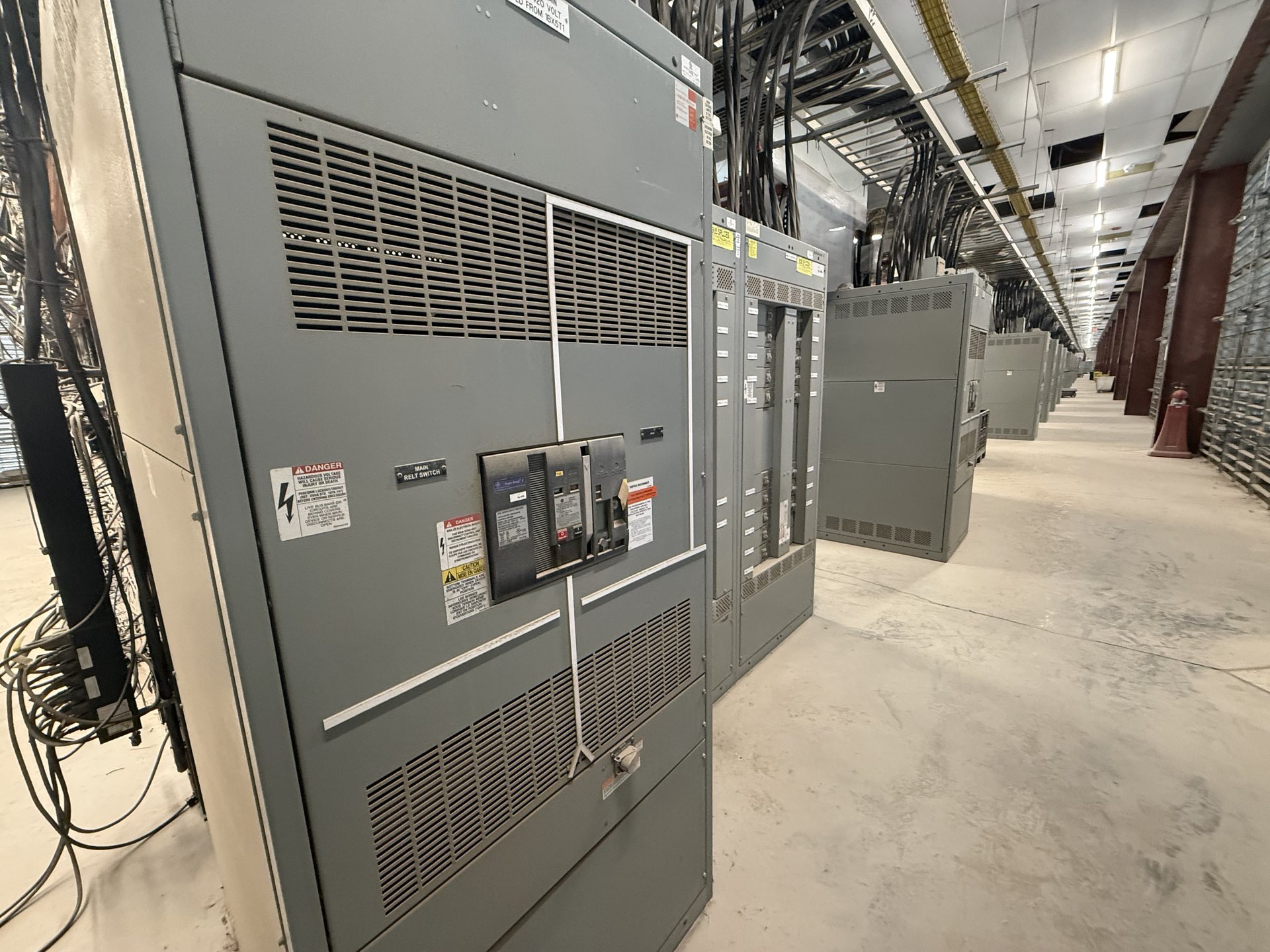
What a drawout breaker is
Unlike a fixed-mounted breaker, a drawout breaker is carried on a mechanism that engages with a purpose-designed cell. The cell provides the supporting structure and the interfaces required for the breaker’s intended arrangement. A breaker’s ability to fit physically is not, by itself, proof that it is electrically or mechanically compatible. The breaker, cell, control circuits, and switchgear design must be considered together.
The term describes a construction and operating arrangement, not one universal breaker format. Frame, ratings, primary disconnects, secondary contacts, operating mechanism, control voltage, and cell geometry vary by design. When requesting a new breaker or retrofit component, identify the existing switchgear manufacturer and model where known, plus the breaker nameplate information and project requirements. If records are incomplete, photographs and available drawings can help establish what needs review.
Operating positions and racking
Racking is the controlled movement of a drawout breaker between its designated positions in the cell, commonly described in terms such as connected, test, and disconnected. In the connected position, the arrangement is intended to engage the primary circuit connections. A test position may permit specified control-circuit checks while the primary circuit remains isolated. The disconnected position withdraws the breaker from its primary connections, but its exact meaning and permitted functions depend on the equipment design.
Position names alone do not establish the state of every circuit or prove that equipment is safe to approach. Buyers and project teams should confirm the manufacturer’s position definitions, indication method, control-circuit behavior, and any required accessories from the applicable drawings and instructions. Racking, inspection, testing, and energization are work for qualified personnel following approved procedures; this glossary is not an operating instruction.
Why interlocks matter
Interlocks are mechanical, electrical, or combined safeguards intended to restrict specified actions unless required conditions are met. Depending on the design, they can govern breaker movement, operation of the breaker mechanism, or access to particular equipment areas. Their purpose is to coordinate equipment states and reduce the possibility of an incompatible sequence. The precise functions are design-specific, so the presence of an interlock should never be assumed from the phrase “drawout breaker” alone.
For replacement or retrofit planning, document which interlock functions the existing assembly requires and how those functions are implemented. Confirm that proposed new components preserve the intended interface with the cell, shutters, grounding provisions, control wiring, and related equipment. Do not modify, bypass, or rely on an interlock as a substitute for isolation and approved safety procedures. The project’s responsible engineering and safety teams should review the complete arrangement.
Checking breaker-to-cell compatibility
A drawout breaker must match the cell and switchgear application, not merely the nominal electrical rating. Compatibility review may include dimensions, rail and latch arrangements, primary disconnect configuration, secondary plug connections, control wiring, operating mechanism, and the cell’s interlock features. Changes made during the service life of a switchgear lineup can also affect what is present in the field, making original catalog information an incomplete basis for selection.
Before requesting pricing, provide the switchgear and breaker identification, available nameplate data, single-line and elementary diagrams, cell drawings, and clear images of relevant interfaces when available. State whether the request is for a complete new breaker, a new retrofit component, or an engineered replacement scope. We review project information to determine whether the proposed configuration can be evaluated; engineering, availability, and any required adaptations must be confirmed for the quotation.
New equipment and retrofit scope
A project may call for a new drawout breaker as part of a new switchgear assembly or for new retrofit components intended for an existing lineup. These are different scopes: a complete assembly involves the breaker and its designed cell arrangement, while a retrofit requires careful evaluation of the existing equipment and interfaces. We manufacture and supply new equipment.
Describe the intended application, existing equipment condition as documented by the project team, required functions, and the boundary of the requested supply. Clarify whether the scope includes a breaker, cell-related components, control interfaces, drawings, or other specified items. Do not assume an existing cell can accept a replacement based on appearance or a matching voltage class. The manufacturer must review the configuration and confirm scope, component origin, and availability for each quotation.
Specifications, documentation, and purchasing
A useful request for pricing identifies the system voltage and frequency, required continuous-current and interrupting characteristics, protection and control requirements, and the intended application. Include applicable project specifications, environmental conditions, required accessories, and the standards or listing expectations that govern the assembly. For switchboard applications, UL 891 is a relevant switchboard standard; it is not a blanket listing for every form of switchgear or every breaker configuration. Verify applicable standards and listing for the proposed assembly.
Ask which drawings, nameplate details, product documentation, and test records are available for the quoted configuration, and identify any project submittal deadlines or review milestones. American components can be specified, but component origin and any domestic-content requirements must be confirmed for the particular quotation; a component preference alone does not establish compliance with Buy American or other procurement rules. Lead time is subject to project review. We serve Texas from the United States and ship nationwide, with delivery arrangements confirmed per project.