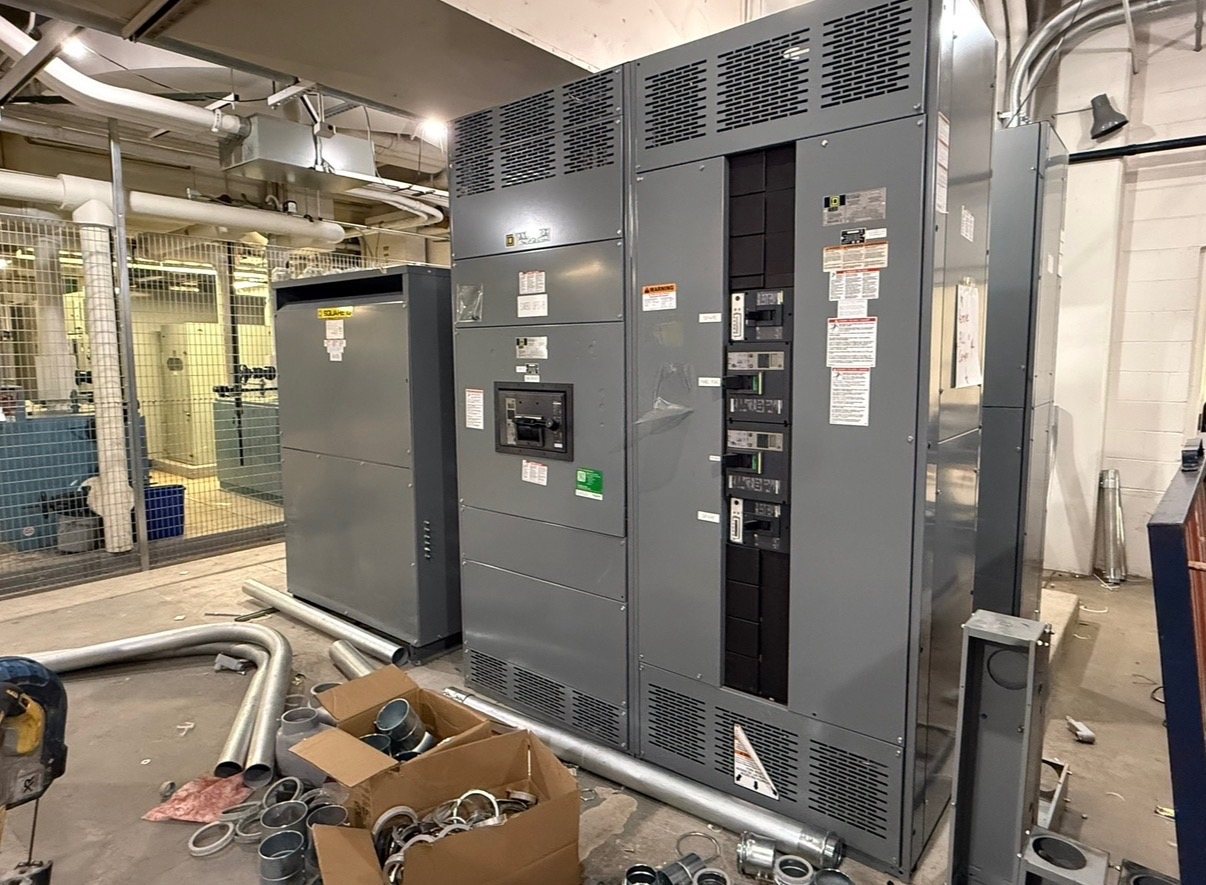
What a main breaker does in a distribution section
In a switchboard, switchgear lineup, or other distribution assembly, the main breaker is generally the principal overcurrent protective device for a supplied section. It is often positioned where incoming power enters that section, but the exact arrangement varies. The breaker can interrupt current under conditions within its ratings and provide a means of isolating the section when operated under the equipment’s approved procedures.
Start with the one-line diagram rather than the equipment label. Identify the source, the section being supplied, the main breaker location, downstream feeders, and any alternate sources or ties. Ask which conductors the breaker protects, what loads and downstream devices it serves, and whether the intended function is source protection, section isolation, or both. Those answers define the scope of a replacement or new assembly.
Frame size is not the trip setting
The breaker frame identifies the breaker’s physical and design family and establishes a range of possible configurations. The trip setting determines the current level at which the protective function is intended to operate, subject to the installed trip unit and its adjustment limits. A frame rating, a trip-unit rating, and an actual setting are related but are not interchangeable values.
For a quotation, provide the existing breaker’s nameplate information and trip-unit details, plus the approved protection study or settings where available. Confirm whether settings are fixed or adjustable and whether the replacement must accommodate a particular adjustment range. Do not infer an acceptable trip setting from the frame marking or a neighboring breaker; coordination and equipment protection depend on the project’s system design.
Interrupting rating and available fault current
An interrupting rating describes the fault current a breaker is rated to interrupt under stated conditions. It is distinct from both frame size and trip setting: a breaker may have an appropriate operating setting yet be unsuitable if its interrupting rating is below the available fault current at its point of installation. System voltage and the applicable device configuration also matter when evaluating the rating.
Provide the available fault-current information for the installation point, its basis and date, and the system voltage when requesting a new main breaker or assembly. Ask the engineer of record to confirm the required rating and any applicable series-rating or coordination constraints. A catalog description or an old device marking alone cannot establish suitability for a changed source, transformer, or distribution arrangement.
Protection coordination and section boundaries
A main breaker’s trip behavior affects how faults are cleared across the distribution system. Its settings may need to coordinate with upstream protection and downstream feeder breakers so that the intended device responds to a fault. The required result depends on the protection study, equipment limitations, system grounding, and the operating configuration—not on a universal “main breaker” setting.
When defining the scope, identify upstream protective devices, downstream feeder ratings and functions, and any ties or alternate sources that can change fault-current paths. Provide current one-line diagrams and coordination documentation where available. If the project changes a section boundary or source arrangement, have qualified engineering personnel review the protection design before selecting settings or specifying a replacement.
New equipment and new retrofit component scoping
For new equipment, specify whether the main breaker is part of a complete switchboard or another assembly, and define the incoming connection, section arrangement, enclosure requirements, and interfaces with adjacent equipment. For a retrofit, identify the existing assembly manufacturer and model, breaker type, compartment or mounting arrangement, bus and connection details, and any restrictions on modifications. Photographs and nameplate records can help clarify the request but do not replace dimensional and electrical review.
Switchgear Builders Texas manufactures new equipment and supplies new retrofit components. A retrofit request should state the intended replacement scope and provide enough documentation to assess compatibility and engineering requirements. Fit, ratings, and availability are subject to project review. Do not assume a new breaker is interchangeable solely because its frame marking or nominal rating resembles the existing device.
Documents, standards, and quotation review
Useful submittal information includes the one-line diagram, system voltage, available fault current, load or service requirements, existing nameplate data, protection study, and clear photographs or drawings of the equipment interfaces. State whether the request is for a new assembly or a new retrofit component, and identify the required schedule and project constraints. This information helps determine what engineering review and supporting documentation the quoted configuration may require.
For switchboard assemblies, UL 891 is a relevant standard, but it is not a blanket listing for every type of switchgear or every configuration. Applicable standards and listing status must be verified for the specific assembly. Customers may specify American components; component origin and any requested documentation are confirmed for each quotation, and no independent domestic-content certification or Buy American compliance is implied. Installation, servicing, testing, and energization require qualified personnel following approved procedures.