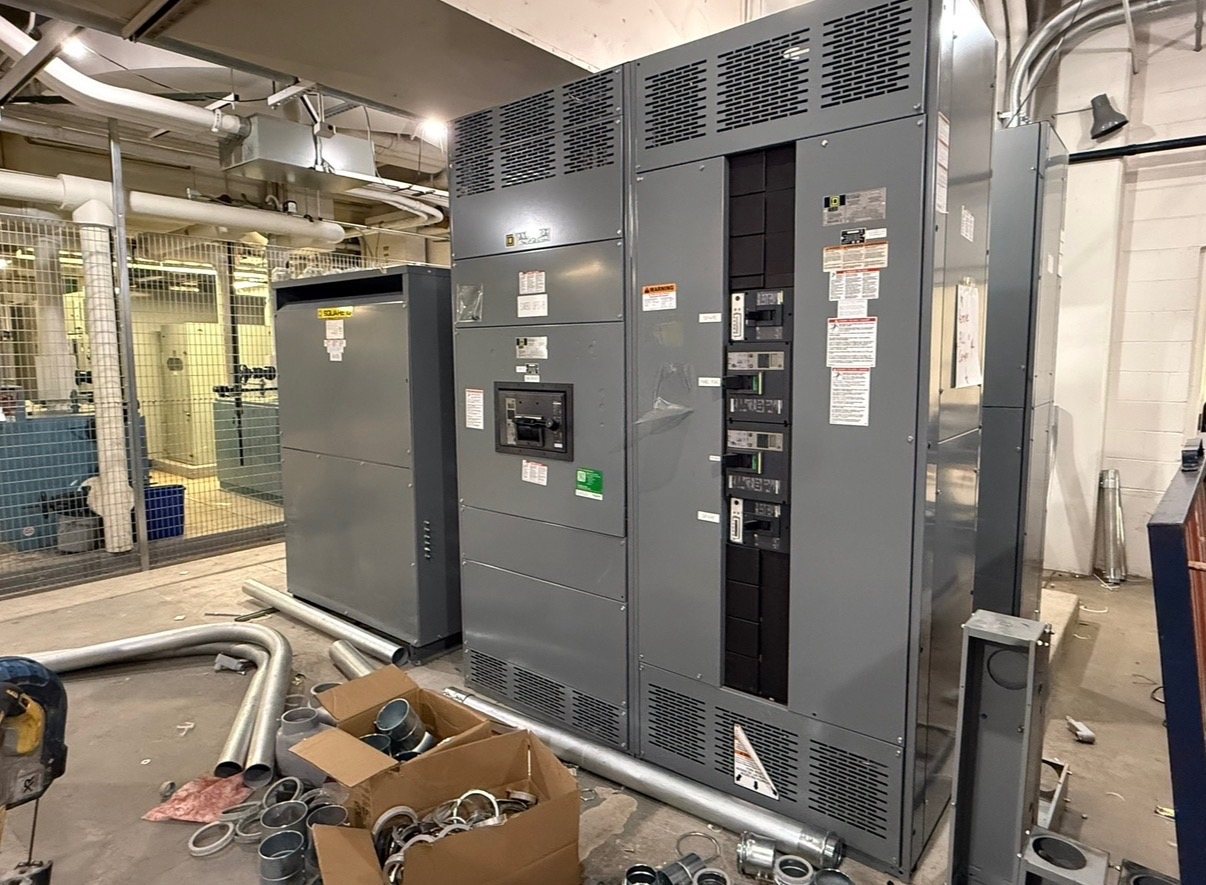
What short-circuit current means
Under normal conditions, electrical current follows its intended path through loads and conductors. A short circuit creates an unintended path with much lower impedance, allowing current to rise sharply. The current that would flow at a particular point under defined fault conditions is commonly called the available short-circuit current, or available fault current. It is a calculated system characteristic, not a normal operating load or a fixed value for an entire facility.
Faults may involve phase conductors, a phase and neutral, or a phase and ground, depending on the system and event. The calculated current can differ by fault type because the system’s grounding arrangement and sequence impedances affect the result. A useful specification therefore identifies the voltage, system configuration, fault basis, and location being assessed rather than giving a single current figure without context.
Why the source changes the result
The source establishes an important part of the available fault current. Utility transformers, on-site generators, and other sources have different impedances and operating characteristics; their contribution can also change with configuration. Transformer size and impedance, generator data, and the presence of parallel sources may all matter. Engineers need the applicable source information, not an assumed value based solely on the service voltage or facility load.
Ask whether the calculation represents the utility supply, a generator operating independently, or sources operating together. Confirm which transformer data and source operating conditions were used, and whether the study covers alternate feeds or tie-breaker arrangements. For a quotation, supplying the relevant one-line diagram and available short-circuit study helps us review the intended equipment configuration. Missing or changing source data should be resolved with the project engineer before final equipment selection.
Why fault current changes by location
Available current generally changes as the fault location moves through the distribution system. Conductors, bus, transformers, and other components contribute impedance between the source and the point of fault. Greater impedance along that path typically reduces the calculated current, although topology and additional sources can alter the pattern. The value at service equipment therefore cannot automatically be applied to a downstream panel or another point in the network.
A study should identify the specific bus or equipment location associated with each result. Review the one-line diagram for conductor lengths and sizes, transformer positions, normal tie status, and alternate paths that could feed a fault. Ask whether each operating arrangement has been evaluated where it could affect equipment selection. Clear location labels prevent a service-entrance value from being mistaken for the available current at a downstream assembly, or vice versa.
How the value affects equipment selection
Calculated fault current informs whether equipment and protective devices are suitable for the conditions at their installation point. The engineer evaluates the applicable short-circuit rating, interrupting rating, and protective-device characteristics against the study and governing project requirements. These terms describe related but different equipment capabilities; one rating should not be treated as a substitute for another. Configuration, voltage, device selection, and assembly details all need review.
When requesting pricing for new equipment, provide the calculated available current at the connection point, the system voltage and phase arrangement, and the protective-device requirements. Also identify whether the assembly is a switchboard, switchgear, or another distribution product and note any required coordination with existing equipment. We build new equipment to project specifications; the proposed configuration, applicable standards, ratings, and documentation must be confirmed during quotation review.
Protective coordination and project changes
Protective devices are intended to respond to faults, but their behavior depends on their ratings, settings, and relationship to other devices in the system. Short-circuit current is one input to coordination and equipment suitability; it does not by itself establish a complete protection design. A changed source, feeder, transformer, or protective-device setting can affect study results and may change what is appropriate at one or more system locations.
Before ordering, compare the equipment specification with the current one-line diagram and study revision. Confirm whether the project includes utility changes, a generator, parallel operation, a bus tie, or a replacement device that changes the fault path. For retrofit work, identify the existing assembly and the precise new retrofit components required. Compatibility, available ratings, engineering, and documentation depend on the actual configuration and must be reviewed for the project.
Documentation, standards, and safe project review
Useful review documents include the latest one-line diagram, short-circuit study, equipment schedules, source data, and protective-device information. Check that the study’s assumptions match the proposed operating arrangement and that each reported value is tied to a clearly named location. Record open questions about missing source data, future system changes, or alternate configurations so the engineer of record can resolve them before the equipment is finalized.
We serve Texas from the United States and ship nationwide. We manufacture new equipment and supply new retrofit components. Customers may specify American components, with origin and availability confirmed for each quotation, but that request is not independent verification of domestic-content compliance. UL 891 applies to switchboards; verify listing and applicable standards for the proposed configuration. Installation, service, testing, and energization require qualified personnel using approved procedures.