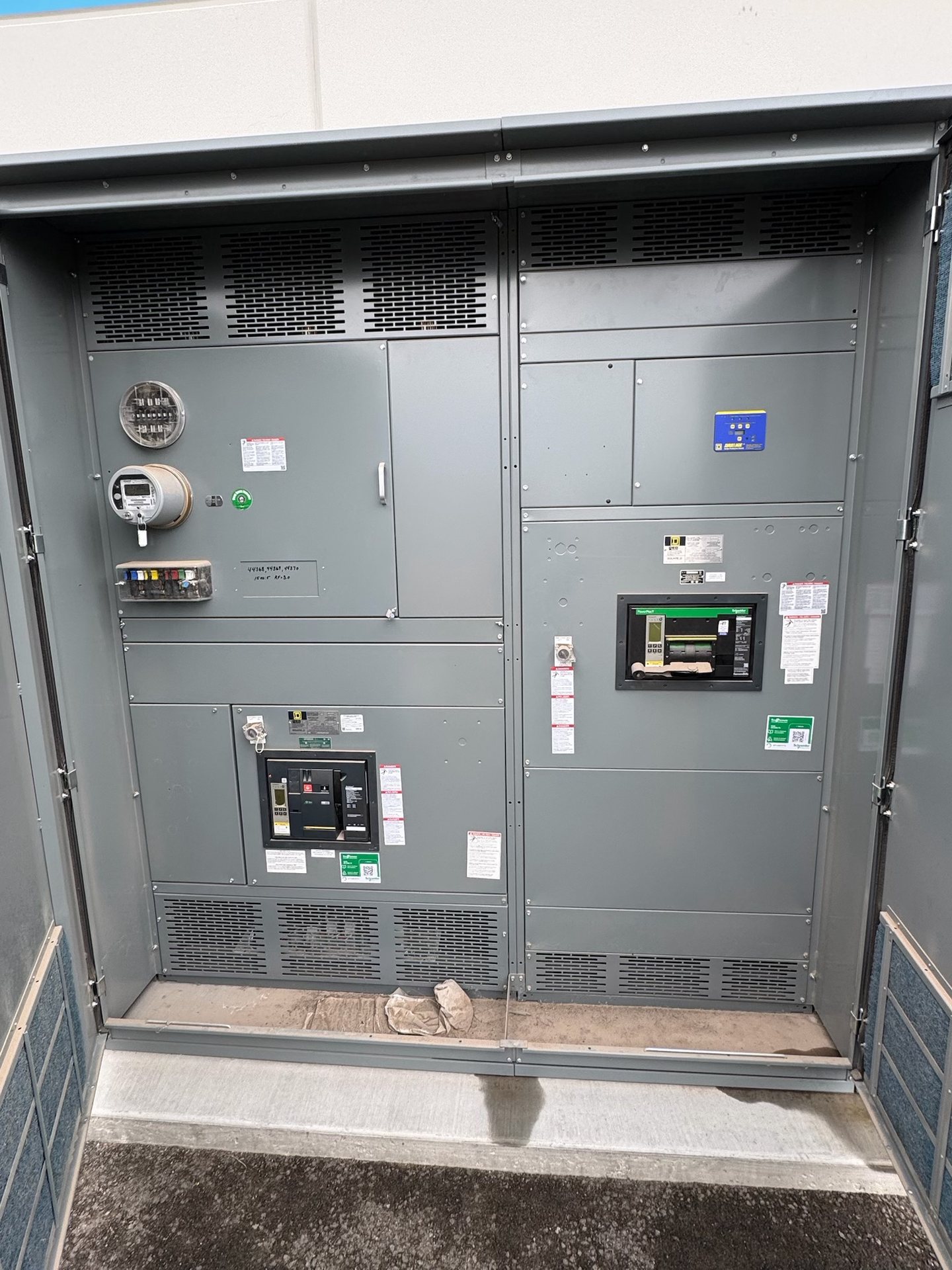
How Power Circuit Breaker Switchgear Fits the Distribution System
Power circuit breaker switchgear is typically selected for distribution systems where the project calls for power circuit breakers, coordinated protection, and an assembly arranged around defined incoming, tie, and feeder functions. The one-line diagram is the starting point: identify the source configuration, normal and alternate supply paths, bus arrangement, connected loads, and any tie operation. These details shape the lineup and prevent a quote from relying on assumptions about how the system operates.
Distinguish this equipment from a switchboard or a lineup built around other circuit-breaker types. The assembly name alone does not establish its construction, fault-duty capability, or listing. Provide system voltage, available fault current at the equipment, continuous-current requirements, grounding arrangement, and project specifications for review. Those are design inputs, not guaranteed product ratings; engineering, availability, and configuration must be confirmed for the specific quotation.
Choose Drawout Features for the Operating Plan
Drawout breakers can be withdrawn from their connected position into defined test or disconnected positions, depending on the equipment design. This can support inspection, maintenance planning, or replacement procedures, but the actual positions, interlocks, shutters, secondary disconnects, and access arrangements vary by configuration. Specify which drawout functions the project requires rather than assuming that a breaker described as drawout includes every operating or safety feature needed.
Review how the equipment will be accessed and maintained in its installed location. Provide room layout constraints, cable entry direction, control wiring needs, intended breaker handling approach, and any project requirements for spare breaker cells or future feeders. Clearances and handling provisions should be checked against the selected assembly and site conditions. Installation, servicing, testing, and energization must be performed by qualified personnel under approved procedures.
Plan Selectivity Across Breakers and Protective Devices
Selectivity describes how protective devices are coordinated so that a fault is isolated as close as practical to its source while other portions of the system remain energized. It cannot be established from breaker frame descriptions alone. Coordination depends on the system study, device trip characteristics, fault levels, settings, and the relationship between upstream and downstream protection. Identify whether the project requires selective coordination and which operating modes or source arrangements the analysis must cover.
For a useful design review, provide available short-circuit and coordination studies when they exist, along with proposed breaker functions and the one-line diagram. Confirm who is responsible for settings and study updates, especially where a tie breaker or alternate source changes available fault current. The manufacturer can review equipment requirements against the project scope, but a quotation should not be treated as proof of system selectivity or a substitute for project-specific engineering analysis.
Verify Listing and Applicable Standards for the Assembly
UL 1558 may be relevant to low-voltage metal-enclosed switchgear, but the applicable standard and listing must be verified for the actual product configuration. A standard reference in a project specification, product description, or procurement schedule does not establish that a particular assembly is listed. Confirm the required construction, intended use, ratings, and listing documentation during quotation and submittal review.
Do not assume that UL 891 applies simply because equipment is low voltage; UL 891 is a standard for switchboards, not a blanket listing for all switchgear. Other standards or approval requirements may also apply based on project documents, jurisdiction, and equipment design. Ask which listing is required, whether it applies to the complete assembly and its proposed options, and what documentation will be provided. Listing and applicable standards remain subject to configuration-specific confirmation.
Specify New Breakers, Controls, and Retrofit Scope
This offering is for new equipment and new retrofit components only. When a project involves an existing lineup, identify the existing manufacturer and model information if available, breaker type, cell details, control voltage, connection arrangement, and the intended retrofit function. Photographs, nameplate data, drawings, and dimensions can help clarify the request, but compatibility must be evaluated rather than inferred from a similar-looking breaker or a general description.
For a new lineup, document breaker functions, trip-unit requirements, control and indication needs, interlocking, metering, communications, and any provisions for future circuits. For retrofit components, state whether the scope is a replacement breaker, a new component, or a defined assembly modification. Confirm which drawings, interface details, and acceptance documents are needed before release. Component origin and documentation should be addressed in the quotation; domestic-content compliance is not implied.
Prepare a Quote Package That Supports Review
A complete request for pricing should include the one-line diagram, equipment schedule, applicable specifications, system voltage, available fault-current information, required continuous-current values, and the desired lineup arrangement. Include site constraints, cable entry and termination expectations, control schematics, communication requirements, and any project-specific inspection or documentation provisions. If information is preliminary, mark it clearly and identify open decisions so they can be reviewed before the design is treated as final.
We build to specification, and short lead times may be possible subject to project review; timing, availability, engineering, component origin, and test documentation must be confirmed for each quotation. State required submittal and approval milestones, requested delivery destination, and any constraints affecting shipment to Texas or elsewhere in the United States. Review the proposed scope for omissions before approval, including listing requirements, breaker functions, accessories, and responsibility for system studies and field procedures.