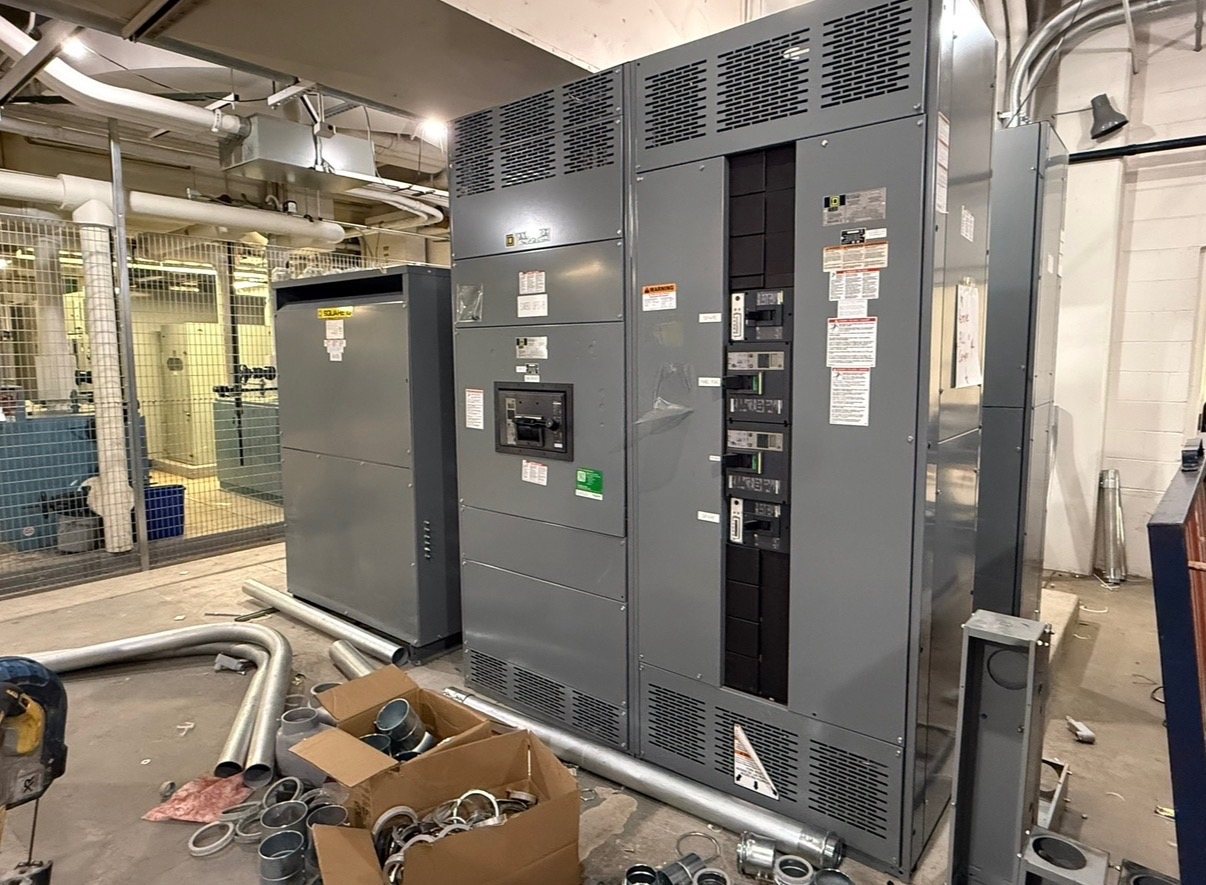
What a Low-Voltage Assembly Must Do
A low-voltage assembly is selected to control and protect circuits at a particular point in a power system, not simply to match a nominal voltage. Start with the system voltage, phase and frequency, available fault current, source configuration, and the loads served. Those details help define the assembly’s interrupting and short-circuit requirements, bus arrangement, incoming equipment, and outgoing feeder configuration.
Also clarify the operating role: service entrance, distribution, generator connection, tie section, or another function. The design may need provisions for metering, monitoring, interlocking, or coordination with upstream and downstream protective devices. Provide a one-line diagram and load information when requesting pricing; incomplete system context can make apparently similar assemblies unsuitable for the same application.
Choose Components Around the Circuit
The lineup may include an incoming main, feeder devices, bus, neutral and ground provisions, metering, control wiring, and enclosure sections. Each component has a job and must fit the system’s operating and protection requirements. Identify the number and purpose of feeders, expected load types, cable entry and termination needs, and any space or access limits that could affect section arrangement.
Protection choices should follow the application’s fault and coordination study rather than a generic component list. Share specified trip functions, settings requirements, metering points, and any control interfaces with the manufacturer during design review. Where a project requires particular component makes or models, list them in the inquiry. Component selection and availability remain subject to engineering review and confirmation with the quotation.
Establish Ratings Through Project Review
Voltage, continuous current, short-circuit capability, and device interrupting ratings are project-dependent. They must align with the electrical study, source characteristics, load profile, and governing project requirements. Do not select an assembly from a current rating alone: available fault current and protective-device performance can impose additional constraints on the complete configuration.
For an accurate review, provide the required nominal voltage and system frequency, calculated or specified fault current, service conditions, and any project-specific rating criteria. Note whether the design is indoor or outdoor and identify environmental or enclosure requirements. We confirm engineering scope, component availability, applicable standards, and lead time for the proposed configuration before the customer places an order.
When to Consider Power Circuit Breaker Construction
Power circuit breaker construction may be worth evaluating when the application calls for drawout breakers, a defined maintenance approach, or particular operating and protection functions. The choice affects lineup layout, compartment requirements, control and interlock details, and the information needed for coordination with the rest of the system. It is an application decision, not an automatic upgrade for every low-voltage project.
Compare the required breaker functions and operating practices with the project’s electrical design, available space, maintenance program, and procurement constraints. Ask the engineer of record to identify any required construction type, breaker characteristics, or interface expectations. Include these requirements in the request for pricing so the proposed assembly can be reviewed as a complete system rather than as a collection of devices.
Specify New Equipment and Retrofit Components
We supply new low-voltage switchgear assemblies and new retrofit components only. For a new lineup, provide the one-line diagram, specifications, equipment schedule, site constraints, and required submittal information. These documents help establish the intended arrangement and reveal conflicts involving feeder quantities, cable access, controls, or the proposed location before the configuration is finalized.
For a retrofit, identify the existing equipment manufacturer and model, the exact compartment and device, nameplate information, drawings, photographs, and the component being replaced. Compatibility cannot be assumed from visual similarity or a partial catalog reference. The existing assembly’s ratings, dimensions, interfaces, and project requirements must be reviewed to determine whether a proposed new component is suitable.
Review Standards, Submittals, and Procurement
Before approval, align the proposed configuration with the project specification and applicable codes and standards. UL 891 applies to switchboards; it is not a blanket listing for every form of low-voltage switchgear. Listing and applicable standards must be verified for the specific configuration. Request the submittals and test documentation your project requires, and confirm their availability for the quoted assembly rather than assuming a particular record is included.
For purchasing, request pricing with the design documents, required delivery destination, requested schedule, component preferences, and documentation requirements. We serve Texas from the United States and ship nationwide. Equipment is new, and American components can be specified, but domestic-content requirements and component origin must be confirmed for the quoted configuration. Installation, servicing, testing, and energization require qualified personnel following approved procedures.