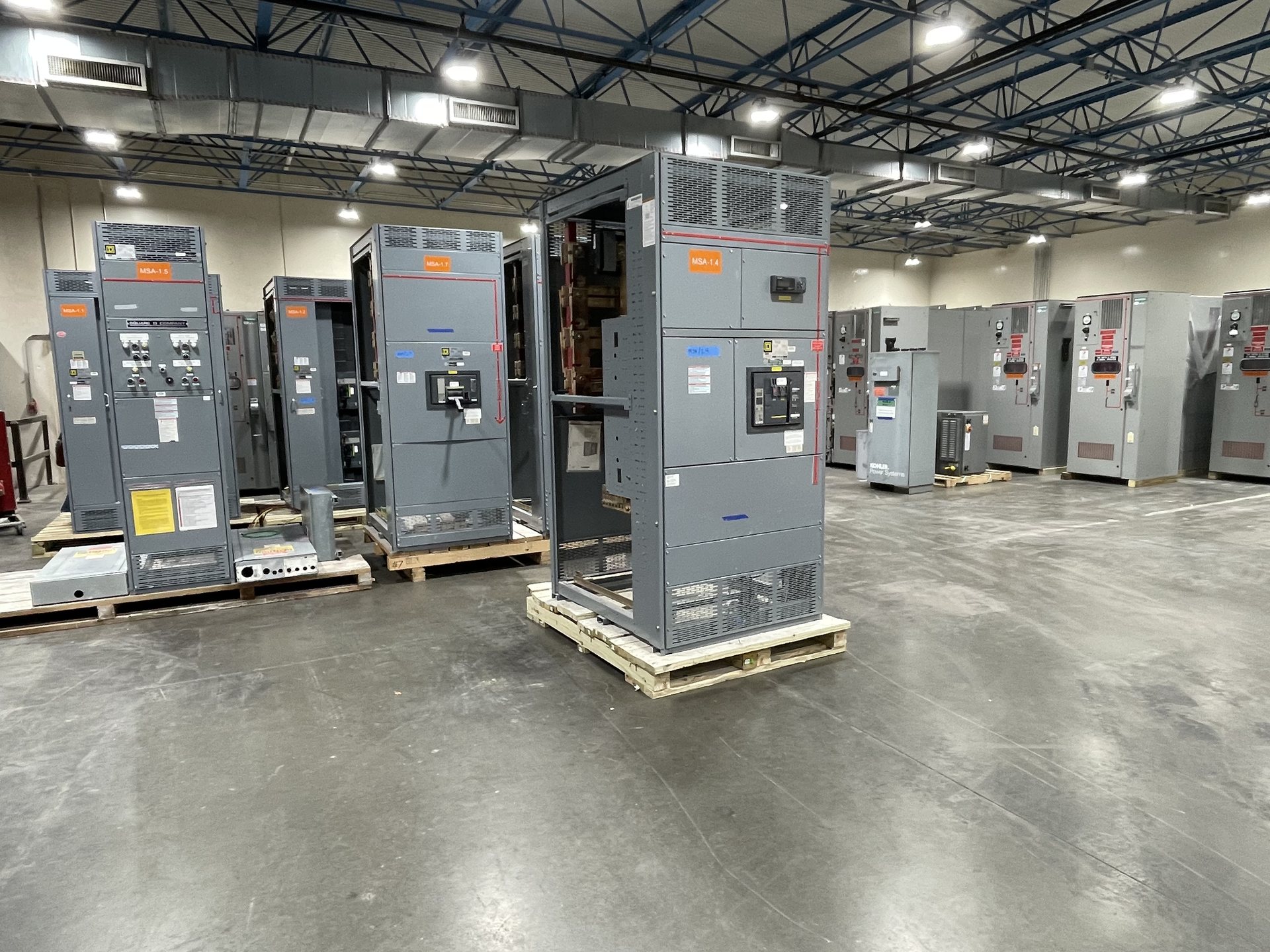
Define the dust exposure before selecting equipment
“Mining dust” is not a single design condition. A crushing area may produce coarse, abrasive particles, while material transfer, screening, or processing can create finer dust that remains airborne and reaches equipment through small openings. Document the material handled, particle characteristics where known, concentration, exposure duration, and whether dust is dry, damp, or mixed with process residues. Also identify nearby washdown, vibration, corrosive agents, and outdoor weather exposure.
Map the installation point rather than relying only on a facility-wide description. Record whether the equipment is in a control room, electrical room, process building, or exposed area, and describe door openings, ventilation paths, and dust-generating operations nearby. Provide site photographs or drawings when available, plus operating and shutdown conditions. These details help us review a suitable new distribution assembly or new retrofit components without presuming a particular mining-sector rating or certification.
Match enclosure protection to the actual contamination path
An enclosure rating is meaningful only in relation to the hazards and exposure at the intended location. Clarify whether dust is likely to settle on surfaces, become airborne, enter during routine access, or arrive with moisture or cleaning spray. Identify the applicable project specifications and site requirements, and ask the responsible engineer to establish the required enclosure protection. The rating and construction must be verified for the proposed configuration; no single enclosure choice suits every mine or mineral-processing area.
Review how cable entries, conduit interfaces, doors, seams, and access panels affect the protection strategy. A nominal enclosure selection cannot compensate for poorly coordinated penetrations or field modifications. Provide cable-entry direction and quantity, planned conduit or cable arrangement, mounting orientation, and any constraints on access or clearance. We can use those project inputs to develop equipment to specification, while final suitability depends on the approved design and installation details.
Balance dust exclusion with heat removal
Limiting dust entry can restrict airflow, while electrical losses and site heat raise internal temperatures. Cooling therefore needs to be assessed together with enclosure protection, equipment loading, ambient conditions, and the amount of dust reaching the installation. Supply expected operating load, voltage and system arrangement, peak and continuous duty, ambient temperature range, elevation if relevant, and nearby heat sources. Identify whether the equipment operates continuously, intermittently, or through frequent load changes.
The project team should decide how heat will be managed without creating an unacceptable contamination path. Relevant design choices may include the equipment layout, ventilation approach, separation from dusty processes, or other project-approved thermal controls. Provide room dimensions and ventilation information when the equipment is indoors, and describe direct solar exposure or weather conditions for outdoor installations. We review these factors as part of configuration; performance assumptions and any applicable limits must be confirmed for the quoted design.
Plan filter access and contamination control
Where a design uses filters, their selection and placement should reflect the dust type, expected loading, replacement access, and site maintenance capacity. Ask who will inspect them, how often the site can support inspection, and whether replacement elements can be kept available under the project’s purchasing plan. Consider whether filters can be reached without obstructing operating clearances, exposing sensitive parts, or creating a maintenance task that the facility cannot sustain. Filter arrangements and service intervals should be determined for the specific design and operating environment.
A filter is only one part of contamination control. The site may also need procedures for housekeeping, limiting dust movement during nearby work, maintaining door seals, and recording enclosure condition. Share any restrictions on cleaning methods or materials, since cleaning requirements can affect enclosure and component choices. Installation, service, inspection, and any testing or energization must be performed by qualified personnel under approved site procedures; this page does not substitute for those procedures.
Provide electrical and operating data for configuration
To scope distribution equipment, provide the one-line diagram, system voltage, frequency, phase arrangement, available fault-current information, upstream protective-device details, and the required distribution functions. Identify feeder quantities, breaker or switching requirements, load characteristics, future capacity plans, and interfaces with existing equipment. These are project parameters, not assumptions about standard availability. Our engineering and quotation review must confirm that the requested arrangement can be configured and supplied for the application.
Explain how the equipment relates to the wider process: which loads are essential, whether a production shutdown is available for installation, and what control, metering, communications, or interlocking interfaces are specified. For replacement work, provide existing nameplate information, dimensions, connection details, drawings, and the reason for the change where known. We manufacture new equipment and supply new retrofit components only; compatibility with an existing installation must be established from its documented configuration.
Coordinate documentation, components, and procurement
A useful quotation package identifies the service conditions, electrical requirements, enclosure expectations, cooling and filter approach, interface points, and requested submittals. Include the project specification, review milestones, required drawing format, inspection or test documentation expectations, and delivery constraints. Tell us whether the equipment must match an existing lineup or fit a defined room and access route. These inputs let the project team evaluate scope and schedule without relying on unverified assumptions about availability or delivery.
If American components are required, state that requirement in the inquiry and identify any project documentation needed for review. Component origin and supporting documentation are confirmed for each quotation; a request does not establish independent verification or certify compliance with Buy American, BAA, or other domestic-content rules. Switchgear Builders Texas supplies new equipment as the manufacturer. Request pricing with the project documents, and confirm configuration, applicable standards, listing status, lead time, and documentation during quotation review.