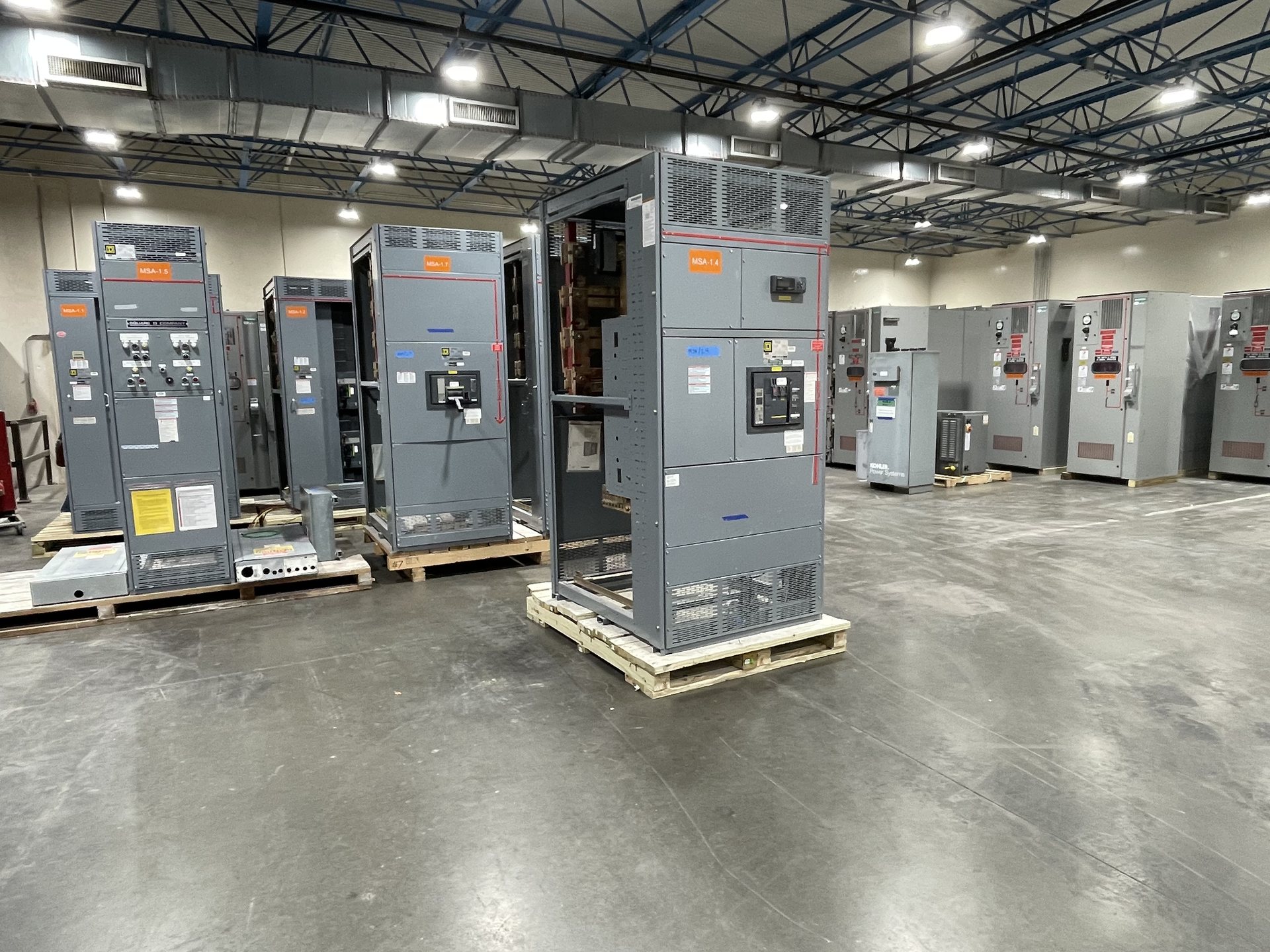
Plan for Remote-Site Reliability
A distribution problem at a remote mine can affect production, water handling, ventilation, processing, or other site operations while personnel and replacement components are still being arranged. Equipment selection should therefore account for more than electrical ratings. Identify which loads are essential, what operating conditions may require reduced service, how maintenance personnel reach the equipment, and what support resources are realistically available at the site.
Start the project scope with a one-line diagram, load information, source and transformer data, and a description of the operating sequence. Include the consequences of losing each feeder or section, anticipated expansion, and any temporary operating arrangements the owner expects to use. These details help define an appropriate distribution configuration and make quotation review more useful than a request based only on a general equipment category.
Choose Sectionalization Around Critical Loads
Sectionalization can help isolate a portion of a distribution system while limiting the effect of a fault or planned maintenance elsewhere. The right arrangement depends on the incoming sources, bus configuration, feeder functions, protective-device coordination, and how operators are authorized to transfer or restore loads. Determine which process areas can be interrupted, which require a separate supply path, and whether the project calls for provisions for future feeders.
Ask the design team to document normal and alternate operating modes, tie-breaker assumptions, interlocking requirements, and the limits on parallel operation, if any. Review how the proposed sections relate to upstream and downstream protection rather than treating a tie or divider as an independent reliability feature. We can review the project requirements when developing a new assembly to specification; final system coordination remains part of the project engineering.
Build a Practical Spare-Parts Plan
Remote-site spares should be selected for compatibility and operational consequence, not simply convenience. The owner and engineer can identify components whose failure could cause an extended outage, then record the required manufacturer and model information, ratings, control voltage, accessory details, and approved alternatives. Check whether the spare is intended for a specific feeder or can serve multiple positions, and account for storage conditions and the person responsible for maintaining the inventory.
A quotation request should distinguish between new distribution equipment and new retrofit components for an existing assembly. For retrofit work, provide clear photographs and nameplate details, device catalog information, dimensions, connection details, and available drawings. Compatibility must be reviewed against the actual installed configuration; a similar-looking part is not sufficient evidence of interchangeability. Component origin, availability, and any proposed substitutions should be confirmed for each quotation.
Make Maintenance Access Part of the Design
Equipment that is difficult to reach can complicate routine inspection and extend the time needed to replace a component. Describe the installation location, access route, room or enclosure constraints, cable entry direction, working clearances, lifting or handling limits, and any restrictions on moving equipment through the site. Include site environmental conditions such as dust, moisture, temperature, elevation, and corrosive exposure so the design review can consider the relevant enclosure and construction requirements.
Clarify how maintenance is expected to occur: whether equipment must be accessible from the front only, whether rear access is available, and which parts must be removable or serviceable without disturbing adjacent sections. These are project-specific design choices, not universal features. Installation, servicing, testing, and energization must be performed by qualified personnel under approved procedures; the equipment scope should not substitute for site safety planning or maintenance controls.
Provide the Information Needed for Selection
Useful selection documents include the current one-line diagram, system voltage and frequency, available fault-current information, source and transformer characteristics, load schedule, feeder quantities, and protective-device requirements. Provide the desired bus and connection arrangement, control and metering needs, enclosure or installation constraints, and applicable project specifications. If the equipment replaces an existing assembly, include its nameplate data, dimensions, termination details, and drawings that reflect the installed condition.
Also identify the governing project codes and standards, the required submittal format, and any owner-specific documentation or inspection expectations. UL 891 applies to switchboard assemblies; it is not a blanket standard for all switchgear configurations. The applicable standards and any listing for a proposed configuration should be verified during project review. Do not assume that a stated component origin establishes Buy American or other domestic-content compliance; specify the requirement and confirm it for the quoted scope.
Maintain Records for Long-Term Operations
Remote operations benefit from records that let site personnel identify what was supplied and how it relates to the approved design. Define the project’s needs for equipment drawings, schematics, bills of material, nameplate information, device schedules, and revision tracking. Confirm which records must be included with the submittal and which final documents are required after the configuration has been approved. Documentation should distinguish the quoted design from later field changes.
For future maintenance and purchasing, preserve the approved equipment and component identifiers alongside the as-installed one-line diagram and any revision history. Record any substitutions and verify that they match the accepted design before updating site records. Documentation and test records available for a project depend on the configuration and quotation; request them during scoping rather than assuming a particular package. Availability, engineering, lead time, component origin, and documentation are confirmed project by project.