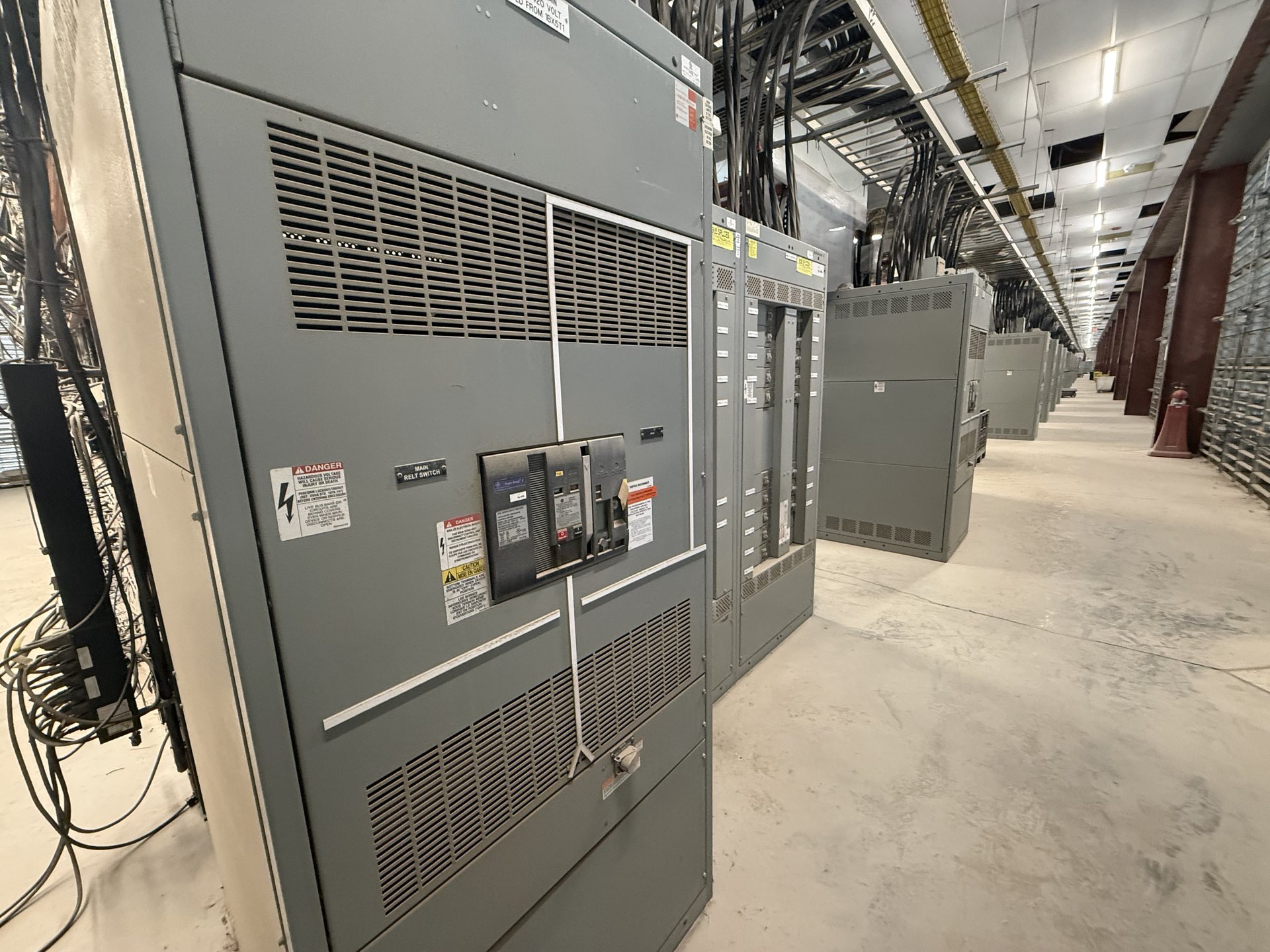
Distribution for Wells and Production Equipment
A well pad and a centralized production facility can have very different distribution needs. Identify the point of connection, source characteristics, system voltage, available fault-current information, grounding arrangement, and the downstream panels or loads the assembly must serve. Clarify whether equipment supplies one location or several process areas, and whether the scope includes the main distribution assembly, feeder sections, or both.
Describe the equipment served rather than relying on a broad label such as “production switchgear.” List well and process loads, their electrical characteristics, required feeders, and any planned future capacity. For each quotation, we review the requested arrangement against the project information provided. A one-line diagram, equipment schedule, and site-specific design criteria help define a compatible scope and surface missing decisions before procurement.
Motor Loads and Operating Behavior
Pumps, compressors, artificial-lift systems, and other motor-driven equipment can shape feeder sizing and distribution design. Provide motor nameplate data where available, including voltage, full-load current, starting method, and duty requirements. Identify which motors may start together, which are controlled by variable-frequency drives or soft starters, and whether a process sequence limits simultaneous demand.
Also document expected operating cycles, load diversity, standby equipment, and the consequences of a motor or feeder outage. These details help the project team evaluate feeder assignments and coordinate switchgear with motor-control equipment and upstream protection. Do not assume a typical upstream load profile applies to a particular site: operating conditions and the selected motor-control approach must be reviewed against project drawings and equipment data.
Outdoor Exposure at Well Pads and Facilities
Outdoor equipment may face direct sun, temperature extremes, windblown dust, moisture, rain, and corrosive conditions. Specify the proposed mounting location and enclosure exposure, including whether the switchgear is sheltered, installed in a building, or positioned near process equipment. Share project requirements for enclosure construction, access, ventilation, coatings, and any environmental classification established by the design team.
Site conditions can affect enclosure selection, arrangement, maintenance access, and the suitability of components. Document ambient temperature range, elevation if relevant to the design, expected contaminants, and any hazardous-area boundaries identified by qualified project professionals. Do not infer a hazardous-location rating or environmental suitability from the application name alone. The exact configuration, applicable requirements, and supporting documentation should be confirmed during quotation and engineering review.
Maintainable Isolation and Feeder Planning
Production operations benefit when distribution boundaries and maintenance responsibilities are clear. Identify which feeders supply individual well or process areas, whether critical loads need separate distribution paths, and what isolation points the project requires for planned maintenance. Explain how operators expect to isolate equipment and what adjacent loads must remain in service while a particular feeder is unavailable.
Provide the project’s protection and coordination requirements, including the available study information and the devices or interfaces that must coordinate with the switchgear. Feeder labels, circuit identification, access clearances, and the intended maintenance approach should be settled in the design rather than left to field interpretation. Installation, servicing, testing, and energization require qualified personnel following approved procedures; equipment selection does not replace site safety planning.
New Equipment and Retrofit Scope
We supply new distribution equipment and new retrofit components. For a replacement or expansion at an operating production site, identify the existing assembly manufacturer and model if known, nameplate data, dimensions, bus arrangement, connection details, and the components intended for replacement. Photographs and legible drawings can help explain constraints, but they do not substitute for verified measurements and engineering review.
Clarify whether the work replaces a complete assembly, adds a new section, or uses new components in an existing configuration. Include shutdown windows, access limitations, cable entry locations, available space, and any requirement to preserve existing feeder relationships. Compatibility cannot be assumed from appearance or a partial description. The existing equipment and proposed scope must be reviewed together, with the final configuration and applicable standards confirmed for the quotation.
Quotation Inputs, Documentation, and Delivery Planning
A useful pricing request includes the one-line diagram, load and feeder schedules, system parameters, fault-current and coordination information, enclosure and environmental criteria, and the required quantity. Add the project location, requested ship-to point, delivery constraints, procurement milestones, and any required submittal documents. Flag whether the project has specified American components so that the requirement can be addressed in the quotation scope.
Component origin, equipment availability, engineering scope, lead time, and test documentation depend on the requested configuration and must be confirmed for each quotation. Share the applicable project standards and clarify what drawings, data sheets, or other documents are needed for review. UL 891 applies to switchboards; it is not a blanket standard for every switchgear configuration. Verify listing and applicable standards for the specific assembly rather than assuming they apply.