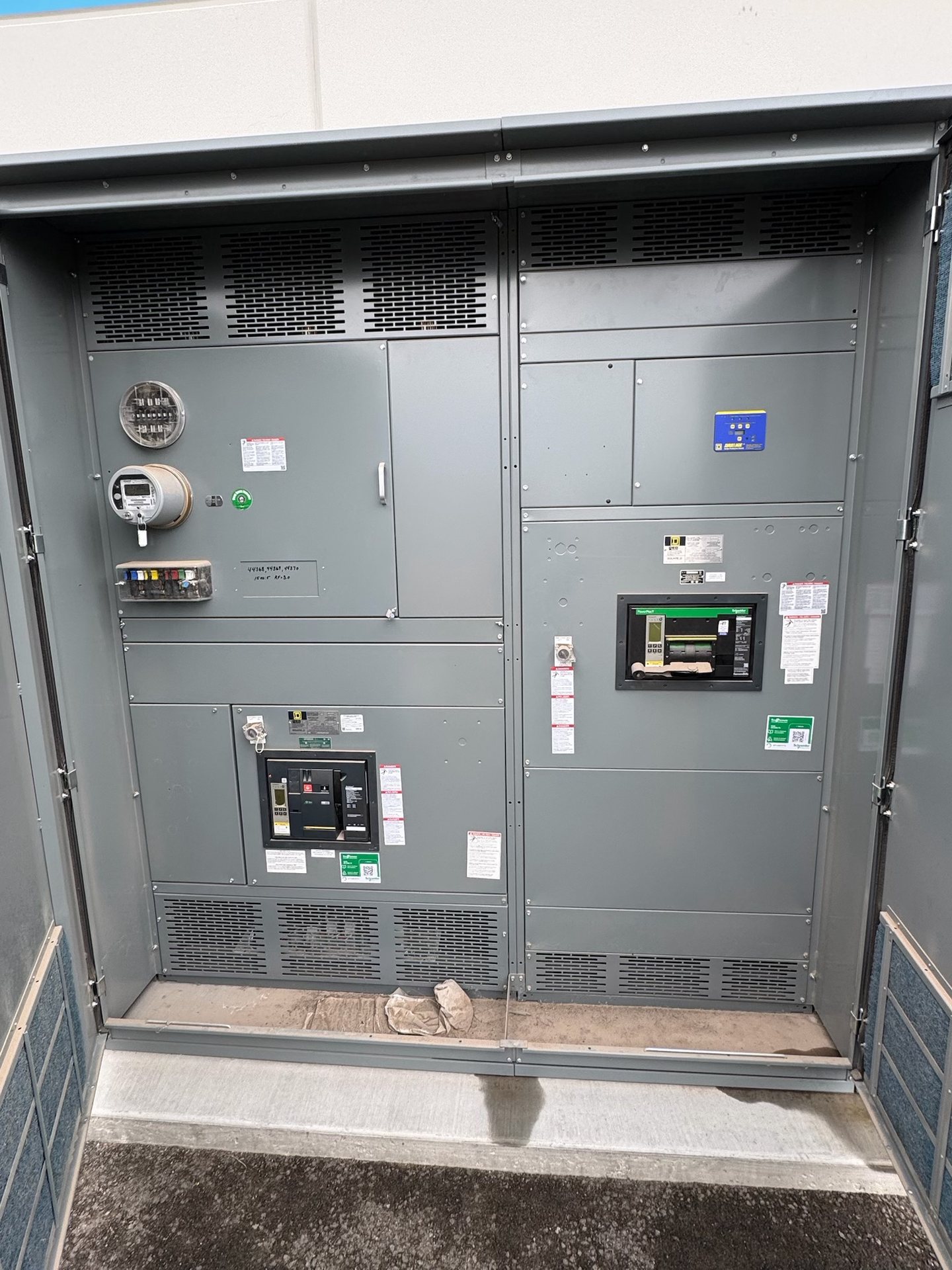
Choose the enclosure for the site exposure
Start with a site description that goes beyond “outdoors.” Identify whether the assembly will face wind-driven rain, standing water, blowing dust, coastal salt, industrial chemicals, direct sun, or frequent washdown. Note nearby equipment that releases heat or moisture, prevailing weather exposure, and whether the installation is sheltered by a canopy. These details help us review enclosure materials, construction, access provisions and the protection level appropriate to the application.
A stated enclosure rating must be verified for the complete proposed configuration, not inferred from a product category or a cabinet component. Doors, seams, operator devices, vents, cable entries and field modifications can affect protection. Provide the required rating and the governing project specification, then confirm that the offered assembly’s construction and documentation support that requirement. Ratings and applicable standards are configuration-dependent and must be confirmed during quotation review.
Plan drainage without creating a water path
Water can collect around outdoor equipment through surface runoff, splash, condensation or water entering during maintenance. Share the mounting arrangement, finished grade, nearby drains, expected snow or debris accumulation, and any curb or housekeeping pad details. The project team should consider how water moves around the enclosure and whether cable entry locations could become vulnerable if water pools or runs along conduits.
Drainage features must be coordinated with the required enclosure protection rather than added casually in the field. Ask how the proposed design manages incidental moisture while preserving the specified rating, and document any drains, weep provisions, drip edges or entry seals included in the configuration. Installation drawings should show the intended orientation and cable-entry zones. Qualified personnel should follow approved procedures for installation and any later inspection or service.
Match heaters or ventilation to the climate
Temperature and humidity conditions can affect condensation risk and equipment operating conditions. For the site, provide the expected ambient range, daily temperature swings, humidity, elevation if relevant to the project design, and whether the assembly receives direct solar exposure. Also identify the heat produced by internal devices and any nearby source of hot air. This information supports a review of whether a heater, ventilation approach or other climate-control provision is appropriate.
Heaters and vents are not interchangeable solutions: a heater may help manage condensation in a cold, damp environment, while ventilation can introduce outside moisture, dust or corrosive contaminants. If climate-control devices are requested, specify how they are powered, controlled and monitored, and whether alarms or thermostatic control are part of the project requirements. The design must preserve applicable enclosure protection, and any operating limits or control details should be confirmed in the quotation documents.
Address ultraviolet and corrosion exposure
Sunlight, salt-laden air and industrial atmospheres can degrade enclosure finishes and exposed fittings over time. Describe the site’s UV exposure, distance from marine or chemical sources, airborne contaminants, cleaning chemicals and expected maintenance environment. Identify any project-required enclosure material, coating system or corrosion-resistance specification rather than relying on a general request for a “weatherproof” cabinet.
Material and finish choices should be reviewed alongside fasteners, hinges, latches, external operators and other exposed details. Ask which portions of the offered assembly address the specified exposure and what finish or material information can be included in the submittal. Do not assume every component has identical environmental protection or domestic origin. Component origin and supporting documentation are confirmed for the quoted configuration, and any domestic-content requirements must be stated for review.
Coordinate access, foundation and cable entry
Outdoor assemblies need workable access after installation. Provide required working clearances, door-swing limits, access direction, equipment-transport path and any restrictions from fences, walls or adjacent systems. Include the foundation or support arrangement, anchorage requirements, conduit routing, bottom or side entry preferences, and whether future cable additions are anticipated. These inputs help align enclosure layout with the civil and electrical drawings before fabrication details are finalized.
Ask for submittal information that shows overall dimensions, access points, entry zones, mounting interfaces and any project-specific restrictions. Confirm who is responsible for foundation design, field conduit coordination and weather sealing at the installation interface. Requests for new retrofit components should identify the existing assembly, its configuration, the intended replacement scope and available drawings or nameplate information. We supply new equipment and new retrofit components only; compatibility and fit require project review.
Define documentation and procurement requirements
A useful request for pricing includes the one-line diagram, load and system information, required ratings, fault-duty criteria, control and metering needs, site exposure, enclosure-rating requirement, and applicable project specifications. Include preferred cable entry, environmental controls, finish requirements, submittal deadlines and delivery destination. If the assembly must coordinate with existing equipment, provide interface dimensions and electrical details so the quotation can identify assumptions, exclusions and items requiring engineering confirmation.
Before release, review the proposed configuration, drawings, enclosure construction, environmental provisions, component origin and requested test or compliance documents. UL 891 applies to switchboard assemblies; it is not a blanket listing for all switchgear, and listing or applicable standards must be verified for the specific configuration. We manufacture new equipment to specification and can review short-lead-time requests subject to project scope and confirmation. Installation, service, testing and energization require qualified personnel working under approved procedures.