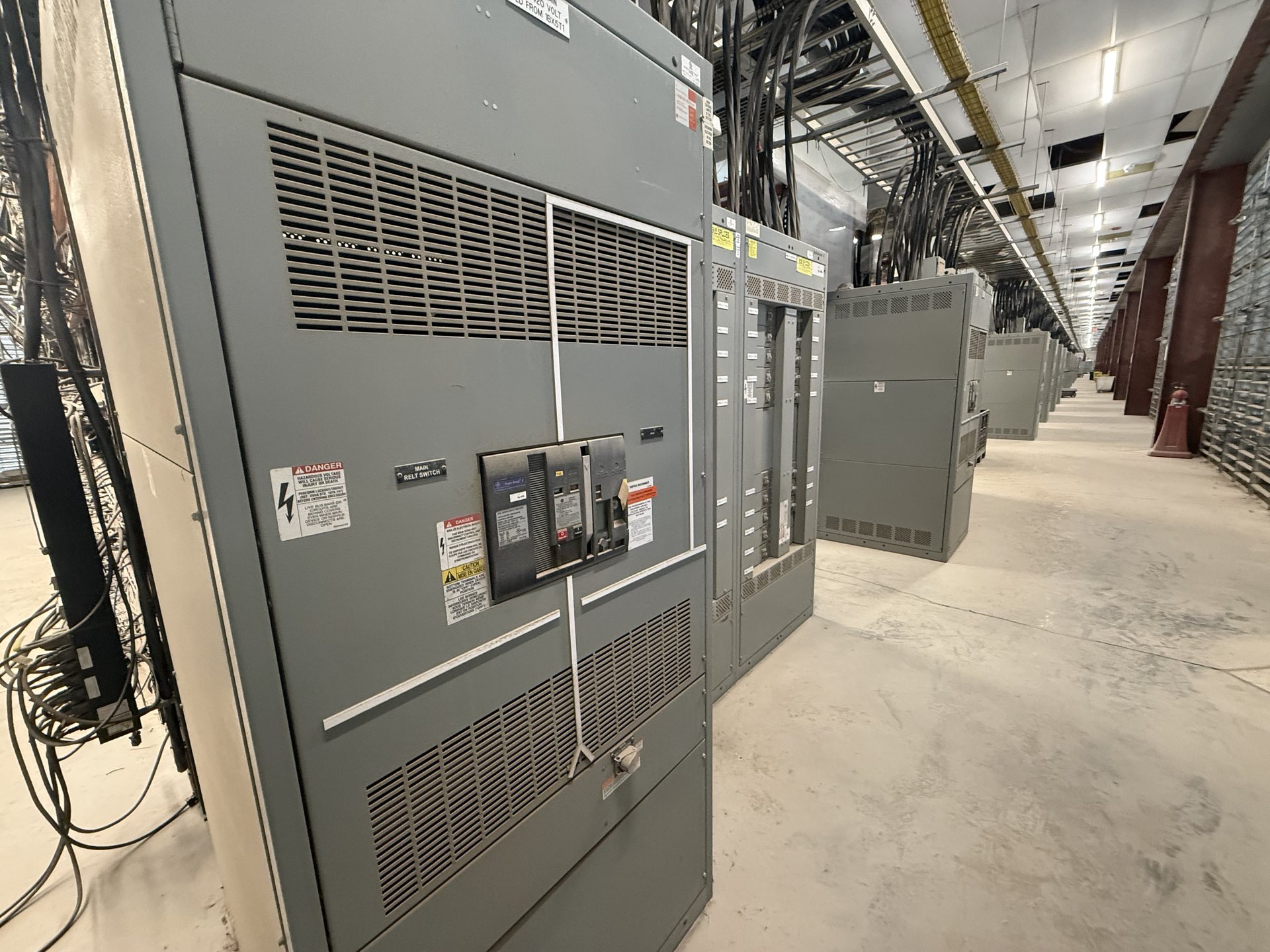
Coordinate Collector and Auxiliary Interfaces
Collector-system equipment and auxiliary distribution perform different jobs, even when they occupy the same facility. The collector interface may connect feeder circuits from turbine step-up transformers to a collector bus, while auxiliary distribution serves control buildings, protection systems, communications, lighting, HVAC, and other station loads. Identify the boundary of supply, the incoming and outgoing circuits, and which equipment is included in the requested assembly.
For a useful selection review, provide the latest one-line diagram and identify the connection point, nominal system voltage, grounding method, number of feeders, source arrangement, and any normally open ties. Describe how station-service power is supplied, including normal and alternate sources where applicable. These details help distinguish collector switching needs from auxiliary panel or switchboard functions and expose interface questions before equipment is quoted.
Define Medium-Voltage Duties and Ratings
A medium-voltage designation alone does not establish whether equipment is suitable for a wind-facility circuit. Selection depends on the system’s nominal and maximum operating voltage, insulation requirements, continuous current, available fault current, and the time the equipment must withstand that fault. Confirm whether the design calls for a particular bus arrangement, feeder count, switching function, or protective-device interface rather than relying on a general project description.
Provide the utility or project fault-study information and the protection assumptions used to develop the equipment requirements. Clarify breaker or switch functions, relay and instrument-transformer interfaces, metering needs, and coordination boundaries with turbine and substation equipment. Ratings and configuration are subject to engineering review; a requested voltage or current is a design input, not a guarantee that a particular arrangement is available.
Account for Wind-Site Exposure
Wind projects can place distribution equipment in substations, control buildings, turbine service areas, or other locations with different environmental conditions. For each installation point, describe whether the equipment is indoors or outdoors and provide the expected ambient temperature range, altitude, humidity, dust, moisture, corrosive contaminants, and exposure to wind-driven rain or blowing material. Also note enclosure constraints, access limitations, and any project-specific environmental requirements.
The installation environment affects enclosure selection, clearances, cable entry, ventilation, material choices, and maintainability. State whether the design includes heating, cooling, filtration, or other environmental controls, and identify who provides those systems. Avoid assuming that a standard indoor assembly is appropriate for an exposed location or that an outdoor enclosure resolves every site condition; the complete installation and applicable requirements need review together.
Plan Isolation and Switching Boundaries
Wind-facility distribution should be specified with clear isolation boundaries between collector feeders, buses, auxiliary sources, and connected equipment. Describe which circuits require switching or isolation, how alternate feeds and bus ties are intended to operate, and whether the project needs provisions for grounding or visible isolation. Equipment functions must match the project’s approved operating philosophy and protection design.
Provide the project’s switching and interlocking requirements, including any restrictions on simultaneous source connections, transfer arrangements, and interfaces with remote control or protection systems. Identify the intended isolation points for maintenance planning and the equipment included on either side of each boundary. Installation, servicing, testing, and energization must be performed by qualified personnel under approved procedures; equipment selection does not replace site-specific safety planning.
Specify New Equipment and Retrofit Scope
We supply new distribution equipment and new retrofit components for wind-facility projects. For a new build, define the assembly scope, lineups, feeder functions, cable terminations, control interfaces, and any required future provisions. For a retrofit, identify the existing equipment manufacturer and model if known, its nameplate data, compartment dimensions, connection details, and the exact function the replacement component must perform.
Retrofit compatibility cannot be established by voltage or a photograph alone. Provide current drawings, dimensions, bus and connection information, protective-device details, and clear images of nameplates and interfaces where available. Identify existing constraints such as limited outage windows, lifting access, cable reach, and required transition pieces. We review the documented configuration before quoting; do not assume a replacement will fit or retain existing ratings without confirmation.
Assemble a Quote-Ready Project Package
A complete inquiry helps align the equipment scope with engineering, procurement, and construction needs. Include the one-line diagram, load and fault information, equipment schedules, site conditions, interface drawings, preferred delivery destination, and the project milestone that governs required delivery. State whether American components are a customer requirement and identify any specified standards or documentation. Component origin and supporting records must be confirmed for the quoted configuration; no blanket domestic-content compliance is implied.
Request pricing for the defined new assembly or retrofit-component scope and list any approved alternates separately. Clarify the requested enclosure, controls, metering, protective-device provisions, incoming and outgoing cable arrangements, and required submittals. UL 891 applies to switchboards, not all switchgear; listing and applicable standards should be verified for the specific configuration. Engineering, availability, lead time, and test documentation are reviewed and confirmed for each quotation.