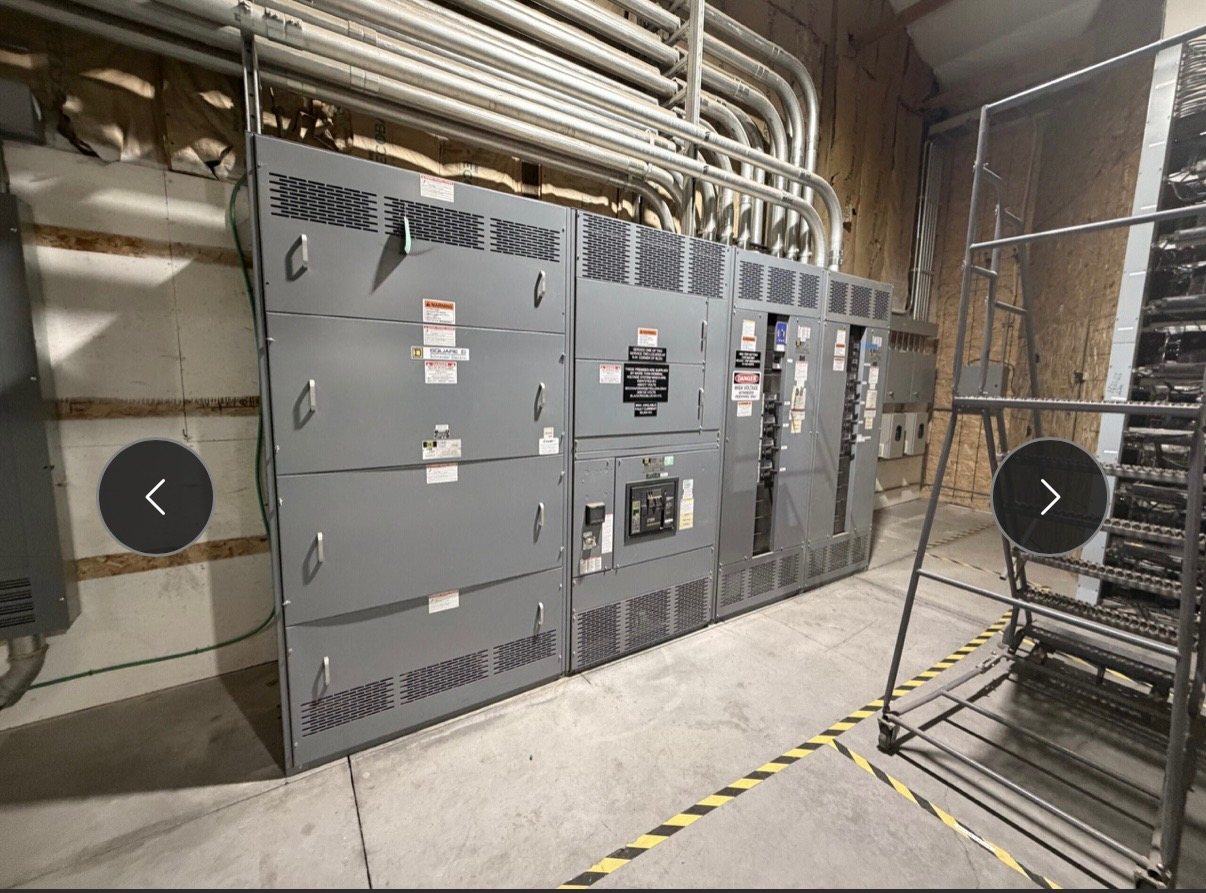
Where component lead-time risk begins
A schedule risk often appears when a project depends on one exact breaker, protective relay, meter, or control device. Before requesting pricing, identify the required manufacturer or approved product family, catalog or model information, quantity, and the date the component must be available for assembly or retrofit. Also clarify whether the need is for a new switchboard, a new component for an existing assembly, or both; these are different scopes to review.
For an existing installation, provide the switchgear nameplate details and the component’s identifying information, along with photographs or drawings when available. State the project location in Texas or elsewhere, the required ship-to destination, and any sequencing constraints. We can review the specified scope as a manufacturer. Do not assume a component is available or interchangeable based only on appearance; the quotation must confirm availability and applicable engineering.
Breakers: confirm the complete application
A breaker substitution begins with electrical and mechanical compatibility, not a similar product name. The review should account for system voltage, continuous-current requirement, interrupting duty, pole count, trip unit and protection functions, connection arrangement, and the switchgear section in which it will operate. For retrofit work, the existing breaker type, cell or mounting details, and the assembly’s original documentation are important inputs. A rating that looks suitable alone does not establish suitability.
Ask whether the proposed breaker is intended for the same application and whether the assembly manufacturer’s design review is required. Identify any coordination or protection study requirements, interface constraints, and project approval steps. A change to breaker type or trip functions may affect more than fit: it can change the protection design and required settings documentation. Final selection and installation must be reviewed and performed by qualified personnel under approved project procedures.
Relays, meters, and controls need functional review
Relays and meters can share a panel opening or general purpose yet differ in inputs, measurement functions, communications, power supply, and operating logic. Specify the quantities and types of current and voltage inputs, required protection or measurement functions, available control power, display or alarm needs, and any communications protocol or monitoring interface. Provide control schematics, wiring diagrams, and the project’s functional requirements so a proposed device can be assessed against actual duties.
For controls, describe the intended sequence, interlocks, indication, and interfaces with other equipment rather than asking only for a visually similar replacement. A relay or meter change may require revised wiring, drawings, settings, or commissioning documents. Confirm who must approve those changes and what records are required at turnover. We supply new components only; a proposed new replacement remains subject to fit, function, rating, engineering, and project approval review.
Substitutions require ratings and approval
A technically responsible substitution review compares the original requirement with the candidate across electrical ratings, intended function, connection and mounting details, environmental conditions, and interfaces with adjacent equipment. The project team should identify which characteristics are mandatory and which may be evaluated as alternatives. For breakers, protection performance and interrupting requirements deserve particular attention; for relays, meters, and controls, inputs, outputs, functions, and system interfaces must match the documented application.
Approval may involve the engineer of record, owner, contractor, equipment manufacturer, or authority having jurisdiction, depending on the contract and project requirements. Establish the approval path before placing an order, and document the accepted model, any design changes, and any required drawing or settings revisions. A quotation or proposed alternative is not approval to install. Listing and applicable standards should be verified for the specific configuration; UL 891 applies to switchboards and is not a blanket listing for every switchgear component or assembly.
Plan for new retrofit components and records
When an existing assembly is to remain in service, distinguish a new retrofit component from a complete new switchgear assembly in the request. Share the equipment identification, existing component model, bus or connection details when documented, available space, and the reason for replacement. Explain whether the request is for a like-for-like new component or an evaluated alternative. The review may reveal that modifications or additional engineering are needed before a component can be specified for the existing equipment.
Useful procurement records include current one-line diagrams, elementary and connection drawings, equipment nameplates, bills of material, protection settings information, and the owner’s approved standards. Indicate which documents are available and which deliverables the project requires with the quotation or equipment. Component origin and test documentation should be confirmed for each quotation; specifying American components does not by itself establish independent verification or compliance with domestic-content rules.
Build a schedule-aware purchasing request
A complete inquiry helps separate a genuine schedule constraint from an unresolved design question. List required quantities, the needed-on-site date, project milestones, shipping destination, acceptable manufacturer or functional alternatives, and approval deadlines. Identify whether the request covers new equipment, new retrofit components, or both, and attach the technical records supporting the scope. This gives us a basis to review availability and engineering needs without treating a requested date as a delivery guarantee.
Ask for the quotation to state the proposed scope, assumptions, exclusions, required customer approvals, and any open technical information needed to proceed. Confirm lead time, component origin, and test documentation in the project-specific quotation rather than relying on general expectations. Installation, servicing, testing, and energization require qualified personnel working under approved procedures. For Texas projects, coordinate shipping and site milestones with the responsible contractor and project team; we serve Texas from the United States.