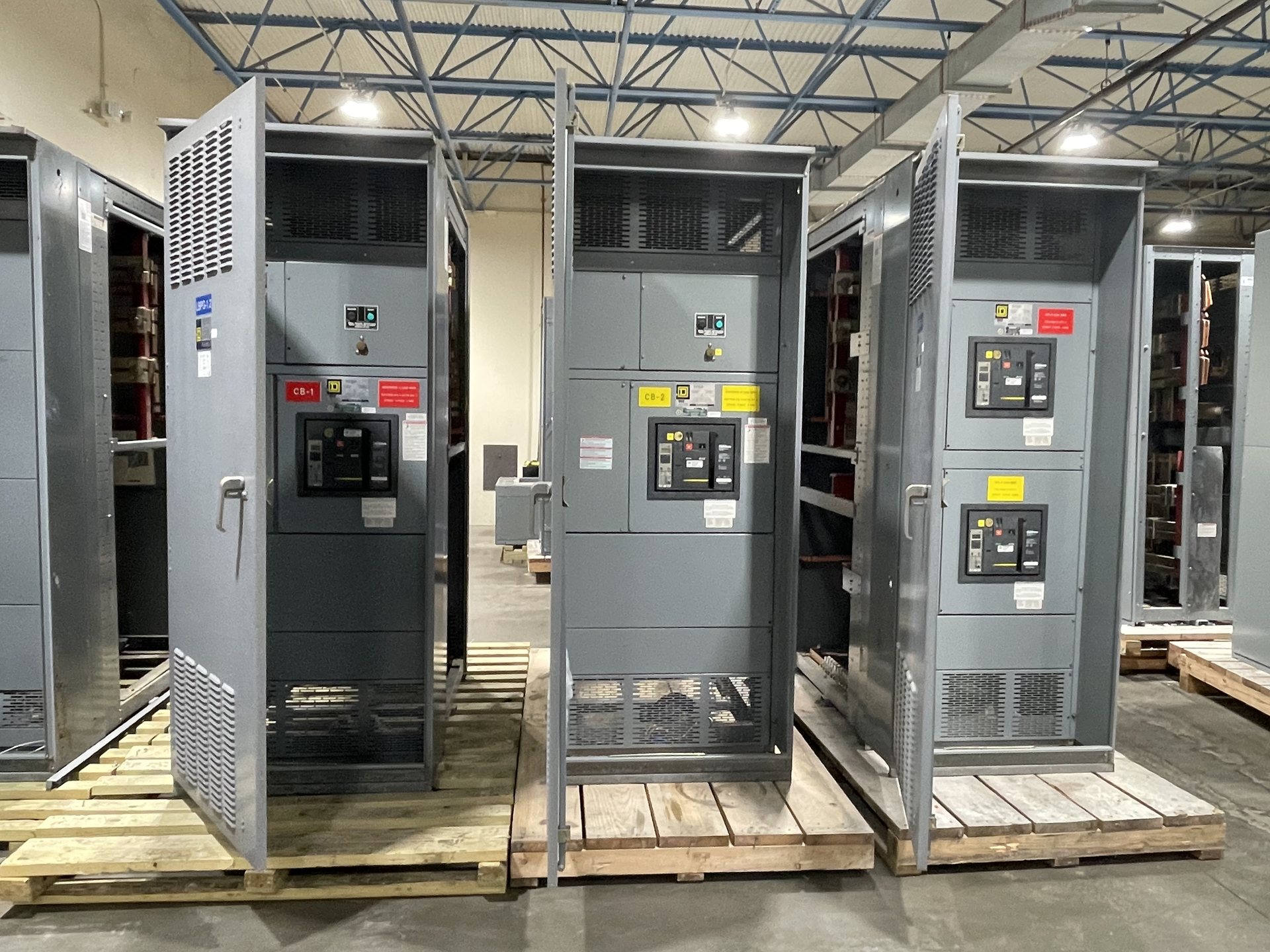
Plan Lineup Splits Around the Route and Set Location
A shipping split determines where a lineup separates into transportable sections and where it is reassembled in the field. Before proposing split points, establish the equipment-room access route, door and corridor clearances, turning space, available rigging access, receiving conditions, and the means of moving each section to its final position. Share route drawings and any elevator, dock, or floor-loading limits early; a lineup that fits its electrical layout may still need a different shipping arrangement.
The electrical design also constrains where sections can divide. Identify bus connections, barriers, cable entry and termination space, control wiring, and any components that cross a proposed joint. Ask which connections must be separated for shipment and how they will be restored. We review these interfaces against the specified assembly and transport plan, then confirm the approved split locations and section arrangement in the project documentation rather than assuming a standard division.
Match-Marking Makes Section Identification Unambiguous
Once split locations are established, each section and its corresponding connection points need a consistent identification scheme. Match-marking should let the field team distinguish section order, orientation, and mating interfaces without relying on crate position or memory. The project plan should state how marks correspond to the lineup drawing and connection schedule, and whether separate bus, control, ground, or hardware groups require their own identifiers.
Review the marking approach with the people who will receive and reassemble the equipment. Confirm that marks remain readable after protective wrapping is removed and that loose items are identified with the section or joint they serve. Shipping labels identify packages; they do not replace assembly references. For a quotation, provide the required tag names, lineup designations, and documentation conventions so the proposed identification can be coordinated with the project records.
Specify Bracing for the Transport Conditions
Internal and external bracing may be needed to limit movement during handling and transit, but the appropriate arrangement depends on the assembly and the shipping configuration. Project review should account for section dimensions, weight distribution, equipment features, transport orientation, anticipated handling, and any separation between sections. Describe known carrier or site constraints and identify items that need particular protection, such as projecting devices, doors, instrument panels, or exposed connection surfaces.
Bracing must be considered together with the equipment’s intended setup and field work. The documents should distinguish temporary shipping restraints from permanent parts and explain what must be removed, retained, or checked before sections are joined. Do not treat packaging as structural support for lifting or installation. The shipment-specific plan should identify the restraint arrangement and any required inspection after delivery, with final methods confirmed for the quoted configuration.
Protect Against Moisture and Handling Damage
Moisture protection should reflect the route, expected transit and storage conditions, and the time between delivery and installation. Discuss whether equipment may be exposed to rain, humidity, condensation, dust, or temperature changes, and whether it will be stored indoors or outdoors. Those details inform the proposed protective wrapping and enclosure approach. Specify any receiving or storage restrictions that the project team needs included with the shipment documentation.
Protective measures should not obscure the information needed to identify, inspect, and handle each section. Agree on how packaging will preserve labels and match marks, protect openings and mating surfaces, and keep associated parts organized. After receipt, qualified project personnel should follow the supplied handling and preservation documents and inspect for visible shipping damage or moisture exposure before reassembly. Report concerns through the project’s designated process rather than proceeding as if the equipment were unaffected.
Confirm Lifting Points and Handling Equipment
Lifting arrangements must be based on the specific section, its documented weight and balance, and the approved handling points. In the project review, confirm what lifting provisions are supplied or specified, how each section is oriented for handling, and whether site rigging access can reach those points. The receiving team should also assess the available lifting equipment and the path from unloading to the final installation location before shipment is released.
Do not infer a lifting method from appearance, a neighboring section, or general equipment practice. The shipment documents should identify the applicable lifting points and any configuration-specific handling restrictions, with the responsible rigging plan developed by qualified personnel. If the site cannot use the identified points or equipment, raise that constraint before the order is finalized so an acceptable approach can be reviewed. Handling and lifting must follow approved procedures and applicable safety requirements.
Prepare Field Reassembly Instructions Before Dispatch
Field reassembly requires more than matching section labels. Confirm that the project package will address section sequence and orientation, joining interfaces, required hardware, temporary restraint removal, and the connection work associated with each split. Establish which drawings and schedules govern the assembly, how revisions will be controlled, and which items are supplied with the shipment. These decisions help the contractor coordinate receiving, staging, installation access, and the work window before the equipment arrives.
The reassembly documents should make clear which tasks belong to the field team and which conditions require review or clarification. Electrical installation, connection work, inspection, testing, and energization must be performed by qualified personnel under approved procedures; this page is not a substitute for shipment-specific instructions or project drawings. Before requesting pricing, provide the intended lineup, transport constraints, site access information, and documentation requirements. Configuration, availability, lead time, component origin, and applicable test or standards documentation are confirmed for each quotation.