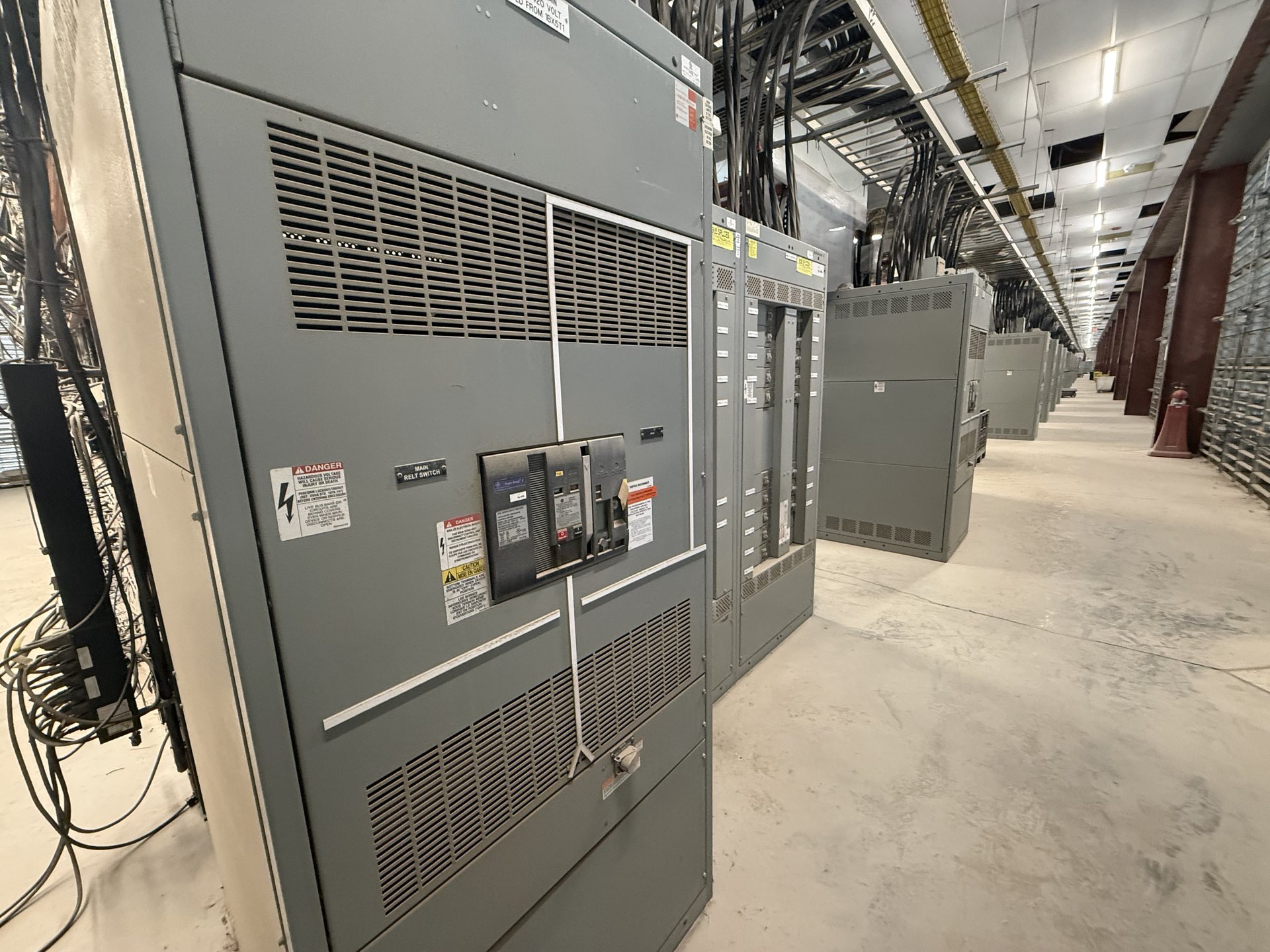
Motor-control distribution for transportation facilities
Airport terminals, transit stations, maintenance buildings, and transportation infrastructure may contain motors with very different operating duties. A ventilation fan that runs continuously presents a different load profile from an intermittently operated pump or a motor that starts as part of a coordinated sequence. Identify each load’s function, operating schedule, starting frequency, and relationship to other equipment before selecting distribution and motor-control components.
For a project review, provide the one-line diagram, equipment schedule, available electrical service information, and motor nameplate data when available. Include voltage, phase, frequency, horsepower or rated current, starting method, and any specified fault-current or coordination requirements. These inputs help us assess a suitable new assembly and identify questions that must be resolved by the engineer of record or equipment supplier.
Selecting starters for ventilation and auxiliary loads
Ventilation systems can include supply and exhaust fans, smoke-control equipment, air-handling units, and associated pumps. Their motor-control requirements may call for across-the-line starters, reduced-voltage starting, or drive-based control, depending on the motor, mechanical system, operating sequence, and electrical design. Specify which method is required rather than assuming a starter type from the equipment’s general description.
For each motor, document the load, nameplate ratings, expected starts per hour, acceleration needs, and any requirement for variable speed or soft starting. Clarify whether the controls must respond to a building automation system, fire-alarm sequence, local operator station, or another approved control source. Final selection must account for the motor and driven equipment, upstream distribution, protective-device coordination, and project-specific design criteria.
Control interfaces and operating sequences
Motor-control equipment may receive commands from local controls, building management systems, programmable controllers, or equipment furnished by others. Define the required command and status points, control-voltage expectations, communication method if applicable, and who supplies each interface. A clear responsibility matrix can prevent gaps between the switchgear scope, motor package, controls contractor, and facility systems integrator.
Describe how each motor is intended to operate during normal conditions, scheduled shutdowns, alarms, and loss or restoration of power. Identify interlocks, permissives, remote and local modes, and any required indication such as run, fault, or available status. These functional requirements should be captured in project documents and reviewed before the equipment is finalized; interface compatibility cannot be inferred from a general request for motor control.
Maintenance isolation and equipment access
Maintenance planning should distinguish the means of stopping a motor from the means of isolating its electrical supply. Identify which equipment must be isolated for inspection or service, where isolation is expected, and how the project documents the boundary between the distribution assembly and downstream equipment. The required arrangement depends on the system design, applicable codes, operating procedures, and the equipment served.
Provide the maintenance team’s access assumptions, room layout, equipment clearances, cable-entry preferences, and any restrictions on the location of disconnecting means. If a new retrofit component is being considered for an existing installation, submit the existing equipment identification, drawings, connection details, and photographs where useful. We supply new equipment and new retrofit components only; compatibility and fit must be reviewed against the actual existing configuration.
Coordination with airport and transit project conditions
Transportation projects often involve phased construction, restricted work windows, occupied areas, or interfaces with operating facility systems. These conditions affect submittal timing, equipment access, shipping coordination, and the sequence for replacement or expansion. Tell us whether the project is new construction, a planned system expansion, or a retrofit, and identify the required delivery milestone and site constraints for quotation review.
For retrofit scopes, establish what existing circuits and loads must remain in service, which equipment is being replaced, and what field verification is expected before final design. For new installations, provide the room arrangement, feeder routing assumptions, and coordination requirements with mechanical and controls packages. Installation, servicing, testing, and energization must be performed by qualified personnel under approved project procedures.
Quotation inputs, standards, and documentation
A useful pricing request includes the project location, requested quantity, one-line diagram, load schedule, specification, equipment dimensions or space constraints, and required submittal documents. Include the governing project standards and the specific equipment scope, such as distribution, motor starters, control provisions, or new retrofit components. If details remain open, list the assumptions and unresolved decisions so they can be addressed during project review.
Switchgear Builders Texas builds new equipment to specification using American components as requested by the customer. Component origin, availability, engineering, lead time, and test documentation must be confirmed for each quotation; domestic-content compliance is not implied. UL 891 applies to switchboards, and listing and applicable standards must be verified for the proposed configuration. We serve Texas from the United States and ship nationwide.