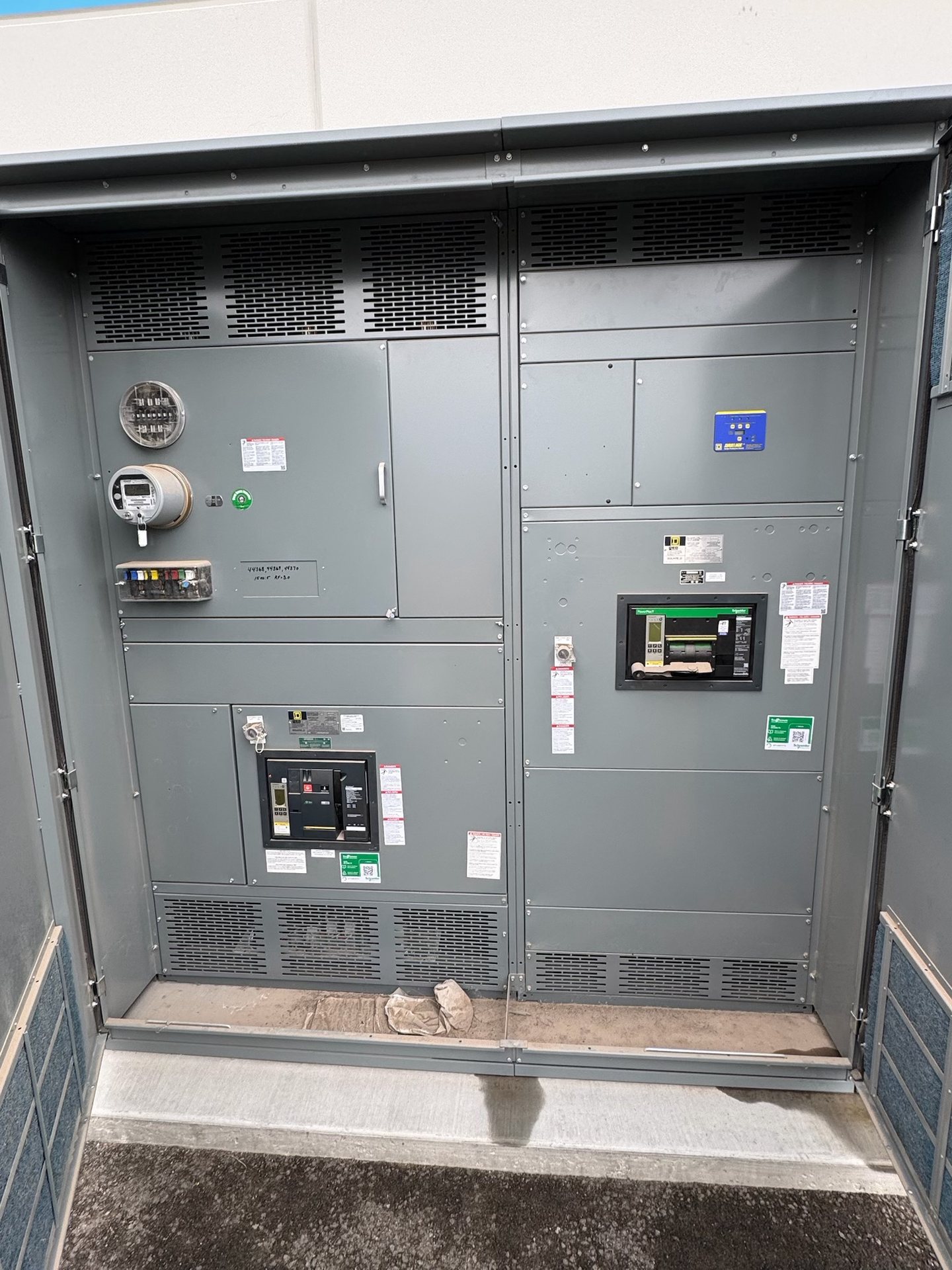
Match the enclosure to the actual exposure
An enclosure rating is only useful when it matches the exposure at the equipment location. Record whether the assembly is in a dry electrical room, a damp process area, an exterior location, or a space subject to directed spray or washdown. Note possible flooding, standing water, hose reach, dust, and airborne contaminants. Do not treat “water and wastewater facility” as a single environmental classification: a control room and a chemical handling area may require different enclosure approaches.
For each proposed location, identify the applicable enclosure-rating requirement and the exposure conditions that drive it. Confirm whether doors must remain closed during cleaning, whether penetrations or cable entry points face spray, and whether equipment is protected by a separate room or barrier. The selected rating and construction should be reviewed against the complete assembly and installation details; a rating should not be inferred from an enclosure material or appearance alone.
Account for humidity and condensation
High relative humidity does not always lead to visible water, but temperature changes can bring internal surfaces below the dew point. This can occur when equipment is moved from a warm space into a cooler room, when outdoor temperatures change, or when a process area cycles between operating conditions. Gather normal and seasonal temperature ranges, humidity patterns, room heating and cooling schedules, and any history of condensation near electrical equipment.
Discuss condensation control during configuration review rather than relying on enclosure sealing alone. Depending on the design and site conditions, options may include space for suitable anti-condensation measures or changes to room-level environmental control. The project team should clarify how such measures will be powered, monitored, maintained, and coordinated with the distribution assembly. Final selection requires review of the enclosure, internal components, available space, and operating environment together.
Evaluate corrosion sources and material compatibility
Corrosion risk depends on more than proximity to water. Identify chemical storage and dosing areas, cleaning agents, treatment processes, salt or other airborne contaminants, and any gases or vapors that may reach the equipment. Describe whether exposure is continuous, intermittent, or associated with a specific operating or cleaning activity. These details help the project team assess enclosure construction, finishes, hardware, and component suitability without assuming that one material or coating fits every plant.
Share available site environmental assessments and any restrictions on materials or coatings. Also identify dissimilar metals, mounting interfaces, and cable-entry hardware that may be exposed to the same conditions, since the complete installation can matter as much as the main enclosure. Component origin and proposed construction should be reviewed in the quotation; specifying American components is a customer requirement to confirm for the particular configuration, not a blanket domestic-content certification.
Choose ventilation without inviting moisture
Ventilation can help manage heat, but openings and air movement may introduce humid air, dust, aerosols, or corrosive contaminants. Provide expected operating conditions, room ventilation details, heat-producing equipment, load profile, and any known temperature limits for the intended installation. Explain whether the enclosure is in a conditioned space and whether nearby pumps, drives, or process equipment create localized heat or vibration. These inputs support a more useful thermal and enclosure review than a room label alone.
The design discussion should balance heat dissipation with the required environmental protection. Ask how ventilation, filters, fans, or other thermal-management provisions affect the proposed enclosure rating and what routine inspection or replacement they require. Where the environment makes filtered airflow unsuitable, the project team may need to consider other ways to manage heat. Do not assume a ventilation method is compatible until the complete assembly and site conditions have been reviewed.
Define the distribution equipment and retrofit scope
Provide the one-line diagram, system voltage, available fault-current information, required continuous and demand loads, feeder and branch-circuit needs, and connection details. Identify service or distribution functions, upstream protective devices, downstream equipment, control interfaces, and any required future capacity. Include the available installation footprint, cable approach, access clearances, and limitations on moving existing equipment. These project parameters guide engineering review; a page heading or general facility description does not establish a suitable rating or confirm availability.
For replacement or modification work, distinguish clearly between new equipment and new retrofit components. Supply existing equipment nameplates, dimensions, bus and connection information, photographs, drawings, and known changes to the electrical system. Identify the equipment to remain, the parts to be replaced, the outage window, and any interface constraints. Compatibility must be evaluated against the actual assembly and documents, not assumed from a model resemblance or a claimed drop-in fit.
Plan maintenance and verify project documentation
Maintenance planning should reflect the location’s moisture and corrosion risks. Describe inspection access, cleaning practices, washdown schedules, staffing constraints, and the plant’s preferred inspection intervals. Ask what enclosure surfaces, seals, filters, ventilation devices, and corrosion-prone interfaces require attention, and whether maintenance can be performed without obstructing process operations. Installation, inspection, servicing, testing, and energization must be handled by qualified personnel using approved procedures.
Before requesting pricing, assemble the electrical drawings, site exposure notes, enclosure-rating requirements, environmental limits, maintenance expectations, and applicable project specifications. Confirm which applicable standards and listing requirements apply to the proposed configuration; UL 891 concerns switchboard assemblies and should not be treated as a blanket listing for all switchgear. Engineering, component origin, test documentation, listing status, and lead time are confirmed for each quotation. We supply new equipment and new retrofit components, with timing subject to project review.